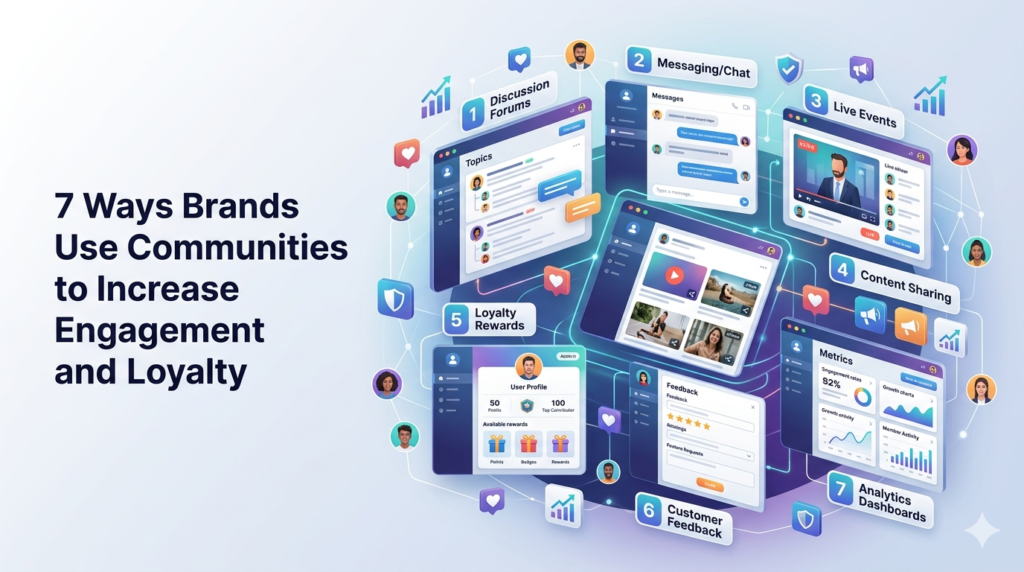

Building customer loyalty today is not as simple as running ads or offering discounts. Customers now want connection, interaction, and experiences that feel personal. That’s why many businesses are investing heavily in community engagement for brands as part of their long-term growth strategy.
A strong community gives customers a place to connect with the brand and with each other. It creates conversations, trust, and ongoing engagement that traditional marketing often struggles to achieve.
From experience, communities usually become one of the most valuable assets for growing businesses. Customers who actively participate in communities are often more loyal, more engaged, and more likely to recommend the brand to others.
In this guide, we’ll look at seven practical ways brands use communities to strengthen engagement and build long-term customer loyalty.
Why Communities Matter for Brands
Customers today have endless options online.
If people feel no emotional connection to a brand, switching to a competitor becomes very easy.
Communities help businesses create stronger relationships by giving customers a place where they can:
- Share experiences
- Ask questions
- Learn from others
- Participate in discussions
- Feel part of something bigger
This is why community engagement for brands has become such an important strategy in modern business.
Communities help transform customers from passive buyers into active participants.
How Communities Improve Customer Loyalty
Strong communities help businesses create emotional loyalty instead of relying only on promotions or pricing.
Communities improve loyalty by:
- Building trust
- Encouraging interaction
- Providing ongoing value
- Creating emotional connection
- Making customers feel heard
People are more likely to stay loyal when they feel connected to both the brand and the community around it.
7 Ways Brands Use Communities to Increase Engagement and Loyalty
1. Creating Spaces for Customer Discussions
One of the most common ways brands use communities is by creating discussion spaces where members can interact freely.
These discussions may include:
- Product questions
- Tips and advice
- Industry conversations
- Feedback discussions
- Personal experiences
For example, fitness brands often create groups where members share workout progress and motivation.
From experience, communities become much stronger when members interact with each other instead of relying only on brand-created content.
2. Offering Customer Support Through Communities
Communities often become valuable support hubs.
Customers frequently help each other solve problems by sharing:
- Tutorials
- Recommendations
- Troubleshooting advice
- Product experiences
This creates faster support experiences while reducing pressure on customer service teams.
Many software companies successfully use community forums because experienced users naturally guide newer customers.
This type of peer-to-peer support also strengthens trust within the community.
3. Encouraging User-Generated Content
User-generated content is one of the strongest tools for engagement.
Communities encourage members to create:
- Reviews
- Tutorials
- Photos
- Videos
- Success stories
- Recommendations
People trust content from real users far more than advertisements.
This content also keeps the community active and authentic.
For brands, this creates a steady flow of engagement without constantly needing to produce every piece of content themselves.
4. Running Exclusive Events and Challenges
Many brands use communities to host:
- Live events
- Webinars
- Challenges
- Q&A sessions
- Product launches
Exclusive activities help members feel involved and valued.
For example:
- Gaming brands host tournaments
- Fitness communities run monthly challenges
- Creator communities organize networking events
These activities encourage regular participation and increase excitement around the brand.
5. Gathering Customer Feedback
Communities provide direct access to customer opinions and ideas.
Brands can ask members about:
- Product improvements
- New feature ideas
- Customer pain points
- Future updates
This feedback helps businesses make smarter decisions while making customers feel heard.
From experience, customers become more loyal when they see brands actually listening and responding to community feedback.
6. Rewarding Active Members
Recognition plays a major role in community engagement.
Brands often reward active members through:
- Badges
- Rankings
- Exclusive access
- Featured posts
- Early product access
These small rewards encourage participation and make members feel appreciated.
Gamification features also motivate people to stay active long-term.
7. Building Emotional Connection Around Shared Interests
The strongest communities are built around shared identity and experiences.
Customers stay loyal when they feel emotionally connected to the community itself.
For example:
- Travelers connect through shared adventures
- Creators connect through collaboration
- Entrepreneurs connect through learning and support
Communities create friendships, shared goals, and ongoing conversations that go far beyond products.
That emotional connection is extremely difficult for competitors to replace.
Choosing the Right Community Platform
The platform you choose affects the entire community experience.
A good community platform should offer:
- Easy navigation
- Mobile-friendly design
- Discussion forums
- Notifications
- Moderation tools
- Member profiles
- Content sharing features
Simple and easy-to-use platforms usually perform better than overly complicated systems.
If you’re planning to launch your own platform, this guide on how to build an online community platform from scratch explains the important features and planning steps businesses should consider before getting started.
You can also explore strategies for creating a scalable community platform that supports long-term engagement and growth.
Pro Tip: Focus on Community Value Before Marketing
One of the biggest mistakes brands make is treating communities like advertising channels.
People join communities for:
- Support
- Learning
- Connection
- Conversations
- Shared experiences
Not constant promotions.
From experience, the strongest communities focus first on helping members and building relationships. Sales and loyalty usually grow naturally when the experience feels valuable and authentic.
Common Mistakes to Avoid
Avoiding these mistakes can improve your community’s success significantly.
Launching Without a Clear Purpose
Communities need direction.
Without purpose, engagement usually fades quickly.
Posting Only Promotional Content
Too much marketing pushes members away.
Balance promotions with genuinely useful discussions and content.
Ignoring Member Feedback
Members want to feel heard.
Ignoring suggestions weakens trust and participation.
Expecting Instant Growth
Communities take time to grow.
Consistency matters far more than speed.
Weak Moderation
Without moderation, spam and negativity can damage the community experience quickly.
Quick Summary
Strong community engagement for brands helps businesses improve customer loyalty through deeper relationships and ongoing interaction.
Brands use communities to:
- Create customer discussions
- Offer peer-to-peer support
- Encourage user-generated content
- Run exclusive events
- Gather customer feedback
- Reward active members
- Build emotional connection
To build a successful community platform, focus on:
- Valuable conversations
- Consistent activity
- Helpful content
- Strong moderation
- Relationship building
Communities grow strongest when members feel connected, supported, and appreciated.
Conclusion
Today’s customers want more than products and advertisements. They want connection, interaction, and experiences that feel meaningful. That’s why strong community engagement for brands has become essential for building long-term customer loyalty.
A well-managed online community platform helps businesses create ongoing conversations, improve trust, and strengthen emotional connection with customers. Communities give members a place to share ideas, ask questions, learn from others, and feel genuinely involved with the brand.
The most successful communities are built through consistency, support, and authentic relationships. Start small, focus on helping your members, and continue improving the community experience over time.
As your community grows, it can become one of the strongest drivers of customer engagement, retention, and long-term business growth.