
How the New US Cyber Doctrine Is Reshaping Ransomware Defense
The cybersecurity landscape is undergoing a fundamental transformation. As ransomware attacks grow in scale, sophistication, and financial impact, governments and enterprises alike are being forced to rethink their approach to cyber defense. In the United States, the emergence of a new cyber doctrine signals a strategic shift away from purely reactive security measures toward a more proactive, resilient, and intelligence-driven model of cyber protection.
For years, organizations have focused on preventing cyberattacks through perimeter defenses, endpoint security, and traditional risk management frameworks. While these controls remain essential, the increasing frequency of ransomware incidents has exposed the limitations of conventional cybersecurity strategies. Threat actors are no longer operating as isolated hackers; many function as highly organized criminal enterprises with sophisticated infrastructure, financial resources, and global reach.
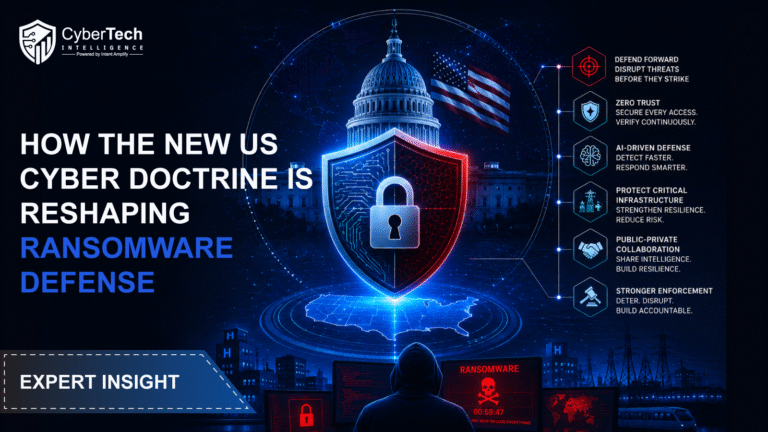
This evolving threat landscape has prompted policymakers and cybersecurity leaders to adopt a broader perspective on cyber resilience. The new U.S. cyber doctrine emphasizes not only defending networks but also disrupting adversaries, strengthening critical infrastructure, improving public-private collaboration, and ensuring organizations can continue operating during and after cyber incidents.
Why This Shift Matters Now
Ransomware remains one of the most disruptive cyber threats facing businesses today. Attackers have expanded beyond encrypting files to leveraging double-extortion, triple-extortion, and supply-chain attack techniques that increase pressure on victims. Organizations are now dealing with threats that can simultaneously impact operations, customer trust, regulatory compliance, and financial stability.
The consequences of a successful ransomware attack can be severe:
- Extended operational downtime
- Data theft and exposure
- Regulatory penalties
- Reputational damage
- Lost revenue and productivity
- Increased cybersecurity and recovery costs
As cybercriminal groups continue to innovate, organizations must evolve faster than ever before. The new cyber doctrine reflects this reality by encouraging a shift from reactive defense to proactive resilience.
The Rise of Cyber Resilience as a Strategic Priority
One of the most significant aspects of the emerging doctrine is the emphasis on resilience. Instead of focusing solely on preventing attacks, organizations are being encouraged to prepare for the possibility that an attack may succeed despite existing defenses.
Cyber resilience involves:
- Rapid threat detection and containment
- Robust backup and recovery capabilities
- Business continuity planning
- Continuous security monitoring
- Incident response readiness
- Cross-functional crisis management
This mindset recognizes that cybersecurity is no longer just an IT issue—it is a business continuity issue. Organizations that can quickly recover from attacks gain a significant advantage in minimizing operational disruption and protecting stakeholder confidence.
Public-Private Collaboration Takes Center Stage
Another major pillar of the evolving U.S. cyber strategy is increased cooperation between government agencies and private-sector organizations. Cyber threats do not respect geographic boundaries, industry sectors, or organizational sizes. Effective defense requires intelligence sharing, coordinated response efforts, and stronger partnerships between public and private entities.
By fostering collaboration, organizations gain access to valuable threat intelligence, emerging attack indicators, and strategic guidance that can help strengthen defenses against rapidly evolving ransomware campaigns.
This collaborative approach is becoming increasingly important as critical infrastructure sectors face heightened risks from both cybercriminal organizations and nation-state actors.
Emerging Technologies Are Changing the Battlefield
The cybersecurity landscape is also being transformed by emerging technologies. Artificial intelligence, machine learning, cloud computing, and automation are creating new opportunities for both defenders and attackers.
While AI-powered security solutions can improve threat detection and accelerate response times, cybercriminals are also leveraging advanced technologies to automate attacks, identify vulnerabilities, and create increasingly convincing phishing campaigns.
The new cyber doctrine acknowledges these realities by encouraging organizations to adopt adaptive security models that can respond dynamically to evolving threats. Businesses that embrace innovation while maintaining strong governance practices will be better positioned to withstand future ransomware challenges.
What Security Leaders Should Be Asking
As the cyber threat environment continues to evolve, CISOs, security teams, and business leaders should evaluate whether their current strategies align with the direction of modern cybersecurity policy.
Key questions include:
- Is our ransomware response plan regularly tested?
- Can critical operations continue during a major cyber incident?
- Are we effectively monitoring third-party and supply-chain risks?
- Do we have visibility across hybrid and cloud environments?
- Are our employees prepared to recognize and report cyber threats?
- How quickly can we detect, contain, and recover from an attack?
Answering these questions honestly can help organizations identify gaps before attackers do.
The Future of Ransomware Defense
The future of cybersecurity will be defined by resilience, intelligence, and adaptability. Organizations can no longer afford to view ransomware defense as a standalone security initiative. Instead, it must become an integrated component of enterprise risk management, business continuity planning, and digital transformation strategies.
The new U.S. cyber doctrine reflects this broader vision by encouraging organizations to move beyond traditional security frameworks and adopt a more comprehensive approach to cyber defense. Those that embrace these changes will be better equipped to navigate an increasingly complex threat landscape while protecting their operations, customers, and reputation.
Read the Full Expert Insight
The cybersecurity landscape is changing rapidly—and so are the strategies required to defend against ransomware.
Discover how the latest U.S. cyber doctrine is influencing enterprise security priorities, reshaping ransomware defense strategies, and redefining cyber resilience for organizations across every industry.
What You’ll Learn
✔ The key principles behind the new U.S. cyber doctrine
✔ How ransomware defense strategies are evolving
✔ Why cyber resilience is becoming a business imperative
✔ The role of threat intelligence and public-private collaboration
✔ Actionable recommendations for strengthening organizational preparedness
✔ Emerging trends shaping the future of ransomware protection
Contact Us
1846 E Innovation Park Dr, Suite 100, Oro Valley, AZ 85755
Phone: +1 (845) 347-8894, +91 77760 9266