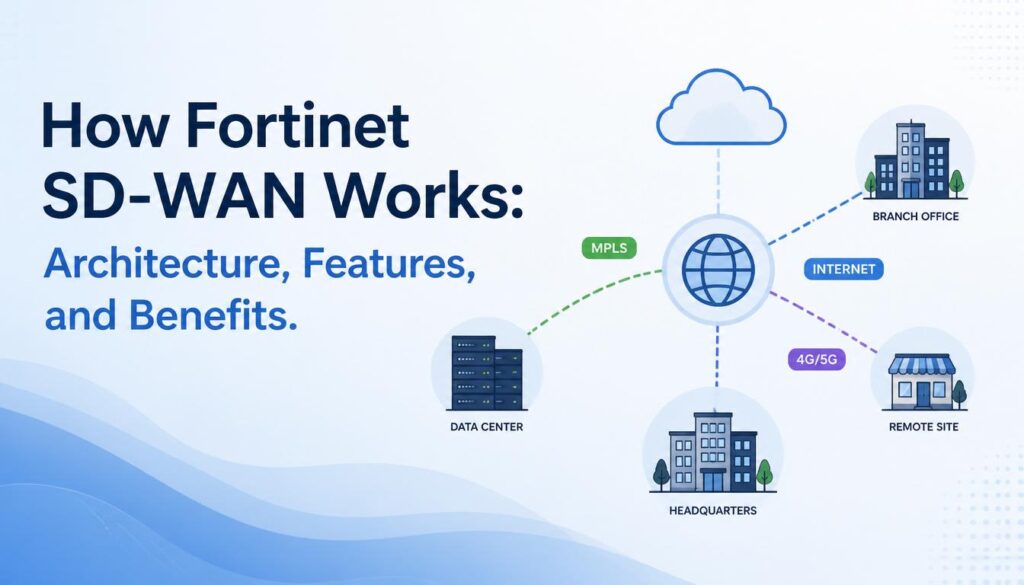

As businesses continue embracing cloud applications, remote work environments, and digital transformation initiatives, traditional WAN networks are facing challenges related to performance, scalability, and security. Organizations today require a smarter networking approach that can provide reliable connectivity, optimize application performance, and reduce operational complexity. Software-defined wide area networking (SD-WAN) has emerged as a modern solution that helps businesses manage network traffic more efficiently while supporting changing technology demands.
Fortinet SD-WAN is designed to provide secure, intelligent, and flexible connectivity across branch offices, data centers, and cloud environments. It combines advanced traffic management capabilities with integrated security features to improve network visibility and control. For professionals and organizations seeking to understand its architecture, deployment methods, and practical applications, Fortinet SD-WAN Training offers valuable guidance on implementing and managing SD-WAN solutions effectively. With its ability to optimize bandwidth usage, automate network decisions, and strengthen security, Fortinet SD-WAN has become an important technology for modern enterprise networks.
What Is Fortinet SD-WAN?
Fortinet SD-WAN is a software-based networking technology integrated into Fortinet’s security ecosystem. It enables organizations to control and optimize network traffic through centralized management and intelligent decision-making.
The primary purpose of SD-WAN is to simplify network operations by automatically selecting the best available connection for different applications. For example, business-critical applications such as video conferencing, voice communication, and cloud services can receive priority over less important traffic.
Fortinet SD-WAN operates through Fortinet’s next-generation firewall platform, allowing organizations to combine networking and security functions in a single solution. This approach helps reduce complexity while improving visibility and control across distributed environments.
Fortinet SD-WAN Architecture
Understanding the architecture of Fortinet SD-WAN helps explain how the technology improves network performance and security. The architecture is built around several important components that work together to provide intelligent connectivity.
SD-WAN Edge Devices
SD-WAN edge devices are deployed at branch offices, headquarters, data centers, or cloud locations. These devices connect different network links and manage traffic flow between locations.
Fortinet FortiGate devices commonly act as SD-WAN edge platforms. They provide routing, security inspection, application control, and traffic optimization capabilities. By using edge devices, organizations can create secure connections across multiple network environments.
Centralized Management System
A centralized management system allows administrators to configure, monitor, and manage SD-WAN operations from a single location. This reduces the need for manual configuration at individual branch sites.
Network teams can create policies, monitor application performance, analyze traffic patterns, and make adjustments quickly. Centralized management also improves operational efficiency for organizations with multiple locations.
Intelligent Traffic Steering
One of the most important elements of Fortinet SD-WAN architecture is intelligent traffic steering. The system continuously evaluates network conditions, including latency, packet loss, and bandwidth availability.
Based on predefined policies, Fortinet SD-WAN automatically chooses the most suitable path for each application. This ensures better user experiences and reduces downtime caused by network issues.
Security Integration
Security is a key part of Fortinet SD-WAN architecture. Instead of treating networking and security as separate functions, Fortinet combines them through its Security Fabric approach.
Integrated security features help protect applications, users, and data from cyber threats. Organizations can apply firewall policies, intrusion prevention, malware protection, and secure access controls while managing network traffic.
How Fortinet SD-WAN Works
Fortinet SD-WAN works by creating intelligent connections across different network paths and continuously optimizing traffic flow. The process begins when multiple WAN connections are connected to an SD-WAN-enabled device.
The system monitors each available connection and measures important performance factors such as bandwidth, delay, and reliability. When an application sends data, SD-WAN policies determine the best route based on current network conditions.
For example, if an organization uses both MPLS and broadband connections, Fortinet SD-WAN can automatically send critical business traffic through the most reliable path while using lower-cost connections for general activities.
This dynamic approach allows organizations to achieve better performance without depending only on expensive network services.
Key Features of Fortinet SD-WAN
Application-Aware Routing
Fortinet SD-WAN identifies applications and automatically applies routing decisions based on business requirements. This helps ensure important applications receive the necessary network resources.
Automatic Failover
Network interruptions can impact productivity and customer experiences. Fortinet SD-WAN provides automatic failover by switching traffic to another available connection when a primary link experiences problems.
Bandwidth Optimization
Organizations can maximize available bandwidth by distributing traffic intelligently across multiple connections. This reduces unnecessary costs and improves overall network efficiency.
Real-Time Monitoring
Fortinet SD-WAN provides visibility into network performance through monitoring and reporting tools. Administrators can identify issues, analyze trends, and improve network planning.
Cloud Application Support
Modern businesses rely heavily on cloud platforms. Fortinet SD-WAN improves access to cloud applications by optimizing connectivity between users, branches, and cloud environments.
Integrated Security Controls
Security features such as firewall protection, threat detection, and access management help organizations maintain secure communications while benefiting from SD-WAN flexibility.
Benefits of Fortinet SD-WAN
Improved Network Performance
Fortinet SD-WAN improves application performance by selecting the best network path automatically. Users experience more reliable access to important services, even when network conditions change.
Reduced Operational Costs
Traditional WAN environments often require expensive dedicated connections and complex management processes. SD-WAN allows businesses to use affordable internet connections while maintaining reliable performance.
Enhanced Security
Combining networking and security capabilities helps organizations protect sensitive information and reduce security risks. Fortinet SD-WAN provides centralized security management across multiple locations.
Simplified Network Management
Managing a large number of branch locations can be challenging. Fortinet SD-WAN simplifies administration through centralized control, automation, and visibility.
Greater Scalability
Organizations can easily add new locations, applications, and users without redesigning their entire network infrastructure. This makes SD-WAN suitable for growing businesses.
Fortinet SD-WAN Use Cases
Enterprise Branch Connectivity
Large organizations with multiple offices can use Fortinet SD-WAN to connect branches efficiently while maintaining consistent security policies.
Remote Workforce Support
Businesses with remote employees can improve secure access to applications and resources through optimized connectivity solutions.
Cloud-Based Business Operations
Companies using cloud services benefit from improved application performance and better control over cloud traffic.
Retail and Distributed Businesses
Retail companies, financial institutions, and other organizations with many locations can use SD-WAN to simplify network management and maintain reliable connectivity.
Fortinet SD-WAN vs Traditional WAN
Traditional WAN solutions often rely on fixed connections and manual management. While they can provide reliability, they may involve higher costs and limited flexibility.
Fortinet SD-WAN provides a more adaptive approach by using software-based controls and multiple connectivity options. It improves automation, visibility, and application performance while supporting modern business requirements.
However, the choice between traditional WAN and SD-WAN depends on organizational needs, budget, security requirements, and existing infrastructure.
Factors to Consider Before Implementing Fortinet SD-WAN
Before adopting Fortinet SD-WAN, organizations should evaluate their network requirements, application priorities, security needs, and available resources.
Businesses should identify critical applications, review existing connectivity options, and develop a clear deployment strategy. Proper planning helps organizations achieve maximum value from their SD-WAN investment.
Training and skilled professionals also play an important role in successful implementation. Understanding configuration, monitoring, and security practices ensures that organizations can manage their SD-WAN environment effectively.
Future of Fortinet SD-WAN
As businesses continue moving toward cloud-first strategies and hybrid work environments, the demand for intelligent networking solutions will continue growing. SD-WAN technology is expected to become an important part of future network infrastructure.
Fortinet SD-WAN is positioned to support this evolution by combining networking automation with advanced security capabilities. Organizations can use this technology to create flexible, secure, and efficient networks that support digital growth.
Conclusion
Fortinet SD-WAN provides organizations with a modern approach to managing connectivity, improving application performance, and strengthening network security. Its intelligent routing, centralized management, and integrated security features make it a valuable solution for businesses adapting to changing technology needs.
As demand for skilled networking professionals increases, learning solutions through Fortinet SD-WAN Online Training can help individuals and organizations better understand SD-WAN concepts, deployment strategies, and security-focused networking practices.