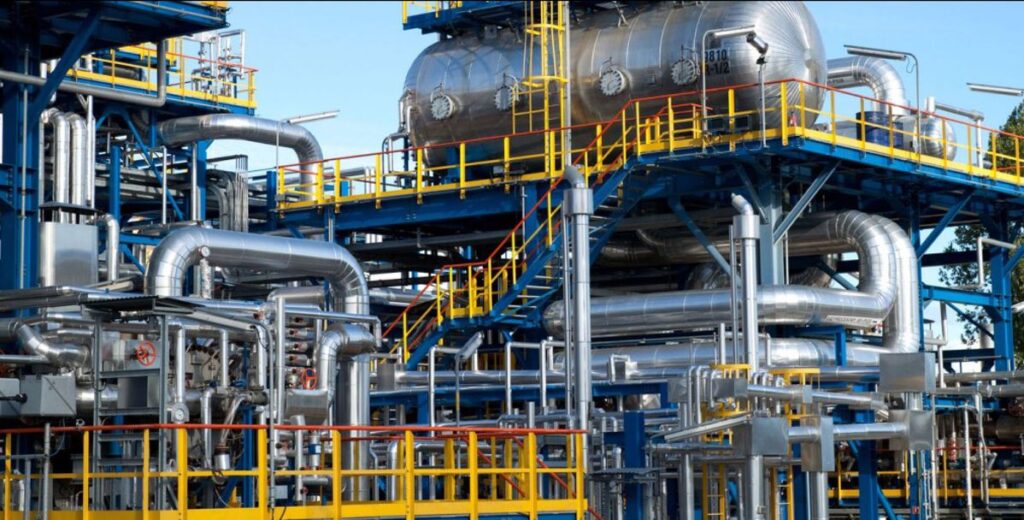

There is always one cost in a factory that tends to be overlooked as it gets bigger. It doesn’t communicate via emails. It doesn’t plan work sessions. It just appears on the monthly utility bills steadily.For quite a few industrial plants, that cost is the energy used for heating.Heating enables manufacturing processes, helps the output, and maintains the performance of machines.Yet surprisingly, a large portion of that energy often escapes through exhaust systems, stacks, and process operations without doing any useful work.
The good news? Modern manufacturing is no longer treating heat like a disposable resource. Today’s facilities are finding smarter ways to capture, reuse, and manage energy through advanced heat recovery systems and process optimization technologies.
Think of it as giving your facility’s energy budget a second shift.
The Silent Escape Artist: Where Industrial Heat Goes

A relatable thought:
Imagine paying for a full tank of fuel and then spilling part of it on the road before reaching your destination.
That’s essentially what happens when excess process heat leaves a facility unused.
Operations involving an industrial oven, curing lines, drying systems, coating processes, and combustion equipment generate substantial thermal energy. While some heat is necessary for production, a significant amount can be lost through exhaust streams.
Historically, many manufacturers accepted this as normal. In 2026, however, rising energy costs and sustainability goals have changed that mindset.
The question is no longer:
“How much heat are we generating?”
It’s now:
“How much heat are we letting escape?”
Heat Recovery Is Becoming the Smart Employee of the Factory

A simple observation:
The best employee is often the one who keeps working without being asked.
That’s exactly how modern heat recovery systems operate.
These systems capture thermal energy that would otherwise be wasted and redirect it to useful applications such as:
- Preheating combustion air
- Heating process water
- Supporting production operations
- Reducing fuel consumption
- Improving overall energy efficiency
Instead of creating new heat from scratch, facilities reuse heat they’ve already paid to generate.
The result is often lower operating costs, reduced emissions, and improved process performance.
Many manufacturers now view heat recovery systems as essential infrastructure rather than optional upgrades.
Why Waste Heat Is Suddenly the Most Popular Resource in Manufacturing
A funny industry truth:
Nobody gets excited about waste until someone calculates its value.
This explains the growing interest in waste heat recovery systems.
These technologies focus specifically on capturing thermal energy from exhaust gases, process vents, ovens, and other high-temperature operations.
Common sources include:
- Furnace exhaust
- Drying operations
- Process heaters
- Industrial burners
- Thermal treatment systems
- Manufacturing lines using an industrial oven
What once disappeared into the atmosphere can now contribute to production efficiency.
The shift is similar to discovering money hidden inside an old jacket pocket—except the jacket is your facility, and the pocket contains thousands of dollars in recoverable energy.
The Industrial Oven Is Doing More Than You Think
A familiar scenario:
An industrial oven often receives attention for product quality, temperature control, and throughput.
But energy managers see something else.
They see opportunity.
Modern industrial oven operations can become valuable sources of recoverable thermal energy. When integrated with properly designed heat recovery systems, exhaust heat can support other facility functions instead of leaving the building unused.
Benefits may include:
- Reduced fuel requirements
- Lower utility costs
- Improved process efficiency
- Better sustainability performance
- Enhanced overall equipment utilization
In many facilities, the oven isn’t just producing products.
It’s producing reusable energy.
The Paint Booth Conversation Is Changing

A practical insight:
For years, discussions about a paint booth focused on airflow, coating quality, and worker safety.
Those topics remain essential.
Today, however, energy performance has joined the conversation.
A paint booth often requires significant air movement and temperature management. Large volumes of conditioned air enter and exit the system throughout production.
This creates an opportunity.
When facilities incorporate waste heat recovery systems, they can capture thermal energy from exhaust streams and use it elsewhere in the operation.
The result is a more balanced approach where production quality and energy efficiency work together rather than competing for attention.
Modern facilities increasingly evaluate paint booth performance not only by finish quality but also by energy effectiveness.
The Thermal Oxidizer Is No Longer Working Alone
A surprising industry trend:
Equipment traditionally viewed as an environmental necessity is becoming an energy asset.
A thermal oxidizer is commonly used to destroy volatile organic compounds and process emissions. The primary goal remains environmental compliance and emissions control.
However, modern systems often integrate energy recovery capabilities.
By combining a thermal oxidizer with heat recovery systems, facilities can capture useful thermal energy generated during the oxidation process.
This recovered energy may support:
- Process heating
- Air preheating
- Facility operations
- Production systems
Instead of simply treating emissions, the system contributes to broader energy management objectives.
That makes it both an environmental and operational performer.
Thermal Cleaning Equipment Is Quietly Improving Efficiency
A common misconception:
Many people view cleaning systems as maintenance tools and nothing more.
The reality is more interesting.
Thermal cleaning equipment plays a critical role in restoring components, removing contaminants, and maintaining process efficiency.
Clean equipment often performs better, transfers heat more effectively, and operates with fewer performance losses.
When residue, coatings, or buildup accumulate on production components, energy consumption can increase unexpectedly.
Thermal cleaning equipment helps facilities maintain optimal operating conditions while reducing unnecessary inefficiencies.
In other words, cleaning isn’t just about appearance.
It’s about performance.
Why Thermal Cleaning Solutions Matter More Than Ever
Facilities that prioritize thermal cleaning solutions often discover gains that were previously hidden beneath layers of buildup, contamination, or process residue.
The Efficiency Mindset of 2026
An important shift:
Manufacturing leaders are moving beyond isolated equipment decisions.
Instead, they’re examining how systems interact.
When heat recovery systems and waste heat recovery systems are incorporated into this broader strategy, efficiency improvements often multiply across the operation.
The result is smarter resource management and stronger long-term performance.
Reader Check-In: Questions People Actually Ask
Curiosity corner:
These are some of the most common questions manufacturers ask when exploring energy efficiency opportunities.
“Is waste heat really valuable enough to recover?”
In many facilities, yes.
Large amounts of thermal energy can leave through exhaust systems every day. Recovering even a portion of that energy can create meaningful operational savings over time.
.
“Why combine a thermal oxidizer with heat recovery?”
Because the thermal energy generated during oxidation can often be captured and redirected to useful applications rather than being lost.
“Do thermal cleaning solutions affect energy efficiency?”
Indirectly, yes.
Cleaner equipment generally operates more effectively, helping maintain process performance and reducing unnecessary energy losses.
What energy challenge is your facility currently trying to solve? That question often leads to the most valuable efficiency discoveries.
Final Thought: Heat Should Work Overtime Too

Manufacturing has entered an era where efficiency is no longer a side project.
It’s a competitive advantage.
Facilities that embrace heat recovery systems, waste heat recovery systems, thermal cleaning equipment, thermal cleaning solutions, industrial oven optimization, paint booth efficiency, and thermal oxidizer integration are discovering something important:
The energy you already have may be more valuable than the energy you’re buying.
The smartest factories in 2026 aren’t necessarily generating more heat.
They’re simply finding better ways to make every degree count.
And unlike most workplace overachievers, recovered heat never asks for a promotion.