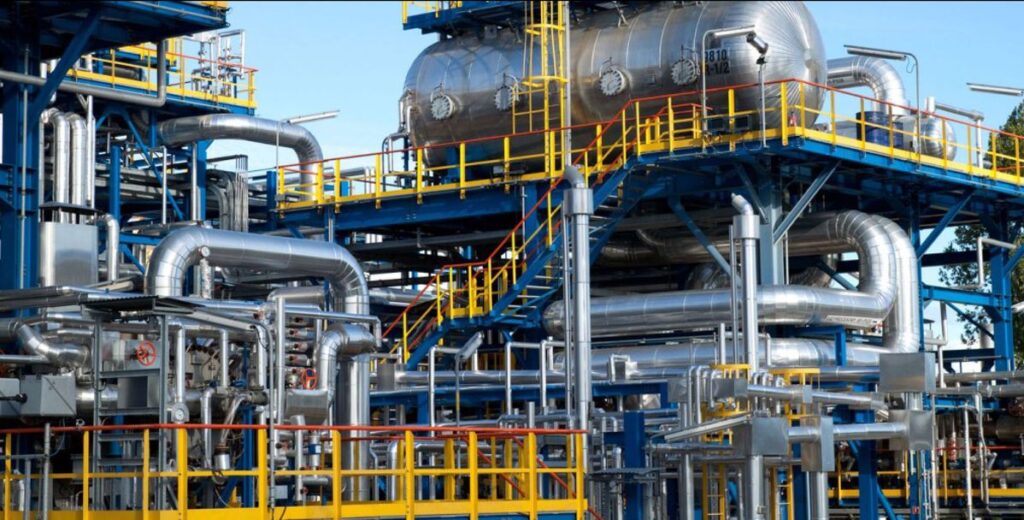

Every factory has that one moment: energy bills go up, production targets get tighter, and equipment somehow demands more attention than a toddler with unlimited questions.
For many industrial facilities in 2026, the challenge is no longer just producing more—it’s producing smarter.
The interesting part? There is a tremendous amount of usable energy already sitting inside factories, quietly escaping through exhaust systems, ovens and high temperature equipment. It is this invisible loss that opens the conversation around heat recovery systems.
Think of it less like a complicated engineering trend and more like finally noticing your heating was running with the windows open
Modern industrial facilities are learning that efficiency is not about cutting corners. It is about noticing opportunities hidden in plain sight.
The “Wait… We Were Losing That Much Heat?” Moment

There is something oddly frustrating about realizing expensive energy has been disappearing into the air for years.
Industrial processes generate large amounts of heat, especially in manufacturing environments involving curing, coating, combustion, or thermal processing. Traditionally, much of this heat escaped unused.
That approach is changing.
Today’s waste heat recovery systems are designed to capture excess thermal energy and redirect it into useful operations. Instead of letting heat disappear through vents or exhaust streams, facilities can repurpose it for preheating air, warming water, supporting combustion systems, or reducing energy loads elsewhere in production.
In simple terms, it is about giving wasted energy a second job.
Industries using high-temperature equipment are increasingly investing in recovery methods because operational efficiency now matters as much as production speed. Rising fuel costs and sustainability goals have simply accelerated the shift.
And no, this is not just a trend people mention in meetings to sound futuristic.
It is becoming operational common sense.
Why Heat Is Basically the Quiet Employee Doing Too Much Work
Imagine a work environment where one person does the work of 5 departments and never gets recognized.
That’s heat inside an industrial plant.
Heat is required for curing, drying, baking, coating, cleaning, combustion and material transformation. But the extra heat is often ignored once it has done its ‘main job’.
This is where heat recovery systems come in.
Reclamation of thermal energy can lower fuel consumption, enhance process efficiency, and reduce temperature variation in factories.
For facilities with heavy-duty manufacturing lines, the benefits of energy reuse, even small ones, can add up to a significant difference over time.
There is no expectation of dramatic overnight transformation..
The goal is smarter consistency.
The Industrial Oven Is Working Harder Than People Realize
Quick reality check: industrial equipment rarely gets appreciation.
An industrial oven, for example, does far more than simply generate heat.
These systems are essential in industries like automotive manufacturing, metal processing, electronics, aerospace, and coatings. Whether curing finishes, drying materials, or processing products at controlled temperatures, ovens are often among the highest energy-consuming assets in a facility.
That is why efficiency improvements around an industrial oven have become a major conversation.
Modern systems increasingly integrate energy recovery technologies that capture exhaust heat and redirect it for secondary processes.
Instead of creating heat once and losing the excess, manufacturers are designing operations where heat cycles back into production support.
The result?
Lower operational waste and better process consistency.
Which, in industrial terms, is basically a standing ovation.
Paint Booths: The Unexpected Energy Conversation Starter
Nobody walks into industrial operations expecting a paint booth to become the star of an efficiency discussion.
Yet here we are.
A paint booth plays a major role in product finishing, quality control, and worker safety. It manages airflow, ventilation, overspray control, and environmental conditions during coating applications.
But maintaining airflow and proper curing temperatures requires serious energy.
That is where integrated efficiency strategies become valuable.
Many facilities are pairing booth operations with heat recovery systems to reclaim heated exhaust air and improve energy management across production lines.
The thinking has evolved from:
“We need ventilation.”
To:
“How can ventilation also support efficiency?”
That mindset shift matters.
Because industrial success increasingly depends on systems working together rather than functioning independently.
Thermal Cleaning Is Getting Smarter, Not Harder
Industrial cleaning has entered its “work smarter” era.
For facilities dealing with contamination buildup, residue removal, or clogged production components, thermal cleaning equipment plays a critical role.
Instead of aggressive mechanical methods or heavy chemical dependence, thermal cleaning uses controlled heat processes to remove paints, polymers, oils, coatings, and manufacturing residue from industrial parts.
The advantage?
Greater consistency and less material damage.
Modern thermal cleaning solutions focus on precision, safety, and process reliability. Manufacturers are increasingly looking for methods that reduce downtime while maintaining equipment lifespan.
After all, shutting down production because machinery needs extensive cleaning is not exactly anyone’s favorite calendar event.
When equipment stays cleaner and performs more consistently, facilities often experience smoother operations overall.
And smoother operations are surprisingly underrated.
The Thermal Oxidizer Conversation Nobody Expected to Enjoy
Let’s be honest.
Few people hear the phrase thermal oxidizer and think, “This sounds exciting.”
But industrial engineers know better.
A thermal oxidizer is an important emissions control technology used to destroy hazardous gases, volatile organic compounds (VOCs), and industrial pollutants through high-temperature oxidation.
In manufacturing sectors involving coatings, chemicals, printing, and processing, these systems help facilities meet environmental standards while supporting safer operations.
Here is where things become interesting.
Many modern thermal oxidizer systems are paired with waste heat recovery systems to improve efficiency.
Instead of treating emissions control as a purely energy-consuming process, manufacturers increasingly design systems where thermal energy generated during oxidation gets reused elsewhere in operations.
That creates a more balanced relationship between compliance and efficiency.
Which feels significantly less painful than choosing one over the other.
Factories in 2026 Are Thinking More Like Ecosystems
Here is something industrial operations are finally embracing:
Equipment should not work in isolation.
The strongest-performing facilities increasingly treat operations like connected ecosystems.
An industrial oven affects energy demand.
A paint booth influences airflow and temperature control.
A thermal oxidizer impacts emissions and thermal output.
Thermal cleaning equipment supports uptime and equipment reliability.
And heat recovery systems connect these moving pieces into a more efficient cycle.
The result is not necessarily dramatic overnight change.
Instead, it creates smarter workflows where wasted effort—and wasted energy—gradually decreases.
Efficiency is becoming less about doing more and more about wasting less.
That distinction matters.
Especially in industries balancing profitability, compliance, production speed, and sustainability expectations at the same time.
A Quick Reality Check: Does Every Facility Need Major Upgrades?
Not always.
This is where practical thinking matters.
Some facilities benefit from large-scale system redesigns. Others gain noticeable improvements from smaller process adjustments.
Questions facilities increasingly ask include:
- Where is heat currently being lost?
- Which systems generate excess thermal energy?
- Can exhaust streams be reused?
- Are equipment cleaning cycles creating downtime?
- Are emissions systems working efficiently?
Sometimes improvements begin with better monitoring.
Sometimes they involve equipment redesign.
Sometimes they simply involve connecting systems that were never designed to communicate before.
Industrial efficiency rarely comes from one giant magic solution.
It usually comes from a series of smart decisions stacked together.
Reader Check-In: “Okay, But What Does This Actually Mean for Real Facilities?”

Because industrial conversations should not feel like decoding engineering riddles.
“Are waste heat recovery systems only useful for massive factories?”
Not necessarily.
Large facilities often see dramatic opportunities because of higher energy usage, but medium-scale operations can also benefit depending on process temperatures and production demands.
The biggest factor is not facility size.
It is heat availability.
“Do thermal cleaning solutions replace manual cleaning completely?”
Usually, no.
They often reduce heavy manual effort and improve consistency, but facilities typically combine different maintenance approaches depending on equipment needs.
“Can a paint booth really affect energy costs that much?”
Absolutely.
Ventilation, airflow, and curing processes consume substantial energy. Small efficiency improvements can become meaningful over time.
“Why are thermal oxidizer systems discussed alongside efficiency?”
Because emissions control no longer exists separately from operational planning. Many facilities now combine environmental responsibility with smarter thermal management.
“Are heat recovery systems difficult to maintain?”
Like any industrial technology, maintenance matters. However, modern systems are increasingly designed for operational durability and long-term efficiency support.
Curiosity about these questions is a good sign.
Industrial innovation usually starts when someone asks, “Could this process work better?”
The Future of Industrial Efficiency Looks Surprisingly Practical.

That includes smarter use of heat recovery systems, more connected waste heat recovery systems, reliable thermal cleaning solutions, optimized industrial oven performance, efficient paint booth management, advanced thermal cleaning equipment, and better-integrated thermal oxidizer technology.
None of these solutions exist in isolation.
They work best when operations start thinking less like disconnected departments and more like connected systems.
And honestly?
That might be the least flashy—but most effective—industrial strategy yet