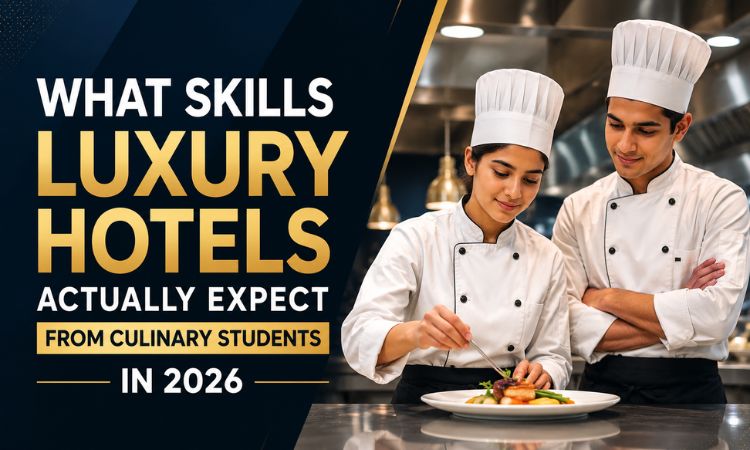

The hospitality industry is changing rapidly, and luxury hotels are no longer hiring culinary graduates based only on basic cooking knowledge. In 2026, hotels are looking for professionals who can handle fast-paced kitchen operations, maintain global hospitality standards, adapt to modern technology, and work professionally under pressure. That is why understanding what skills luxury hotels actually expect from culinary students in 2026 has become important for aspiring chefs who want to build long-term careers in premium hospitality brands.
Luxury hotels today prefer industry-ready culinary graduates who already understand kitchen discipline, teamwork, hygiene standards, and operational efficiency. From five-star resorts to international hotel chains, recruiters now evaluate both technical and behavioural skills before hiring young chefs.
Why Luxury Hotels Are Raising Hiring Standards for Culinary Students
Luxury hospitality brands are competing through guest experience more than ever before. Guests now expect consistency, presentation, hygiene, personalization, and premium dining experiences at every level. Because of this, hotel kitchens require skilled culinary professionals who can perform efficiently from day one.
Modern kitchens also operate differently compared to traditional hotel kitchens. Many luxury properties now use inventory management software, automated kitchen systems, digital recipe standardization, and sustainability-focused operations. Culinary students entering the industry are expected to understand these evolving systems alongside core cooking techniques.
Another reason hiring standards are increasing is the growing pressure on hotels to maintain international service quality while managing operational costs. Executive chefs often prefer students who can adapt quickly, reduce wastage, communicate effectively, and contribute positively to kitchen teams.
Core Culinary Skills Luxury Hotels Expect in 2026
Advanced Knife Skills and Food Preparation
Knife skills remain one of the most basic yet important requirements in professional kitchens. Luxury hotels expect culinary students to understand precision cutting techniques, ingredient handling, portion consistency, and preparation speed.
In high-volume kitchens, poor knife handling can slow down operations and affect food presentation. Students who demonstrate confidence in preparation techniques often perform better during internships and kitchen trials.
Understanding International Cuisine Standards
Global hospitality brands serve guests from different cultures and backgrounds. Because of this, hotels expect culinary graduates to have exposure to international cuisines, flavour profiles, and plating styles.
Students are not expected to master every cuisine immediately, but they should understand:
- Basic continental cooking methods
- Sauce preparation
- International kitchen terminology
- Modern plating concepts
- Buffet and à la carte operations
This knowledge helps students adapt more easily to professional hotel kitchens.
Food Presentation and Plating Techniques
Luxury dining experiences depend heavily on presentation. Executive chefs now pay close attention to creativity, portion balance, colour contrast, and plating consistency.
Even simple dishes must look refined and visually appealing in luxury hotels. Culinary students who understand plating aesthetics often stand out during practical assessments.
Food Safety and Hygiene Standards
Professional hospitality kitchens operate under strict hygiene protocols. Hotels expect students to understand:
- Food contamination prevention
- Proper storage temperatures
- Kitchen sanitation practices
- Personal grooming standards
- HACCP basics
Poor hygiene practices can damage hotel reputation and guest safety, which is why hotels prioritize disciplined kitchen behaviour during recruitment.
Time Management in Fast-Paced Kitchens
Luxury hotel kitchens operate under intense service pressure. Students must learn how to complete tasks efficiently while maintaining consistency and quality.
During peak hours, delays in one kitchen section can affect the entire service operation. Hotels value culinary graduates who can stay calm, organized, and focused under pressure.
Soft Skills That Matter More Than Ever in Hotel Kitchens
Technical skills alone are no longer enough in premium hospitality environments. Luxury hotels also evaluate communication, professionalism, and teamwork before hiring culinary students.
Communication and Team Coordination
Hotel kitchens depend on strong communication between chefs, stewards, servers, and management teams. Students must understand how to communicate clearly during busy operations.
Miscommunication in kitchens can lead to delays, incorrect orders, and operational mistakes. This is why recruiters often assess communication skills during interviews and internships.
Discipline and Professional Behaviour
Kitchen discipline remains one of the strongest indicators of long-term success in hospitality careers. Luxury hotels expect students to:
- Arrive on time
- Follow kitchen hierarchy
- Maintain cleanliness
- Respect operational procedures
- Handle feedback professionally
Professional behaviour is often valued as highly as cooking ability in hotel environments.
Ability to Handle Pressure
Luxury hotel kitchens can become extremely demanding during banquet events, weekend dining hours, or festive seasons. Students who panic easily may struggle in real operations.
Hotels prefer candidates who remain composed during pressure situations while maintaining food quality and teamwork.
Adaptability and Continuous Learning
Hospitality trends change quickly. New dining concepts, global cuisines, sustainability practices, and technology systems continue to reshape hotel kitchens.
Culinary students who show curiosity, adaptability, and willingness to learn are usually considered stronger long-term investments by employers.
Technical Skills Modern Hotel Kitchens Now Expect
Familiarity with Kitchen Technology
Technology is becoming more common in professional kitchens. Many luxury hotels now use:
- Digital inventory systems
- Smart ovens
- Automated cooking equipment
- Recipe management software
- Kitchen display systems
Students who understand modern kitchen operations may adapt faster in professional environments.
Basic Cost Control Knowledge
Hotels increasingly expect chefs to understand ingredient costing and wastage management. Culinary students should know:
- Portion control basics
- Food cost awareness
- Inventory handling
- Ingredient utilization
Reducing wastage directly affects profitability in luxury hospitality operations.
Sustainable Cooking Practices
Sustainability has become an important focus across global hospitality brands. Many hotels now prioritize:
- Local sourcing
- Reduced food wastage
- Seasonal ingredients
- Energy-efficient kitchen operations
Students who understand sustainable cooking practices may have an advantage in future hospitality careers.
What Executive Chefs Look for During Culinary Student Interviews
Luxury hotels often evaluate attitude and work ethic more than advanced technical perfection during entry-level hiring.
Practical Confidence Over Theoretical Knowledge
Executive chefs usually prefer students who can perform confidently in kitchens rather than candidates who only possess theoretical understanding.
Practical exposure helps students understand:
- Kitchen timing
- Mise en place preparation
- Team coordination
- Service operations
- Real kitchen pressure
Professional Grooming and Kitchen Etiquette
Personal presentation matters significantly in luxury hospitality environments. Students are expected to maintain:
- Proper chef uniform standards
- Clean grooming
- Organized workstation habits
- Respectful behaviour
These habits reflect professionalism and discipline.
Internship Experience and Real Kitchen Exposure
Internships provide valuable operational exposure that classrooms alone cannot offer. Students who have worked in professional kitchens usually adapt faster during hotel recruitment.
Real-world kitchen exposure also helps students understand hotel culture, guest expectations, and service standards more realistically.
Common Skill Gaps Luxury Hotels Notice in Fresh Culinary Graduates
Many hotel recruiters mention that fresh graduates often struggle with practical efficiency rather than cooking theory.
Some common gaps include:
- Weak communication skills
- Lack of kitchen discipline
- Poor time management
- Limited understanding of hotel operations
- Difficulty handling pressure situations
This is why practical culinary training has become more important than purely classroom-based learning.
How Culinary Institutes Can Help Students Meet Industry Expectations
Professional culinary institutes play an important role in preparing students for real hospitality careers. Institutes that focus heavily on hands-on learning, kitchen exposure, and industry-oriented training often help students build stronger operational confidence.
According to the official website of Chef IBCA, the institute focuses on practical culinary education, bakery and pastry training, and industry-aligned learning approaches designed to prepare students for modern hospitality careers.
Hands-on kitchen practice helps students improve:
- Speed and consistency
- Professional discipline
- Team coordination
- Kitchen workflow understanding
- Operational confidence
Learning under experienced chef mentors can also help students understand the expectations of luxury hospitality environments more realistically.
How Students Can Prepare Themselves for Luxury Hotel Careers in 2026
Students preparing for hotel careers should focus on both technical and behavioural growth.
Some practical ways to improve include:
- Practising kitchen discipline daily
- Improving communication skills
- Learning modern plating techniques
- Staying updated with hospitality trends
- Building physical stamina for kitchen operations
- Gaining internship exposure whenever possible
Students should also develop a mindset of continuous learning because hospitality is an industry that constantly evolves.
Future Trends Shaping Culinary Careers in Luxury Hotels
The future of hospitality kitchens will continue evolving with technology, sustainability, and guest experience expectations.
Some major trends influencing chef careers include:
- Technology-driven kitchens
- Sustainable dining practices
- Personalized guest experiences
- Health-focused menus
- Multi-skilled culinary roles
- Global fusion cuisine concepts
Hotels will increasingly prefer culinary professionals who combine creativity, operational discipline, and adaptability.
Conclusion
Luxury hotels in 2026 are looking for far more than basic cooking ability. They expect culinary students to understand professional kitchen operations, communication, discipline, food safety, adaptability, and modern hospitality standards. Technical expertise remains important, but attitude, consistency, teamwork, and practical confidence now play an equally important role in hotel recruitment.
As hospitality continues evolving, students who invest in hands-on culinary training, real kitchen exposure, and continuous learning will be better prepared for successful careers in luxury hotels. Choosing industry-focused culinary education can help aspiring chefs develop the practical and professional skills that modern hospitality brands truly value.
Google’s current people-first content guidelines also emphasize original expertise, real-world experience, and trustworthy information rather than generic content.