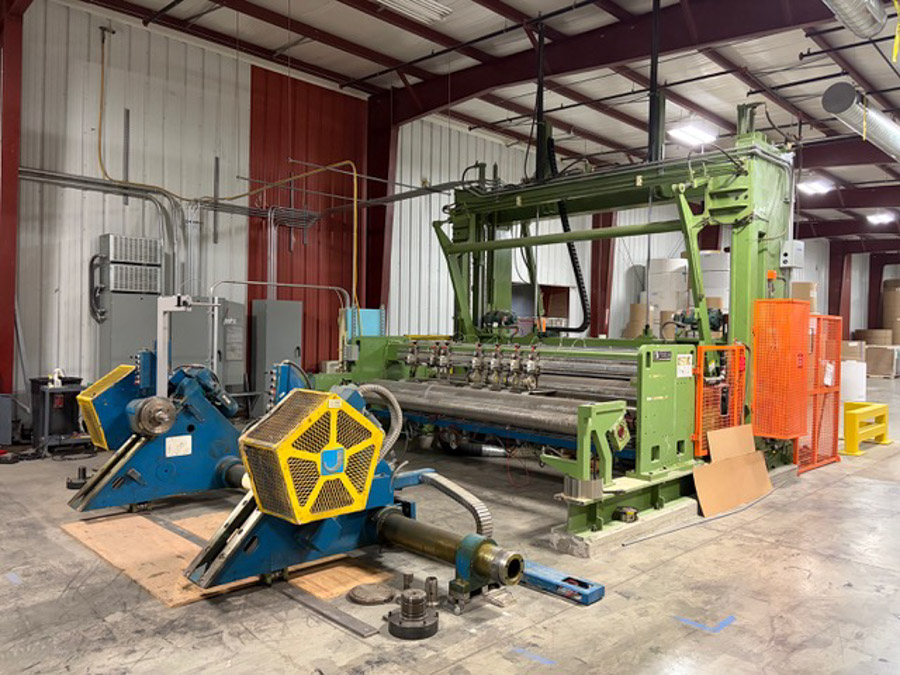

In the converting industry, selecting the right winding and slitting equipment plays a major role in production efficiency, roll quality, material handling, and overall operational performance. Manufacturers processing films, foils, laminates, paper, and flexible packaging materials often compare two popular machine configurations: two drum slitter rewinders and center surface winders.
Both systems are designed to slit and rewind material rolls, but they differ significantly in machine design, roll support, winding tension control, production speed, and application suitability.
Understanding these differences helps converters choose equipment that aligns with their production goals, material characteristics, and product quality requirements.
At Industrial Exchange, manufacturers can explore a wide range of used converting equipment designed for demanding industrial operations.
Companies searching for slitting and rewinding machinery can browse the Used Slitter Rewinder Category Page and the Two Drum Slitter Rewinder Collection for available equipment inventory.
What Is a Two Drum Slitter Rewinder?
A two drum slitter rewinder uses two driven support drums to carry and wind the slit material rolls during production.
As the material rewinds, the finished rolls remain supported by the surface of both drums, which helps maintain consistent winding tension and roll stability.
Two drum systems are commonly used for:
- Flexible packaging films
- Plastic films
- Paper converting
- Laminates
- Foil products
- Industrial web materials
These systems are widely valued for their ability to handle large roll diameters and maintain high-speed production efficiency.
Industrial converting systems such as the 134″ Wide Toschi Model 4000-3S Two Drum Slitter Rewinder – Jagenburg Unwind provide high-capacity slitting and rewinding capability for demanding converting applications.
What Is a Center Surface Winder?
A center surface winder combines both center winding and surface winding technologies.
In this configuration:
- Torque is applied through the rewind shaft core (center winding)
- Additional support and tension control are applied through surface contact rollers
This hybrid approach allows greater control over winding tension throughout the rewind cycle.
Center surface winders are commonly used for:
- Sensitive films
- Stretch materials
- Thin laminates
- Specialty foils
- High-quality converting applications
Because they provide more advanced tension management, center surface systems are often selected for materials requiring extremely precise roll formation.
Machine Configuration Differences
Two Drum Slitter Rewinder Configuration
Two drum systems use:
- Dual support drums
- Surface-driven rewind rolls
- Consistent roll support during winding
- Gravity-assisted roll stability
The rewind rolls rest directly on the two drums, which simplifies roll handling and helps maintain stable winding conditions.
Advantages include:
- Simpler mechanical design
- Excellent roll support
- High-speed capability
- Reliable operation for larger rolls
Center Surface Winder Configuration
Center surface winders use:
- Driven rewind shafts
- Surface contact rollers
- Advanced tension control systems
- More complex torque management
These systems actively control winding tension throughout the roll build process.
This design provides improved flexibility for handling delicate or highly stretch-sensitive materials.
Material Handling Capabilities
Material characteristics play a major role in determining which machine configuration is most suitable.
Two Drum Slitter Rewinders
Two drum systems are highly effective for:
- Paper rolls
- Flexible packaging films
- Laminated materials
- Foils
- Industrial packaging substrates
These systems perform especially well with:
- Medium-to-heavy materials
- Large roll diameters
- High-volume production runs
Because the rolls are continuously supported by the drums, two drum systems often provide excellent roll stability at high operating speeds.
Center Surface Winders
Center surface winders are better suited for:
- Thin gauge films
- Stretch-sensitive materials
- Delicate laminates
- Specialty converting materials
- High-precision winding applications
Their advanced tension control helps reduce defects such as:
- Wrinkling
- Telescoping
- Core crushing
- Roll deformation
This makes them ideal for highly sensitive converting applications requiring precise tension management.
Roll Quality Comparison
Roll quality is one of the most important considerations in converting operations.
Two Drum Roll Quality
Two drum slitter rewinders produce strong roll quality for many industrial applications because the dual support drums help maintain:
- Stable winding pressure
- Consistent roll density
- Uniform roll formation
These systems are widely trusted for high-volume industrial production where consistent roll build is essential.
Center Surface Roll Quality
Center surface winders offer greater tension precision throughout the rewind cycle.
This allows operators to fine-tune:
- Roll hardness
- Tension profiles
- Winding pressure
- Material compression
As a result, center surface systems may produce superior roll quality for delicate or specialty materials requiring tighter winding control.
Production Speed and Efficiency
Two Drum Slitter Rewinders
Two drum systems are known for:
- High production speeds
- Excellent roll handling stability
- Efficient large-roll processing
- Reliable continuous operation
Many large-scale converting facilities prefer two drum systems because they support fast throughput while maintaining dependable winding performance.
These systems are especially popular in:
- Flexible packaging
- Paper converting
- Industrial film production
- Foil processing operations
Center Surface Winders
Center surface winders may operate at high speeds as well, but their primary advantage is often tension precision rather than maximum throughput.
They are commonly selected when:
- Material sensitivity is critical
- Product quality requirements are extremely demanding
- Roll consistency outweighs maximum production speed
Application Suitability
Best Applications for Two Drum Slitter Rewinders
Two drum systems are commonly used for:
- Flexible packaging films
- Paper converting
- Laminates
- Industrial foils
- Packaging substrates
- High-volume production environments
These systems are ideal for facilities prioritizing:
- Production speed
- Roll stability
- Large roll handling
- Operational simplicity
- Cost-effective performance
Best Applications for Center Surface Winders
Center surface systems are better suited for:
- Thin specialty films
- Delicate laminates
- Sensitive substrates
- High-precision winding operations
- Premium converting applications
Facilities requiring maximum winding control often prefer center surface configurations.
Cost and Maintenance Considerations
Two Drum Systems
Two drum slitter rewinders often provide:
- Lower acquisition costs
- Simpler maintenance
- Easier operator training
- Reduced mechanical complexity
Because of their durable design and operational simplicity, many facilities choose used two drum systems for reliable long-term production.
Center Surface Systems
Center surface winders may involve:
- Higher equipment cost
- More advanced control systems
- Greater maintenance complexity
- Increased setup precision requirements
However, these systems may justify the additional investment for highly specialized converting applications.
Why Many Converters Choose Used Two Drum Slitter Rewinders
Used two drum slitter rewinders remain highly popular because they offer:
- Lower capital investment
- Proven industrial performance
- High-speed production capability
- Reliable roll quality
- Faster equipment availability
- Easier maintenance
For many converting operations processing films, paper, laminates, and foils, two drum systems provide an ideal balance between performance and affordability.
Final Thoughts
Both two drum slitter rewinders and center surface winders offer valuable advantages depending on material type, production goals, and product quality requirements.
Two drum systems excel in high-speed industrial converting applications requiring stable roll support and dependable large-volume production. Center surface winders provide greater tension precision for delicate materials and specialty converting operations.
Companies searching for used converting equipment can explore available machinery through Industrial Exchange, including slitter rewinders and industrial converting systems designed for demanding production environments.