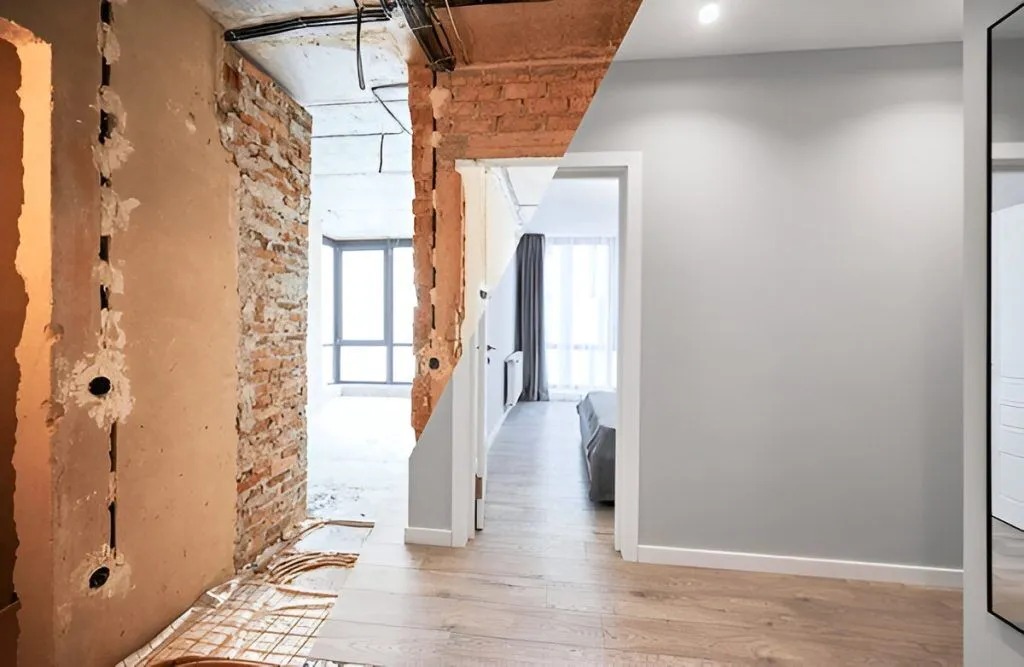

Deciding whether to sell as is or renovate the house before listing is one of the most financially significant decisions a homeowner can make. The choice impacts the sale price, timeline, stress level, and overall profit. For some sellers, speed and simplicity are the priority. For others, maximizing return is worth additional time and upfront investment. The difference between these two strategies can amount to tens of thousands of dollars.
This guide breaks down verified ROI data, realistic pricing scenarios, and market behavior insights so you can determine which strategy aligns with your goals and your local housing conditions.
Understanding Sell As Is vs Renovate House
What It Means to Sell As-Is
When you sell house as is, you list the property in its current condition without making repairs or improvements. Buyers understand that no post-inspection fixes will be negotiated. While inspections still occur, the seller’s position remains firm. Market analyses consistently show that as-is properties sell for approximately 10–20% less than comparable move-in-ready homes. Buyers factor in repair costs, uncertainty, and inconvenience when calculating offers.
This approach typically attracts investors, cash buyers, and renovation-focused purchasers seeking margin. The primary advantage is speed. Without contractor delays or renovation planning, as-is sales often close faster and with fewer complications. For homeowners relocating quickly, handling inherited property, or avoiding construction stress, this simplicity can be valuable.
What It Means to Renovate a House Before Selling
To renovate house before listing means making targeted improvements intended to increase resale value and buyer appeal. These improvements can range from cosmetic upgrades, such as paint and landscaping, to larger updates like kitchen remodels or system replacements. The goal is to present a move-in-ready property that appeals to owner-occupier buyers who prefer convenience over renovation projects.
However, renovation does not guarantee profit. Return on investment depends on renovation quality, neighborhood expectations, market timing, and overall project cost control. Strategic improvements aligned with buyer demand tend to perform better than full-scale luxury transformations that exceed neighborhood standards.
Financial Tradeoffs of Selling As-Is
Selling a home as-is eliminates upfront renovation expenses and contractor risk. There are no surprise budget overruns, no supply chain delays, and no scheduling disruptions. This predictability has tangible value for sellers prioritizing efficiency. The tradeoff is pricing. If a fully updated home could sell for $400,000 but requires $40,000 in work, investor buyers may offer between $330,000 and $350,000.
That difference reflects both repair costs and profit margin expectations. In slower markets, discounts may widen further as buyers gain negotiation leverage. Yet in high-demand areas, even properties needing updates can receive competitive offers. The profitability gap between as-is and renovated sales often narrows when inventory is limited.
Financial Tradeoffs When You Renovate House
When homeowners renovate their house before listing, they attempt to expand the buyer pool and create an emotional appeal. Updated kitchens, refreshed bathrooms, and strong curb appeal often increase perceived value and reduce time on market. Still, renovation introduces uncertainty. Unexpected structural issues, contractor delays, and fluctuating material costs can quickly erode anticipated profits.
National remodeling reports consistently show that most renovations recover between 60% and 85% of their cost, with only select projects exceeding 100% return. The most financially efficient renovations are typically visible, moderate upgrades rather than high-end overhauls. Sellers who focus on presentation rather than luxury customization often see stronger percentage returns.
Verified ROI Data
The following figures are widely referenced in annual cost vs. value reports used by real estate professionals and appraisers:
| Renovation Type | Average Cost | Avg % Value Recovered |
| Garage Door Replacement | ~$3,500 | 100%+ |
| Minor Kitchen Remodel | ~$15,000 | 80–85% |
| Exterior Paint | ~$5,000 | 50–55% |
| Landscaping Improvements | $300–1,000 | High visual ROI |
| Midrange Bathroom Remodel | ~$20,000 | 60–70% |
Smaller, high-visibility upgrades often outperform major remodels in terms of return efficiency. Sellers choosing to renovate a house should prioritize improvements that immediately enhance visual appeal and buyer confidence.
Market Conditions Shape the Outcome
Supply and demand conditions heavily influence whether to sell as-is or renovate the house. In seller-favored markets with limited inventory, buyers may compete even for properties needing work. Price discounts shrink when competition rises. In balanced or buyer-leaning markets, condition becomes a decisive factor.
Renovated homes tend to attract stronger offers and sell more quickly, while distressed properties face longer listing times and deeper negotiations. Timing, therefore, plays a crucial role. Sellers who analyze local comparable sales, average days on market, and buyer financing trends gain a clearer view of potential return.
Buyer Type Matters
Investor buyers evaluate properties based on repair costs, after-repair value, and market resale potential. Their offers are calculated and conservative. Selling as-is may be the most practical path for homes with major structural issues. Owner-occupier buyers behave differently. Families and first-time buyers often prefer move-in-ready homes to avoid renovation stress.
When cosmetic issues are the primary concern, modest updates can significantly increase competition and sales price. Understanding which buyer segment is most likely to purchase your home clarifies which strategy aligns best with market demand.
Financial Comparison Scenario
Consider the following simplified example:
Scenario A: Sell As-Is
- Retail value after renovation: $400,000
- Investor offer at 15% discount: $340,000
- Renovation cost avoided: $40,000
- Net to seller: $340,000
Scenario B: Renovate Then Sell
- Renovation cost: $40,000
- Sale price after updates: $395,000
- Net after renovation: $355,000
In this example, renovation yields an additional $15,000. However, if renovation costs increase due to delays or unexpected issues, that margin can disappear quickly. The decision depends on accurate cost estimation and realistic pricing expectations.
Key Takeaways
- Selling as-is typically results in 10–20% lower offers.
- Renovation ROI varies significantly by project type and neighborhood.
- Moderate, high-visibility upgrades outperform luxury overhauls.
- Buyer type strongly influences pricing outcomes.
- Market conditions determine how large the profitability gap becomes.
- Timeline, stress tolerance, and available capital are critical factors.
Final Take
The choice between sell as-is and house renovation is ultimately a strategic financial decision rather than an emotional one. Sellers who prioritize speed and certainty may accept lower offers in exchange for simplicity and reduced stress, while those with available capital and favorable market conditions may increase net proceeds through targeted, high-ROI upgrades.
The most profitable path comes from comparing renovation return data, obtaining realistic contractor estimates, and evaluating local buyer demand before committing to a strategy. When analysis replaces assumption, risk declines and clarity increases.
Experts like Pennington Real Estate Investments understand how market timing, property condition, and buyer behavior intersect to influence final sale outcomes. There is no universal answer, only the approach that best aligns with a seller’s financial priorities, timeline, and long-term objectives.
FAQs
1. Is it always cheaper to sell as is?
Not necessarily. While you avoid renovation costs, buyers typically offer less to account for repairs and risk.
2. What renovations add the most resale value?
Garage door replacements, minor kitchen updates, and curb appeal improvements often produce strong returns relative to cost.
3. How much less do as-is homes sell for?
In many markets, 10–20% below comparable renovated homes, depending on condition and demand.
4. Should I renovate if I need to sell quickly?
Usually no. Renovations add time and uncertainty, which can conflict with urgent timelines.
5. What if my home only needs cosmetic work?
Light updates like paint and landscaping can increase buyer appeal without heavy investment, often improving the final sale price.