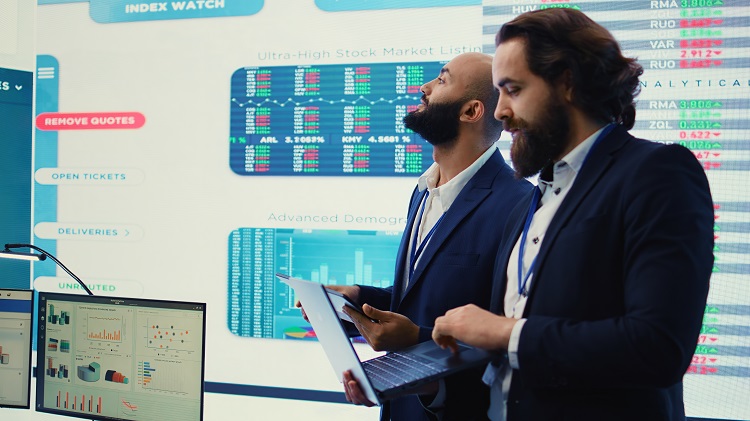

Financial markets in 2026 move faster than in previous years due to algorithmic participation, global data flow, and rising retail activity. Traders face sharper intraday swings, shorter trend cycles, and frequent liquidity shifts. In this environment, consistent profits depend on disciplined execution and structured trading methods rather than prediction-based decisions.
No single method works across all market conditions. Traders who aim for steady results rely on tested strategies, strict risk control, and repeatable rules. This article outlines practical trading strategies that market participants use in 2026 to target consistency across equities, forex, and derivatives.
Market Conditions Shaping Trading in 2026
Modern markets show three key traits that directly affect strategy performance:
First, volatility remains uneven. Markets often shift between low-volatility consolidation and high-volatility breakouts within short periods. This forces traders to adapt quickly.
Second, algorithmic trading accounts for a large share of daily volume. These systems react within milliseconds, which reduces the reliability of slow manual reaction-based entries.
Third, macroeconomic announcements and global sentiment shifts influence price action more frequently. Traders must account for scheduled news events and unexpected shocks.
These conditions reward structured strategies with clear entry and exit rules rather than discretionary trading without a framework.
Trend-Following Strategy
Trend-following remains one of the most widely used approaches in 2026. This strategy focuses on capturing sustained directional moves in price.
Traders identify an existing trend using moving averages, price structure, or momentum indicators. They then enter positions in the direction of the trend and hold until signs of reversal appear.
This method works well in strong bullish or bearish phases. However, it performs poorly during sideways markets. To manage this limitation, traders often combine trend filters with volatility filters to avoid low-quality signals.
Risk control plays a key role here. Traders typically use trailing stops to protect gains while allowing room for price movement.
Mean Reversion Strategy
Mean reversion trading assumes that price eventually returns to its average level after moving too far in one direction.
Traders using this method look for overextended price moves, often confirmed by indicators such as RSI or Bollinger Bands. When price deviates significantly from its historical average, traders take positions expecting a pullback.
This strategy works best in range-bound markets where price lacks strong directional momentum.
However, mean reversion fails during strong trends. To reduce losses, traders often avoid this strategy during high-impact news periods or breakout conditions.
Breakout Strategy
Breakout trading focuses on price movement beyond key support or resistance levels. When price breaks these levels with volume support, it often signals the start of a new trend.
Traders enter positions immediately after confirmation of the breakout or after a retest of the broken level.
This strategy performs well in volatile markets, especially when markets transition from consolidation to expansion phases.
False breakouts remain a major risk. Traders reduce this risk by using volume confirmation, multi-timeframe analysis, and tight stop-loss placement.
Pairs Trading Strategy
Pairs trading uses relative price movement between two correlated assets. Instead of predicting direction, traders focus on the price relationship between the two instruments.
When one asset moves significantly away from its historical correlation with another, traders take opposing positions. They go long on the undervalued asset and short the overvalued one.
This strategy reduces market direction risk because profit depends on convergence rather than overall market movement.
Institutional traders use this method in equity, forex, and commodity markets. It requires statistical tracking of correlation and disciplined execution.
Scalping Strategy
Scalping targets small price movements within short time frames. Traders open and close positions within minutes or even seconds.
This method requires high focus, fast execution, and low transaction costs. Traders often rely on tight spreads and high liquidity instruments.
Scalping works best during high-volume trading sessions where price movements remain frequent but controlled.
However, this strategy demands strict discipline. A few poor trades can erase multiple small gains if risk control fails.
Algorithmic and Rule-Based Trading
Algorithmic trading continues to grow in 2026. Traders use coded systems that execute trades based on predefined conditions.
These systems remove emotional decision-making and ensure consistency in execution. Rules may include entry signals, exit conditions, stop-loss levels, and position sizing logic.
Even retail traders now use semi-automated tools that execute parts of their strategy.
Success in this area depends on strategy design, backtesting, and continuous monitoring. Poorly tested systems can generate false confidence and unexpected losses.
Risk Management as the Core Element
No trading strategy works without risk control. Traders who maintain consistent performance treat risk management as a priority rather than an afterthought.
Key risk control practices include:
- Limiting risk per trade to a fixed percentage of capital
- Using stop-loss orders on every position
- Avoiding overexposure to correlated assets
- Reducing position size during uncertain market conditions
Capital preservation ensures traders remain active in the market long enough to benefit from winning periods. Without this discipline, even strong strategies fail over time.
Choosing the Right Strategy
Traders often fail when they switch strategies too frequently. Each method requires time, data, and experience to perform well.
A structured approach works better:
- Use trend-following during directional markets
- Apply mean reversion during range conditions
- Use breakout strategies during volatility expansion
- Apply pairs trading for relative value opportunities
Market conditions should guide strategy selection, not personal preference.
Traders who align their methods with market behavior maintain more stable performance over time.
Common Mistakes Traders Should Avoid
Many traders lose consistency due to repeated behavioral errors rather than flawed strategies.
Common issues include:
- Overtrading during uncertain conditions
- Ignoring stop-loss levels
- Increasing position size after losses
- Switching strategies after short-term losses
- Trading without a defined plan
Discipline separates consistent traders from inconsistent ones. A structured plan reduces emotional decision-making and improves execution quality.
Conclusion
Trading in 2026 demands structured methods, strict risk control, and adaptability to changing market conditions. No single strategy guarantees results in all environments. Instead, traders build consistency by applying the right method at the right time.
Trend-following, mean reversion, breakout trading, pairs trading, scalping, and algorithmic systems all serve specific roles. The key lies in discipline, execution, and alignment with market conditions.
Traders who maintain structure and manage risk carefully improve their chances of consistent performance over time.
Frequently Asked Questions (FAQ)
1. Which trading strategy works best for consistent profits?
No single strategy guarantees profits. Trend-following and breakout strategies often perform well in volatile markets, while mean reversion works better in sideways conditions.
2. Can beginners use these trading strategies?
Yes, beginners can start with trend-following or simple breakout methods. These strategies provide clear rules and reduce complexity.
3. How important is risk management in trading?
Risk management plays a critical role. Traders who control losses and manage position size maintain longer participation in the market.
4. What makes pairs trading different from other strategies?
Pairs trading focuses on the relationship between two assets rather than market direction. Profit comes from price convergence.
5. Do automated trading systems work better than manual trading?
Automated systems remove emotional bias and maintain discipline. However, they still require strong strategy design and regular monitoring.
6. How often should a trader change strategies?
Traders should avoid frequent changes. A strategy needs sufficient testing and consistent application before evaluation.