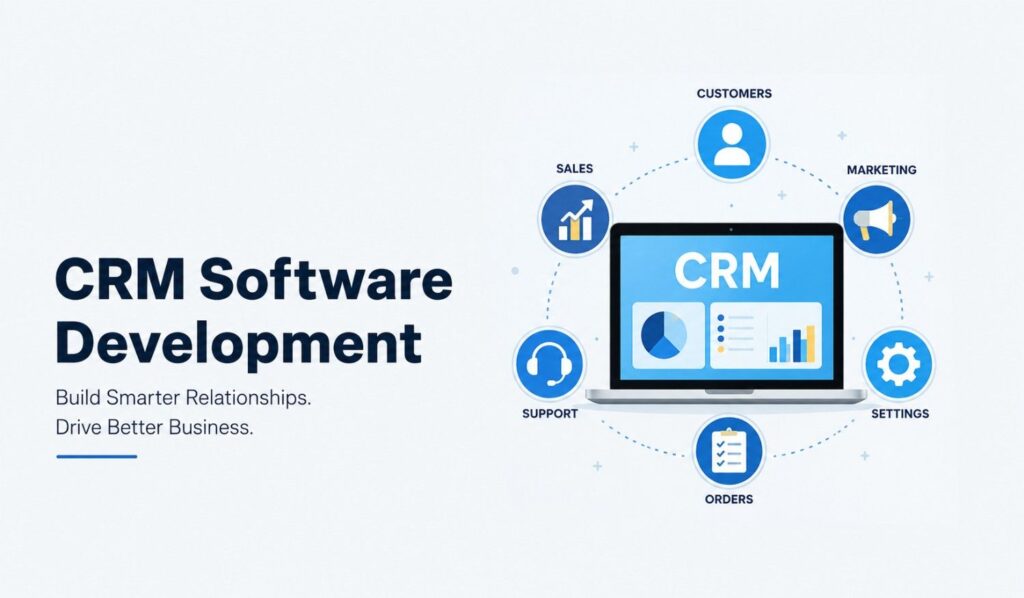

Customer relationships rarely improve through spreadsheets, sticky notes, or sales teams hunting for “that one missing client email” at 5 PM on a Friday. Businesses invest in CRM systems to organize operations, improve communication, and create smoother customer experiences. However, many projects fail long before deployment because companies focus too heavily on features while ignoring strategy. A CRM overloaded with unnecessary tools becomes the digital version of a junk drawer — everything is inside, but nobody can find anything useful. During development, avoiding common mistakes matters just as much as selecting the right technology stack or workflow structure.
Avoid Starting CRM Development Without Clear Business Goals
Many companies jump into CRM projects with enthusiasm but very little direction. One department requests automation, another wants advanced reports, while management suddenly asks for AI dashboards because “everyone else has them.” Without clearly defined business goals, development quickly becomes chaotic. Teams spend months building features that solve no real operational problem. We have seen businesses request fifteen modules before identifying their actual sales bottleneck, which usually creates confusion instead of efficiency. A successful CRM begins with understanding workflows, customer journeys, and measurable outcomes rather than collecting random feature ideas from every meeting room conversation.
Avoid Copying Another Company’s CRM System
Competitor research is useful, but blindly copying another company’s CRM setup creates more problems than solutions. Every organization operates differently, even within the same industry. A workflow designed for a large enterprise may completely overwhelm a growing business with a smaller team. Companies often assume successful software can simply be duplicated and customized later — unfortunately, “later” usually becomes expensive. One client once requested a CRM identical to a multinational corporation’s platform, despite having a five-person sales team. The result looked impressive but required a user manual longer than some college textbooks. Custom CRM systems should support business operations, not complicate them.
Avoid Ignoring End Users During Development
CRM systems are built for employees, not just executives reviewing dashboards during quarterly meetings. Sales representatives, customer support teams, and managers interact with the software daily, which makes user feedback extremely important during development. Ignoring employee input often leads to low adoption rates and endless frustration. Complicated navigation, excessive data entry, and confusing workflows quickly turn a CRM into software people avoid whenever possible. Even the most advanced platform becomes ineffective if employees prefer spreadsheets instead. Businesses sometimes prioritize visual complexity over usability, but practical design always wins. A CRM should simplify work processes, not feel like solving a puzzle before lunch.
Avoid Hiring Inexperienced Development Teams
Choosing developers based only on low pricing can become one of the most expensive business decisions later. Poor coding practices, weak architecture, and rushed implementation often create technical debt that affects operations for years. Many companies realize these issues only after performance problems begin appearing during growth stages. A reliable Kanhasoft understands scalability, integrations, user experience, and long-term maintenance requirements from the beginning. Businesses should evaluate technical expertise, communication quality, and industry knowledge before selecting a development partner. Saving money initially means very little when the CRM requires constant fixes every few months afterward.
Avoid Building a CRM Without Scalability
Businesses evolve continuously, and CRM systems should evolve alongside them. Many companies build software focused only on current requirements without considering future expansion. Initially, the platform may work perfectly for ten employees, but operational issues appear once teams grow, departments expand, or customer databases increase significantly. Scalability involves much more than adding storage space. Integrations, automation processes, reporting capabilities, and user permissions all become more complex over time. We often compare non-scalable CRM systems to buying a small office chair for a growing child — comfortable today, completely impractical tomorrow. Flexible architecture prevents costly rebuilds and operational disruptions later.
Avoid Ignoring Data Security and Compliance
Customer information remains one of the most valuable business assets, which makes security a critical part of CRM software development company. Unfortunately, many companies prioritize functionality while treating security as an optional feature added later. Weak authentication systems, poor encryption practices, and unrestricted access controls create serious risks for organizations handling sensitive customer data. Security breaches damage both finances and reputation, and rebuilding customer trust rarely happens overnight. Compliance requirements also vary across industries, making proper planning essential during development stages. Secure CRM systems should include role-based access, regular backups, data encryption, and monitoring tools designed to reduce operational vulnerabilities effectively.
Avoid Skipping CRM Integration Planning
A CRM operating separately from other business systems creates inefficiencies almost immediately. Employees begin manually transferring data between accounting software, email platforms, marketing tools, and spreadsheets — which usually leads to duplicate records and reporting errors. Integration planning should happen early during development rather than becoming an afterthought after deployment. Businesses often underestimate how connected their operations truly are until disconnected software starts slowing down daily workflows. One company described its disconnected systems as “digital office gossip” because information traveled slowly and changed slightly every time. Proper integrations improve visibility, reduce repetitive tasks, and help teams make faster operational decisions using accurate data.
Avoid Rushing the Development Process
Every business wants faster software delivery, but rushing CRM development usually creates bigger operational problems later. Limited testing, incomplete workflows, and unstable releases often result from unrealistic timelines. Businesses sometimes push for rapid deployment because competitors are launching new platforms or internal pressure increases from management. Unfortunately, software shortcuts rarely stay hidden for long. Bugs appear, employees struggle with usability, and developers spend months correcting preventable mistakes. Agile development processes help reduce these risks by encouraging gradual improvements, testing cycles, and continuous feedback. CRM systems designed carefully tend to perform better long-term than platforms rushed into production under unnecessary pressure.
Avoid Neglecting Employee Training
Even well-designed CRM systems can fail without proper employee training and onboarding. Businesses often assume software adoption happens automatically once the system becomes available, but employees need guidance, support, and time to adjust. Resistance usually increases when teams feel overwhelmed by unfamiliar processes or excessive functionality. We have noticed that some employees treat new CRM systems like complicated gym equipment — everyone stares at it cautiously while hoping someone else figures it out first. Training programs, internal documentation, and support channels improve confidence and adoption rates significantly. Long-term CRM success depends heavily on how comfortably employees can use the platform daily.
Avoid Ignoring Analytics and Reporting Needs
CRM systems collect enormous amounts of customer and operational data, but information alone has very little value without meaningful insights. Many companies focus heavily on automation while overlooking reporting capabilities during development. Weak analytics create challenges for forecasting, sales tracking, and decision-making across departments. Businesses need dashboards and reports that provide clear visibility instead of overwhelming users with unnecessary metrics. Real-time analytics help organizations identify customer behavior patterns, monitor team performance, and improve strategic planning. Companies planning to use Kanhasoft solutions often achieve stronger long-term results when reporting functionality is prioritized from the beginning rather than added later.
Why Strategic CRM Development Matters
Successful CRM software development requires much more than attractive dashboards and automation tools. Businesses must balance usability, scalability, integrations, security, and employee adoption throughout the entire development process. Ignoring these factors often creates operational inefficiencies that become expensive to fix later. Companies planning to hire CRM developer teams should focus on long-term business goals instead of chasing every trending feature appearing in software discussions online. A thoughtfully developed CRM simplifies workflows, strengthens customer relationships, and supports sustainable growth. After all, technology should reduce workplace chaos — not organize it into slightly more colorful dashboards with additional notification sounds.
Conclusion
CRM software development is not simply about adding more features or creating visually impressive dashboards. Businesses achieve stronger results when they focus on strategy, usability, scalability, and employee experience from the beginning. Avoiding common mistakes saves time, reduces operational stress, and improves long-term return on investment. Companies often believe more software automatically fixes inefficient processes, although reality tends to disagree rather loudly after deployment. The best CRM systems quietly improve workflows without demanding constant attention from employees. Thoughtful planning, experienced development, and practical decision-making ultimately create CRM platforms that support sustainable business growth instead of creating additional complexity.
FAQs
What is the biggest mistake companies make during CRM software development?
The most common mistake involves starting development without clearly defined business objectives, workflows, and user requirements.
Why is user experience important in CRM systems?
Simple and intuitive CRM systems improve employee adoption, productivity, and overall operational efficiency across departments.
How important is scalability in CRM software?
Scalability helps CRM systems handle business growth, additional integrations, larger databases, and evolving operational needs effectively.
Should businesses choose custom CRM development?
Custom CRM development works best for companies with unique workflows that standard software solutions cannot support properly.
Why should companies invest in experienced CRM developers?
Experienced developers help businesses avoid technical debt, security vulnerabilities, poor architecture, and costly redevelopment projects later.