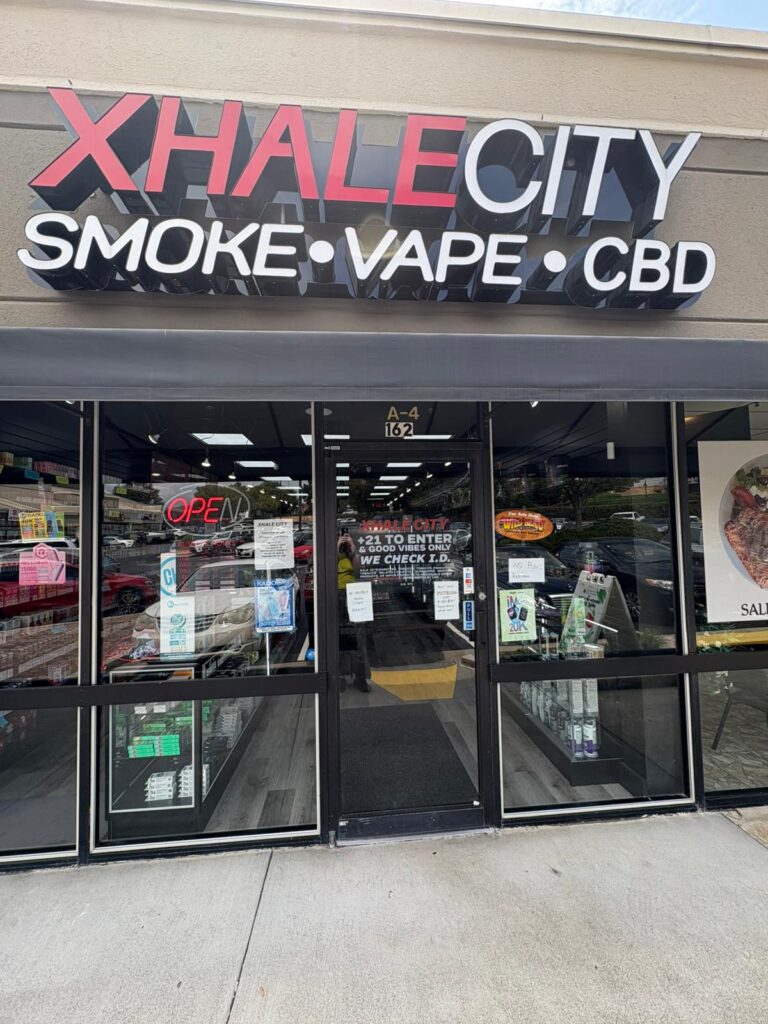

Sarah had never bought CBD before. Her sister recommended it for the low-grade tension she carried in her shoulders after long shifts at work, so she typed “CBD near me” into her phone one evening and found herself staring at a dozen storefronts scattered across Marietta, Georgia — each one promising the “best” oils, gummies, or tinctures in town.
She had no idea where to start.
That’s not a rare situation. Georgia’s hemp-derived CBD market has grown fast, and with growth comes a flood of shops, kiosks, and online listings that vary wildly in quality. Some retailers take product testing and label accuracy seriously. Others don’t. For a first-time buyer — or even someone who’s purchased CBD for years — telling the difference isn’t always obvious just by walking through the door.
This guide breaks down exactly what separates a forgettable CBD shop from one worth trusting with your money, using the same criteria experienced buyers, retailers, and industry watchdogs rely on.
Table of Contents
- Why the CBD Market in Marietta Has Gotten Crowded
- Understanding Hemp-Derived CBD Before You Shop
- The Certificate of Analysis (COA): Your Most Important Tool
- How to Actually Read a CBD Label
- Third-Party Lab Testing Explained
- Product Potency: What the Numbers Really Mean
- Ingredient Transparency and Why It Matters
- CBD Oils, Tinctures, Gummies, Topicals, and Capsules — What’s the Difference?
- Why Shopping Locally in Marietta Has Real Advantages
- Storage and Shelf Life: Protecting What You’ve Bought
- Average CBD Store vs. Trusted CBD Store: A Side-by-Side Comparison
- The Expert CBD Buyer’s Checklist
- Frequently Asked Questions
- Final Takeaway
1. Why the CBD Market in Marietta Has Gotten Crowded
Cobb County has seen a steady rise in smoke shops, vape stores, and wellness boutiques that carry CBD alongside other products. That’s not inherently a problem — but it does mean shoppers need to do more homework than they might expect.
Not every store that sells CBD specializes in it. Some carry a small selection as an afterthought, with little staff training and no clear testing documentation. Others have built their entire business model around hemp education, quality sourcing, and customer trust.
Knowing which type of store you’re walking into changes everything about the experience.
2. Understanding Hemp-Derived CBD Before You Shop
CBD, or cannabidiol, is one of more than a hundred compounds found in the hemp plant. Under federal law, hemp-derived products must contain no more than 0.3% THC by dry weight, which distinguishes them from marijuana-derived products.
That legal threshold matters because it’s the baseline every legitimate retailer should be able to document. If a store can’t show you paperwork confirming their products fall within that limit, that’s a red flag worth taking seriously.
Hemp-derived CBD comes in three primary formulations:
- Full-spectrum — contains CBD plus other cannabinoids and trace THC (within legal limits)
- Broad-spectrum — contains multiple cannabinoids with THC removed
- CBD isolate — pure CBD with no other plant compounds
None of these formulations is universally “better.” The right one depends on personal preference and what the buyer is looking for.
3. The Certificate of Analysis (COA): Your Most Important Tool
If there’s one document every CBD shopper should ask for, it’s the Certificate of Analysis. A COA is a lab report generated by an independent, third-party testing facility that verifies what’s actually inside a product.
A legitimate COA should show:
- Cannabinoid potency (confirming CBD and THC levels match the label)
- Screening for pesticides, heavy metals, and residual solvents
- Microbial and mold testing
- A batch or lot number that matches the product on the shelf
Trusted retailers make COAs easy to find — often through a QR code on the packaging or posted directly on their website. If a store hesitates when you ask for one, or can’t produce a report tied to the specific batch you’re buying, that’s worth noting before you commit to a purchase.
4. How to Actually Read a CBD Label
Labels tell a story, but only if you know what to look for. A trustworthy CBD label typically includes:
- Total milligrams of CBD per container and per serving
- The type of extract (full-spectrum, broad-spectrum, or isolate)
- A full ingredient list, not just “hemp extract”
- A batch number linking back to a COA
- Manufacturer contact information
- Suggested use and storage instructions
Vague labels — ones that list “proprietary blend” without specifics, or skip potency numbers altogether — should raise questions. Reputable brands understand that transparency builds trust, so they rarely hide behind vague language.
What a Missing Batch Number Really Means
Without a batch number, there’s no way to connect the product in your hand to any lab report. Even if a company publishes COAs online, an unnumbered product can’t be verified. This is a small detail that carries a lot of weight.
5. Third-Party Lab Testing Explained
“Third-party” is the operative phrase here. It means the lab conducting the test has no financial relationship with the brand whose product it’s analyzing. This independence is what makes the results credible.
Some companies test their own products in-house and market the results as proof of quality. While internal testing isn’t necessarily dishonest, it doesn’t carry the same weight as an independent, accredited lab’s findings. Experienced buyers specifically look for ISO-accredited third-party labs when reviewing COAs.
6. Product Potency: What the Numbers Really Mean
Potency refers to how much CBD is actually present per serving, and it’s one of the most commonly misunderstood parts of a label.
A tincture labeled “1000mg” typically refers to the total CBD content in the entire bottle — not the amount in a single dropper. Dividing the total by the number of servings gives a more accurate picture of what you’re actually consuming per use.
This matters because potency mismatches are common in the unregulated corners of the market. Independent lab testing has repeatedly found that some hemp products contain significantly more or less CBD than their labels claim, which is exactly why COAs exist — to confirm the number on the bottle matches the number in the lab report.
7. Ingredient Transparency and Why It Matters
Beyond CBD content, ingredient transparency covers everything else in the formulation — carrier oils, flavorings, preservatives, and any additional botanical extracts.
A trustworthy retailer should be able to answer basic questions like:
- What carrier oil is used in this tincture?
- Are there artificial dyes or sweeteners in this gummy?
- Is this product vegan, gluten-free, or free of common allergens?
If staff can’t answer these questions or seem unfamiliar with what they’re selling, it often signals a store that treats CBD as a side product rather than a specialty.
8. CBD Oils, Tinctures, Gummies, Topicals, and Capsules — What’s the Difference?
Understanding product formats helps buyers choose what actually fits their routine.
CBD Oils and Tinctures — Taken sublingually (under the tongue), these tend to offer more precise dosing control since buyers can adjust drop count.
CBD Gummies — A popular entry point for new users because of consistent dosing and familiar format, though onset time is slower than tinctures since they pass through digestion.
CBD Topicals — Applied directly to the skin, these are typically chosen for localized use rather than systemic effects.
CBD Capsules — Offer pre-measured, consistent dosing similar to gummies, with no flavor to consider.
None of these formats is objectively superior — the right choice depends on the individual’s preferences around convenience, taste, and dosing precision.
9. Why Shopping Locally in Marietta Has Real Advantages
Buying from a physical best CBD store Marietta GA location offers something online-only retailers can’t: the ability to ask questions in person, examine packaging and batch numbers before purchasing, and get a feel for how knowledgeable the staff actually are.
Local stores also tend to build long-term reputations within their community. A shop that’s been serving Marietta shoppers consistently, with staff who can walk through COAs and answer specific product questions, has more accountability than an anonymous online storefront with no local footprint.
That said, “local” alone isn’t a guarantee of quality — it simply gives buyers more tools to evaluate the retailer directly, which is worth taking advantage of.
10. Storage and Shelf Life: Protecting What You’ve Bought
Even a high-quality CBD product loses potency if it’s stored incorrectly. General best practices include:
- Keeping tinctures and oils away from direct sunlight and heat
- Storing gummies in a cool, dry place to prevent them from becoming sticky or degrading
- Sealing topicals tightly after use to prevent oxidation
- Checking manufacturer-listed shelf life, typically 12–18 months from the production date
A knowledgeable retailer should be willing to walk customers through proper storage at the point of sale — another small but telling sign of a store that prioritizes customer education.
11. Average CBD Store vs. Trusted CBD Store: A Side-by-Side Comparison
| Criteria | Average CBD Store | Trusted CBD Store |
|---|---|---|
| Lab Testing | Inconsistent or self-reported | Independent, third-party accredited |
| COA Availability | Difficult to find or outdated | Easily accessible, batch-specific |
| Ingredient Transparency | Vague or incomplete labeling | Full ingredient disclosure |
| Product Variety | Limited, narrow selection | Wide range of formats and formulations |
| Knowledgeable Staff | Minimal product training | Able to explain COAs, potency, and sourcing |
| Customer Support | Reactive, minimal follow-up | Proactive guidance and education |
| Store Standards | No consistent quality checks | Documented sourcing and quality control |
| Brand Selection | Few or unverified brands | Vetted, reputable brand partnerships |
12. The Expert CBD Buyer’s Checklist
Before purchasing from any CBD retailer, run through this list:
- Does the store provide a Certificate of Analysis for the specific product?
- Is the COA from an independent, third-party lab?
- Does the label list a batch number matching the COA?
- Is the full ingredient list disclosed, not just “hemp extract”?
- Can staff explain potency, formulation type, and sourcing?
- Is the product’s THC content within the legal 0.3% threshold?
- Does the store offer proper storage guidance?
- Does the retailer have an established, verifiable local presence?
If a store checks most or all of these boxes, it’s a strong sign you’re dealing with a retailer that takes quality seriously.
13. Frequently Asked Questions
What is the difference between full-spectrum and broad-spectrum CBD?
Full-spectrum CBD contains trace amounts of THC (within the legal 0.3% limit) along with other cannabinoids, while broad-spectrum CBD has THC removed but retains other plant compounds.
Why does a Certificate of Analysis matter so much?
A COA is independent verification that a product contains what its label claims and is free of contaminants like heavy metals, pesticides, or mold. Without one, there’s no way to confirm a product’s accuracy or safety.
Is CBD legal in Georgia?
Hemp-derived CBD products containing no more than 0.3% THC are legal under both federal law and Georgia state law.
How can I tell if a CBD store is reputable before visiting?
Check whether the retailer publishes COAs, lists full ingredients on packaging, and has a consistent local presence with knowledgeable staff who can answer product questions.
Does a higher price always mean higher quality?
Not necessarily. Price can reflect sourcing, extraction method, and lab testing costs, but the only reliable quality indicator is independent lab verification — not price alone.
14. Final Takeaway
Choosing a CBD retailer doesn’t have to feel like guesswork. The details that separate an average shop from a genuinely trustworthy one are consistent: independent lab testing, accessible Certificates of Analysis, transparent ingredient lists, and staff who can answer real questions instead of reciting marketing copy.
Marietta shoppers have more options today than ever before, which makes due diligence more important, not less. Taking a few extra minutes to check a COA or ask about sourcing can make the difference between a product that meets your expectations and one that leaves you uncertain about what you actually bought.