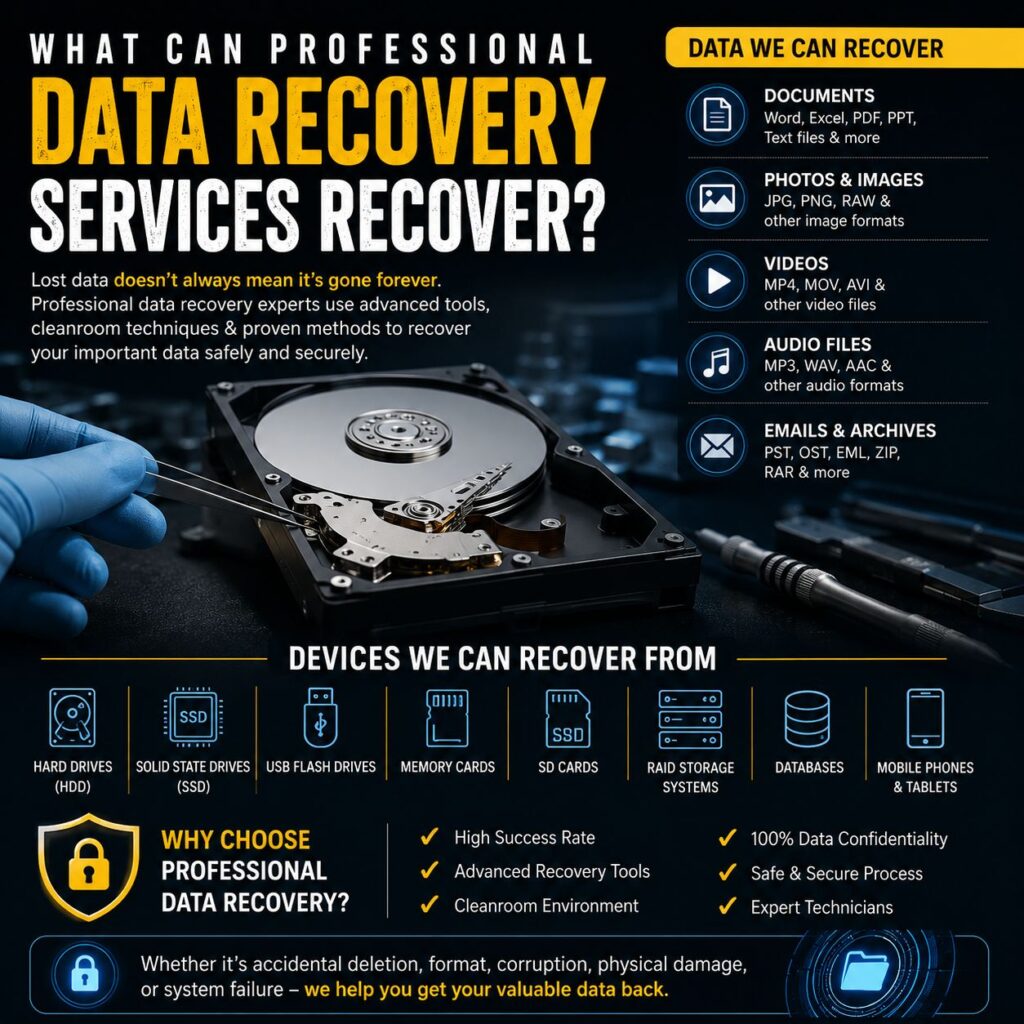

Losing important digital information can happen in seconds, but recovering it may require far more than clicking the “restore” button. Accidental deletion, device failure, corruption, formatting, malware, or physical damage can make valuable files inaccessible. In such situations, professional data recovery services can help you determine whether you can safely retrieve lost information.
From personal photographs and documents to business records and digital evidence, recovery specialists use specialised techniques to examine storage media and retrieve data wherever technically possible.
What Is Data Recovery?
Data recovery is the process of retrieving inaccessible, deleted, corrupted, or lost information from digital storage devices. The recovery approach depends on the type of device, cause of data loss, condition of the storage medium, and whether the information has been overwritten.
Professional recovery is particularly useful when conventional software cannot access the required files or when the device has suffered physical or logical damage.
What Can Professional Data Recovery Services Recover?
Deleted Files and Folders
Accidentally deleting an important document, photograph, video, or folder does not always mean the information is permanently gone. Depending on the circumstances, specialists may be able to retrieve deleted data from computers, external drives, memory cards, and other storage media.
Data from Damaged Hard Drives
Hard drives can develop mechanical faults, damaged sectors, electronic failures, or other problems that prevent normal access. A professional assessment can determine whether the drive is recoverable and which method may be appropriate.
Corrupted Files and Storage Media
File-system corruption can make an otherwise functional storage device unreadable. Recovery specialists may work with corrupted partitions, damaged file structures, and inaccessible directories to attempt retrieval of usable information.
Data from Formatted Devices
Formatting a storage device can remove access to previously stored information. Depending on how the device was formatted and whether new data has overwritten the original information, professional techniques may sometimes recover portions of the previous content.
Information from Memory Cards and USB Drives
SD cards, pen drives, and other portable storage devices can experience accidental deletion, corruption, physical damage, or formatting errors. Specialist recovery can help assess whether photographs, videos, documents, and other files remain recoverable.
Data from Computers and Laptops
Desktop computers and laptops can lose information because of operating-system failures, malware, accidental deletion, hardware faults, or damaged storage components. Professional recovery can help identify the cause and assess the possibility of retrieving important files.
Mobile and Other Digital Devices
Depending on the device, operating system, storage technology, and circumstances, specialists may be able to assist with retrieving certain types of digital information from mobile devices and other electronic media.
However, modern smartphones often use strong encryption and secure storage mechanisms, so successful recovery is never guaranteed.
Can Permanently Deleted Data Be Recovered?
The answer depends on what “permanently deleted” means in a particular situation.
When data is deleted, the underlying storage space may initially remain available until new information overwrites it. Once overwritten, recovery can become extremely difficult or impossible.
Modern solid-state drives can also use technologies such as TRIM and wear levelling, which may affect the recoverability of deleted information.
That is why acting quickly matters.
What Should You Do After Data Loss?
If important information suddenly disappears, avoid repeatedly using the affected device.
Helpful precautions include:
- Stop saving new files to the affected storage.
- Avoid unnecessary formatting or partition changes.
- Do not repeatedly restart a failing drive.
- Avoid installing recovery software onto the same storage device.
- Preserve the original device in its current condition where possible.
- Seek professional assessment if the information is important.
Attempting random recovery methods can sometimes reduce the chances of successful retrieval, particularly when physical damage is involved.
Why Choose Professional Data Recovery?
Professional recovery involves more than running a basic recovery application. Specialists can assess the storage medium, identify the likely cause of data loss, and select an appropriate recovery approach.
This can be particularly valuable for:
- Critical business documents
- Financial records
- Personal photographs and videos
- Important emails and files
- Damaged storage devices
- Accidentally deleted information
- Corrupted data
- Sensitive digital information
A professional service should also explain the likely limitations of recovery rather than promising guaranteed results.
Recover What Still Matters
Data loss does not necessarily mean your valuable information is lost forever. In some cases, a detective agency in Delhi with professional data recovery expertise can help assess whether files can be retrieved. Recovery depends on the device, extent of damage, deletion method, storage technology, and whether the original data has been overwritten.
If valuable files have disappeared or a storage device has become inaccessible, don’t experiment with uncertain recovery methods.