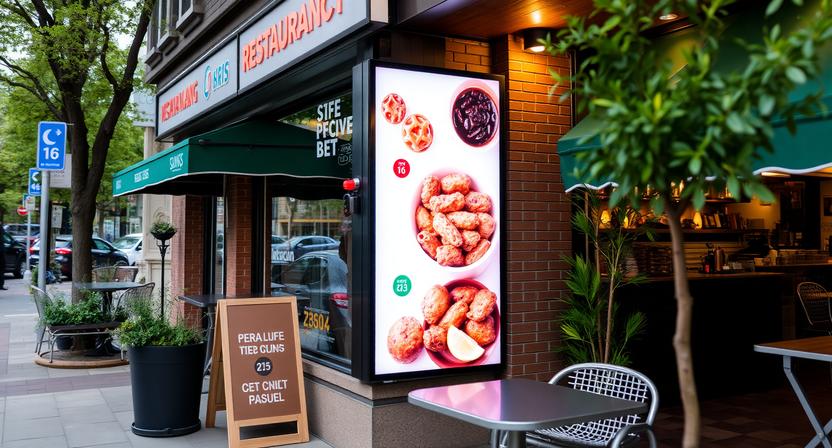

Companies in retail, hospitality, corporate, and healthcare are abandoning fixed posters and bulletin boards. The move toward digital signage solutions is a radical transformation of the way organizations convey messages to their audiences. Through the integration of clear, high-resolution displays and smart software, digital signage can provide real-time, customized, and interactive content that is instantly captivating.
Digital solutions are more flexible than traditional signs that need to be reprinted and manually updated. Content can be shown on one screen, with menu changes, wayfinding maps, social feeds, weather updates, and promotional videos all being displayed within minutes. This flexibility makes digital signage an important investment in any setting where information is time-sensitive.
What Is Digital Signage Software
Digital signage software is at the core of any successful digital signage network. This is an on-premise or cloud-based platform that enables users to create, schedule, deploy, and monitor content on various screens using a centralized dashboard. The software does not require technical skills; drag-and-drop editors, templates, and media libraries allow anyone to create professional-quality displays.
The digital signage software has the following important functions:
• Content scheduling: Schedule certain messages to be shown at specific times.
• Remote device control: Refresh displays in other locations in real time.
• Creation of playlists: Auto-loop videos and photos, as well as real-time data.
• Integration features: Pull data in real time via RSS feeds, social media APIs, and internal databases.
Digital signage hardware is merely a monitor without effective software. It is converted into a dynamic communication tool using the software.
The Major Characteristics to consider in Digital Signage Systems
When deciding on the appropriate digital signage software, it is important to consider some key features. First, a user-friendly interface is a must. If staff members find it hard to update content, the system will soon become outdated. Look for platforms that provide WYSIWYG (what you see is what you get) editors and role permissions.
Second, content variety is important. The most appropriate solutions support high-resolution videos, live web pages, PowerPoint imports, countdown timers, and touch overlays. Third, reliability and uptime matter. Enterprise-grade digital signage solutions provide automatic failover, offline playback, and 24/7 monitoring.
Proof-of-play reporting (to confirm what is aired) and audience analytics (with camera sensors to gauge engagement) are also useful features. For multi-location businesses, team collaboration and group management tools are necessary.
Digital Signage in Industry-specific applications
Different industries use digital signage software in different ways. Digital menu boards in fast food restaurants are used to change pricing and promotions in real time across all restaurants. Retail stores use digital signage to display product videos, social proof, and limited-time deals around checkout lanes.
Corporate settings use digital signage for internal communications: KPIs, employee recognition, meeting rooms, and safety reminders. Healthcare facilities depend on digital wayfinding and patient education loops to decrease interruptions for staff. Educational campuses use the technology to announce events, emergency alerts, and cafeteria menus.
The common factor is real-time control. Whether there are two screens or two thousand, digital signage solutions enable immediate response to changing conditions, whether that is weather, stock level, or breaking news.
Scalability and Hardware
Although software drives the experience, hardware makes it possible. Most digital signage systems are compatible with commercial-grade displays (16/7 or 24/7 operation), media players, and mounting. More companies are using SoC (System on Chip) displays, which can run software without external players. For outdoor signage, weatherproof enclosures and high-brightness panels are needed.
One key advantage is scalability. Start with a single screen in a lobby, measure engagement, then expand to waiting areas, break rooms, and exterior windows. Cloud digital signage software allows adding new screens by downloading an app and using a pairing code.
Digital Signage Technology Future
The next generation of digital signage software will use artificial intelligence, proximity sensors, and data-based personalization. In the near future, screens may identify demographic information about viewers (age, gender, dwell time) and modify content on the fly. Systems will connect to inventory systems to automatically remove out-of-stock items from advertisements.
Interactive features like QR code bridging to mobile phones, touchless gesture control, and live social media walls are already becoming the norm. With 5G, 4K and 8K video streaming to hundreds of screens can occur with virtually no lag.
Digital signage is no longer a luxury; it has become an operational need for organizations that must communicate in a clear, quick, and creative manner. The synergy of quality hardware and user-friendly digital signage software forms a platform that scales with business growth, providing measurable benefits through better customer experience and operational efficiency.