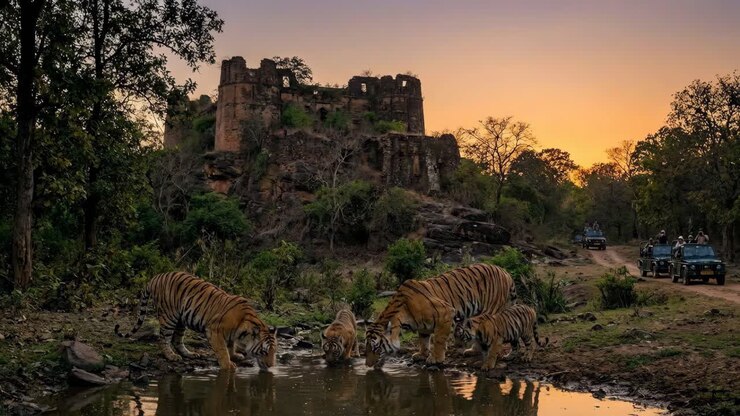

Ranthambore National Park Rajasthan is one of India’s most family-friendly tiger reserves, offering open-terrain jeep safaris, lake-edge wildlife viewing, a UNESCO-listed fort, village walks, and a natural history museum. The best safari experiences for families include the core zone jeep safari (Zones 1–5), sunrise safaris for cooler temperatures and better sightings, and Kachida Valley for quieter leopard and bird viewing. The ideal travel window for families is November to February.
There is a particular kind of silence that falls over a safari jeep the moment a child spots their first tiger. No phones, no chatter, not even a whisper, just wide eyes following stripes through dry grass. Parents who have watched this happen will tell you it is worth every hour of planning that came before it.
Ranthambore National Park Rajasthan has earned a reputation as one of India’s finest tiger reserves, but what often gets overlooked is how genuinely well-suited it is for family travel. The terrain is open rather than impossibly dense. The tigers are visible rather than rumoured. The drives are long enough to be exciting but short enough to hold a child’s attention. Beyond the safari itself, the park sits inside a landscape rich with forts, lakes, village culture, and gentler nature trails that suit grandparents and toddlers just as well as teenagers chasing their first wildlife photograph.
This guide walks through nine safari experiences at Ranthambore that work especially well for families, along with the practical details that make the difference between a stressful trip and a memorable one.
Key Facts About Family Safaris at Ranthambore National Park
- Location: Sawai Madhopur district, Rajasthan, approximately 180 km from Jaipur
- Total safari zones: 10 (Zones 1–5 are core zones; Zones 6–10 are buffer zones)
- Minimum age for safari: No official minimum; children above 5 generally engage better
- Safari duration: Approximately 3 to 3.5 hours per drive
- Best season for families: November to February
- Recommended vehicle for families: Gypsy (6-seater jeep) over Canter (20-seater)
- Number of safaris recommended: 3 to 4 across different zones
- Booking lead time (peak season): 8 to 10 weeks in advance
Why is Ranthambore National Park good for family safaris?
Ranthambore is considered one of India’s best parks for family travel because its terrain is open rather than densely forested, which means sightings of tigers, deer, and birdlife happen in clear view rather than hidden behind thick vegetation. The combination of reliable tiger activity, manageable safari durations, and nearby cultural attractions like Ranthambore Fort makes it accessible for children, parents, and grandparents alike.
1. Core Zone Jeep Safari (Zones 1 to 5)
Zones 1 to 5 are the core zones of Ranthambore National Park Rajasthan, known for the highest tiger density and most consistent sighting record in the park. These zones include Padam Talao, Raj Bagh Lake, and the base of Ranthambore Fort, making them the top recommendation for a family’s first safari.
For families, the appeal goes beyond tiger odds. The open grassland and lake-edge terrain mean that even when a tiger does not appear, children stay engaged, spotted deer grazing in herds, langurs swinging through the fort ruins, and crocodiles basking at the water’s edge keep the three-hour drive from ever feeling slow. A six-seater gypsy is the better choice here for families with young children, since it allows the guide to stop, explain, and answer the steady stream of questions that come naturally on a first safari.
Book Zone 3 or Zone 4 if you have a choice. Both combine strong tiger activity with photogenic backdrops that keep kids visually engaged even between sightings.
2. Lake-Edge Wildlife Viewing at Padam Talao and Raj Bagh
Ranthambore’s three main lakes Padam Talao, Malik Talao, and Raj Bagh Talao offer a slower-paced, water-focused safari segment ideal for younger children and grandparents who prefer a gentler pace over fast-moving tiger tracking.
Naturalists who know the park well will often plan a route that lingers along the lake edges during the cooler parts of the safari. Painted storks, herons, and openbill storks wade through shallow water. Marsh crocodiles drift motionless near the reeds. For a child who finds three hours of waiting for a tiger a little long, the lakes offer a steady stream of visible, moving wildlife that needs no patience to enjoy.
Carry a simple bird identification card or download one before the trip. Turning the lake stretch into a “spot the bird” activity keeps younger children engaged without needing binoculars or a long attention span.
3. Ranthambore Fort: A Safari Day With a Change of Pace
Ranthambore Fort is a 10th-century UNESCO World Heritage Site located inside the park, reachable by jeep or canter with free entry. It offers families a low-effort, high-reward break from safari drives, combining history, climbing, and panoramic views of the forest below.
For families doing multiple safaris over several days, a half-day visit to the fort is the perfect change of rhythm less about wildlife spotting and more about exploration, climbing, and a bit of history that keeps older children interested. Langurs patrol the courtyards, peacocks wander the temple grounds, and from the ramparts, families get a sweeping view of the lakes and forest below, often the same landscape they were driving through on safari the day before.
Visit the fort mid-morning after a sunrise safari, rather than scheduling it as a separate full day. It pairs naturally with breakfast back at the resort and an afternoon safari later.
4. Village Walks and Cultural Immersion Near the Park
Guided village walks near Ranthambore National Park Rajasthan offer families an unhurried introduction to rural Rajasthani life, including local interactions, traditional crafts, and home-cooked meals a relaxed alternative for families needing a break from early safari wake-up calls.
Wildlife is only half the story around the park. The villages surrounding the reserve resonate particularly well with children who have grown up in cities and have never seen how a working farm or a rural household actually functions. For families travelling with grandparents or very young children who may need a day off, this is a culturally rich alternative that still feels like part of the adventure rather than a forced rest day.
Ask your guide to time the village walk for late afternoon, when the light softens and the village is at its most active children playing, animals being brought in, and the day winding down.
5. Rajiv Gandhi Regional Museum of Natural History
This natural history museum near Ranthambore National Park gives children a classroom-style introduction to the region’s flora, fauna, and conservation history useful both before a first safari to build excitement, and after one to help children process what they saw.
Not every family-friendly safari experience needs to happen inside the forest. Exhibits cover the region’s ecology, the predator-prey relationships within the park, and the conservation history that brought Ranthambore’s tiger population back from the brink. For families travelling with school-age children, this stop adds an educational dimension that turns the trip into more than just an exciting few days.
Visit on a non-safari morning or during the midday break between drives, when the heat makes indoor activities the more comfortable choice anyway.
6. Kachida Valley: Leopard and Birdwatching Buffer Zone
Kachida Valley is one of Ranthambore’s buffer zones, known for leopard activity, birdwatching, and a quieter pace compared to the core zones. It is well suited to families who have already done a couple of core-zone safaris and want a slower, observation-focused experience.
This zone tends to suit older children and teenagers especially well, since the slower pace rewards patience and careful observation rather than the fast-paced excitement of a core-zone tiger chase. Sloth bears, hyenas, and raptors are all part of the regular sightings here.
Pair a Kachida Valley safari with a short nature talk from your guide about predator behaviour and ecosystem balance. Older kids tend to engage deeply with this kind of explanation once the novelty of “just seeing animals” has worn off slightly.
7. Sunrise Safari for the Best Family Photographs
A sunrise safari, departing around 6 AM, offers the most comfortable temperatures and the highest wildlife activity at Ranthambore National Park Rajasthan, making it the most rewarding choice for families wanting both strong sightings and good photographs.
Mornings at Ranthambore carry a particular kind of light soft, golden, and cool enough that even summer visits feel comfortable for the first hour or two. Animals are more active in the cooler hours, predators included, which means sighting probability is generally higher on morning drives than afternoon ones.
Dress children in light layers. Early mornings, even in warmer months, can be cool enough on an open jeep that a light jacket makes the first half hour considerably more comfortable, and it can be peeled off as the sun rises.
8. Multi-Day Safari Circuit Across Different Zones
A multi-day safari circuit at Ranthambore, typically 3 to 4 drives spread across 2 to 3 zones, gives families the best chance of a tiger sighting while exposing them to the park’s full ecological range core zones, buffer zones, lakes, and the fort.
One safari rarely tells the full story of Ranthambore National Park Rajasthan, and families who plan a single drive often leave wondering what they missed. This is where guided wildlife tours designed specifically around family pacing make a real difference. Rather than booking random permits and hoping for the best, an experienced operator structures the circuit so the family experiences variety without exhausting younger children with back-to-back early starts.
Build in at least one rest morning between safaris if travelling with children under seven. The excitement of a 6 AM wake-up loses its charm by the third consecutive day for most young kids.
9. Sunset Storytelling and Bonfire Evenings
Many resorts near Ranthambore National Park organise evening bonfires and naturalist-led storytelling sessions, giving children a relaxed space to ask questions and process the day’s sightings, an experience families often remember as much as the safari itself.
These evenings matter more than they might seem to on paper. They give children a space to talk through what they saw, ask follow-up questions in a relaxed setting, and connect emotionally with the experience rather than just collecting photographs.
Choose a resort that specifically offers naturalist-led evening sessions rather than purely entertainment-focused programming. The difference in what children retain from the trip is genuinely noticeable.
Planning Tips for a Family Safari at Ranthambore National Park
Best season for families: November through February offers the most comfortable temperatures for children and grandparents alike, with safaris remaining enjoyable rather than exhausting. March is a good shoulder month. Summer (April to June) can still work for families prepared with sun protection, but it is not the easiest season for very young children.
Choosing jeep over canter: A six-seater gypsy is almost always the better choice for families. It offers more flexibility, a quieter ride, and the ability for your guide to genuinely engage with your children’s questions.
Age considerations: There is no official minimum age for safaris at Ranthambore, but children above five generally engage with the experience far more than toddlers, who may find the three-and-a-half-hour duration restless.
Booking ahead: Safari permits at Ranthambore are limited and allocated through the Rajasthan Forest Department. For families travelling during the popular winter season, booking at least eight to ten weeks in advance is strongly advised.
What to pack: Neutral-coloured clothing, layers for cool mornings, sun protection for midday, binoculars for older children, and snacks for the drive (to be eaten outside the vehicle, never inside, per park rules).
For families exploring wildlife tours in India more broadly, Ranthambore remains one of the most accessible and rewarding starting points a destination where the logistics are well established, the sightings are genuinely strong, and the surrounding experiences give children far more than just a few hours in a jeep.
Frequently Asked Questions
Is Ranthambore National Park safe and suitable for young children?
Yes. Safaris are regulated by the Rajasthan Forest Department with fixed routes, trained guides, and strict safety protocols. There is no official minimum age, though children above five tend to engage better with the three-hour safari duration than toddlers.
What is the best time of year to visit Ranthambore National Park Rajasthan with kids?
November to February offers the most comfortable weather for families, with pleasant temperatures and strong wildlife activity. March is a good shoulder option. Summer months can work too, but require careful planning around the midday heat.
Should families choose a jeep safari or a canter safari at Ranthambore?
A jeep (gypsy) safari is generally better for families. It seats up to six people, offers more flexibility, and allows the guide to engage directly with children’s questions — something a larger, shared canter cannot easily offer.
How many safaris should a family plan for during their Ranthambore trip?
Three to four safaris across two or three different zones gives families the best balance of sighting probability and variety. A single safari often leaves visitors wondering what else the park had to offer.
What else can families do at Ranthambore besides the jungle safari?
Beyond the safari, families can visit Ranthambore Fort, take a guided village walk, explore the Rajiv Gandhi Regional Museum of Natural History, or enjoy resort evenings with bonfires and naturalist storytelling.