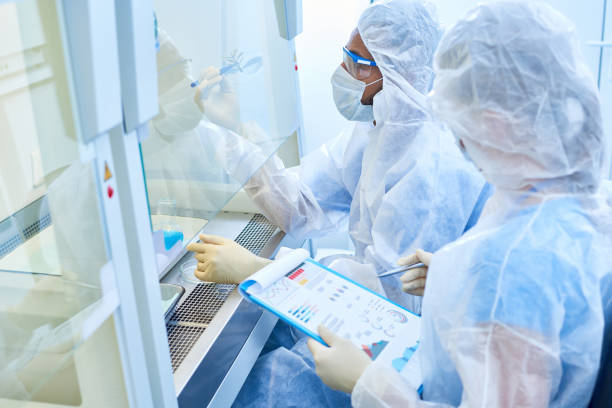

Evidence-based science rests on one core demand: claims must be testable, and tests must be trustworthy. Laboratory analysis is the mechanism that makes this possible transforming ideas and observations into measurable, verifiable evidence that can withstand scrutiny.
Turning Claims into Testable Evidence
A hypothesis is only as good as the data that supports or refutes it. Laboratory analysis provides the structured, controlled environment needed to generate that data. By isolating variables, standardizing conditions, and using calibrated instruments, labs convert vague observations into concrete measurements a compound’s exact concentration, a reaction’s precise yield, a sample’s specific composition. This precision is what allows a claim to move from speculation to something that can genuinely be evaluated.
The Role of Reproducibility
Evidence-based science depends on results holding up when someone else tries to repeat them. Laboratory protocols are written specifically to be reproducible: standardized reagents, documented procedures, calibrated equipment, and controlled environmental conditions all exist so that a different researcher, in a different lab, can run the same experiment and get comparable results. When findings replicate across independent labs, confidence in the underlying claim grows; when they don’t, it signals that something in the original claim or the method needs re-examination.
Quantifying Uncertainty
Real laboratory data is never perfectly clean. Evidence-based science requires being honest about that imperfection rather than hiding it. Statistical tools like confidence intervals, p-values, and limits of detection let researchers express not just what they found, but how certain they are of it. This turns raw lab output into evidence that can be weighed appropriately strong evidence isn’t just a positive result, it’s a positive result with a well-characterized margin of error.
Cross-Verification Across Methods
Strong evidence-based conclusions rarely rest on a single measurement. A finding confirmed by multiple independent techniques say, a compound’s identity verified separately by NMR, mass spectrometry, and X-ray diffraction carries far more weight than one from a single test alone. Laboratory analysis provides this redundancy, and it’s this convergence of independent evidence that gives scientific conclusions their durability.
From Bench to Policy
Laboratory analysis doesn’t just serve academic research it directly informs decisions with real-world consequences. Drug approvals, environmental regulations, forensic verdicts, and public health guidance all depend on laboratory data that has been generated, calibrated, and verified according to rigorous standards. When a regulatory agency sets a safety threshold for a contaminant, that number is only meaningful because it’s backed by lab analysis that can be independently checked.
Artificial Intelligence Meets the Instrument
Modern instruments increasingly pair raw data collection with machine learning models that can spot patterns humans would miss flagging anomalies in mass spectra, predicting molecular structures from partial data, or automatically classifying thousands of spectra against reference libraries. This partnership is compressing analysis time from hours to seconds and making advanced interpretation accessible to non-specialists.
Miniaturized and Field-Deployable Tools
Instruments that once required a dedicated lab room now fit in a backpack. Portable mass spectrometers and handheld spectrometers let researchers do meaningful chemical analysis in the field at a contaminated site, a crime scene, or even on another planet, as seen with the instruments aboard Mars rovers.
Multi-Omics Integration
Advanced instrumentation is also enabling the simultaneous study of genomes, proteomes, and metabolomes the full molecular profile of a biological system rather than one layer at a time. This integrated view is central to precision medicine, where treatment decisions increasingly draw on a patient’s complete molecular signature rather than a single test.
What This Means for the Future
As instruments grow more sensitive, faster, and more integrated with computational analysis, the bottleneck in scientific research is shifting — from “can we measure this?” to “what question should we ask next?” That shift is quietly redefining the pace of discovery across chemistry, biology, and medicine alike.