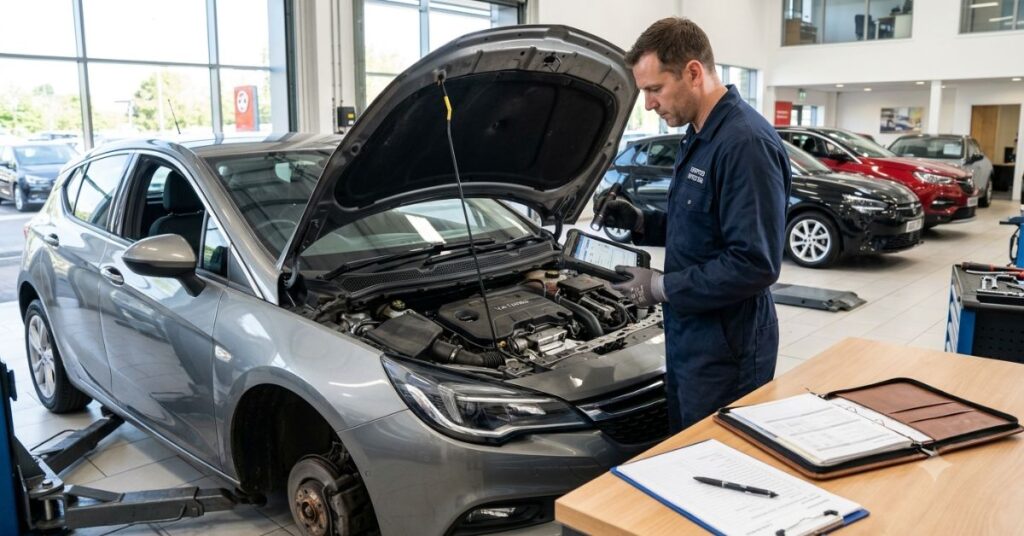

Purchasing a Vauxhall from a dealership can be an excellent way to secure a reliable vehicle with added peace of mind. Dealerships often provide warranties, vehicle history reports, and professional preparation before sale.
However, even when buying from a reputable auto dealer, conducting a thorough Vauxhall dealership inspection is essential before signing any paperwork.
Many buyers assume that dealer vehicle checks guarantee a fault-free car. While dealerships typically perform inspections, hidden issues can still exist.
A careful examination can help you avoid unexpected repair bills, identify potential safety concerns, and ensure you receive the best value for your money.
This guide explains everything you should inspect before purchasing a Vauxhall from a dealership, including mechanical components, interior features, documentation, and practical test-drive assessments.
Why a Vauxhall Dealership Inspection Matters
A dealership inspection is your final opportunity to verify the condition of the vehicle before ownership transfers to you. Whether you’re purchasing a Vauxhall Corsa, Astra, Insignia, Mokka, Crossland, or Grandland, every used vehicle deserves careful scrutiny.
Benefits of performing a detailed inspection include:
- Identifying hidden used car faults
- Confirming the dealer’s condition claims
- Preventing expensive future repairs
- Ensuring vehicle safety
- Verifying maintenance history
- Improving negotiation opportunities
Even certified used vehicles should undergo your own assessment.
Start with the Vehicle’s Exterior Condition
The exterior can reveal important clues about previous accidents, poor repairs, or inadequate maintenance.
Inspect the Paintwork
Walk around the vehicle in daylight and look for:
- Uneven paint shades
- Overspray on trim pieces
- Scratches and dents
- Bubbling or peeling paint
- Signs of rust
Mismatched paint sections may indicate previous body repairs following a collision.
Check Panel Alignment
Examine:
- Bonnet gaps
- Door alignment
- Boot lid fitment
- Bumper positioning
Uneven panel gaps often suggest accident repairs or structural damage.
Examine Glass and Mirrors
Inspect all windows and mirrors for:
- Cracks
- Chips
- Scratches
- Poor visibility
Windshield replacement can be expensive, especially if advanced driver-assistance systems require recalibration.
Evaluate the Tires Carefully
Tires can reveal how well the vehicle has been maintained.
Check for:
- Even tread wear
- Matching tire brands
- Sufficient tread depth
- Sidewall damage
- Cracks or bulges
Uneven tire wear may indicate:
- Poor wheel alignment
- Suspension issues
- Steering problems
A professional used car inspection checklist should always include tire assessment.
Perform Essential Vauxhall Mechanical Checks
Mechanical reliability is one of the most important aspects of any Vauxhall dealership inspection.
Inspect the Engine Bay
Open the bonnet and look for:
- Oil leaks
- Coolant leaks
- Damaged hoses
- Loose wiring
- Corrosion around battery terminals
The engine bay should appear maintained but not excessively cleaned to hide leaks.
Check Engine Oil
Remove the dipstick and inspect:
- Oil level
- Oil color
- Metal particles
Very dirty oil may indicate poor servicing practices.
Inspect Coolant Levels
Coolant should:
- Be between minimum and maximum marks
- Have a clean appearance
- Show no signs of oil contamination
Milky residue may indicate serious engine problems.
Battery Condition
Check for:
- Corrosion
- Loose terminals
- Warning lights on startup
Battery replacement costs can quickly add up.
Review the Vehicle’s Service History
A complete service history is often a strong indicator of proper maintenance.
Request records showing:
- Annual servicing
- Oil changes
- Brake maintenance
- Timing belt replacement
- MOT history
For many Vauxhall models, timing belt replacement is critical. Failure to replace it at recommended intervals can result in severe engine damage.
Ask the dealer for:
- Service invoices
- Maintenance records
- Inspection reports
Inspect Brakes Thoroughly
Brakes are among the most important safety systems.
Visual Brake Inspection
Look for:
- Excessively worn brake discs
- Deep grooves
- Rust buildup
- Thin brake pads
During the Test Drive
Pay attention to:
- Brake responsiveness
- Pedal feel
- Pulling to one side
- Grinding noises
- Vibrations
Any abnormal behavior warrants further investigation.
Check Suspension and Steering Components
Suspension problems can affect safety, comfort, and handling.
Inspect for:
- Uneven vehicle height
- Excessive bouncing
- Knocking sounds
- Leaking shock absorbers
During your test drive:
- Drive over uneven surfaces
- Listen for rattles
- Check steering responsiveness
These Vauxhall mechanical checks can reveal expensive issues before purchase.
Examine the Interior Condition
The interior often reveals how previous owners treated the vehicle.
Seats and Upholstery
Check for:
- Tears
- Stains
- Excessive wear
- Broken seat adjustments
Dashboard and Controls
Verify operation of:
- Infotainment system
- Climate control
- Navigation system
- USB ports
- Steering wheel controls
Warning Lights
Before starting the engine:
- Turn ignition on
- Confirm all warning lights illuminate
- Ensure they disappear after startup
Persistent warning lights may indicate unresolved faults.
Test Every Electronic Feature
Modern Vauxhall vehicles include numerous electronic systems.
Inspect:
- Electric windows
- Mirrors
- Central locking
- Parking sensors
- Reverse camera
- Heated seats
- Heated windscreen
- Cruise control
- Automatic headlights
Electronic repairs can be surprisingly expensive.
Conduct a Comprehensive Test Drive
One of the most valuable test drive inspection tips is to drive the vehicle under varied conditions.
Start with a Cold Engine
A cold start often reveals issues hidden when the engine is already warm.
Listen for:
- Rattles
- Tapping noises
- Excessive smoke
City Driving
Assess:
- Gear changes
- Clutch operation
- Steering response
- Brake performance
Motorway Driving
Evaluate:
- Stability
- Engine performance
- Wind noise
- Vibrations
Parking Maneuvers
Check:
- Steering smoothness
- Parking sensors
- Reverse camera functionality
Never skip the test drive during a Vauxhall dealership inspection.
Look for Hidden Used Car Faults
Some issues are not immediately obvious.
Common hidden used car faults include:
Water Damage
Signs include:
- Damp carpets
- Mold smell
- Rust under seats
- Electrical issues
Accident Repairs
Watch for:
- Inconsistent paint texture
- Welding marks
- New components among older parts
Odometer Concerns
Verify mileage consistency through:
- Service records
- MOT history
- Vehicle condition
Excessive wear compared to mileage can be a warning sign.
Verify Vehicle Documentation
Before signing any agreement, ensure documentation is complete.
Request:
- V5C registration document
- MOT certificate
- Service history
- Warranty details
- Vehicle history report
Confirm:
- VIN matches paperwork
- Registration numbers match
- Mileage records are consistent
Accurate documentation protects your investment.
Review the Dealer Warranty
Many dealerships provide warranties with used Vauxhall vehicles.
Review:
- Coverage period
- Covered components
- Claim process
- Exclusions
- Repair limits
Do not assume every fault is covered.
Understand Dealer Vehicle Checks
Most dealerships perform pre-sale inspections.
Ask for details regarding:
- Brake inspections
- Tire assessments
- Engine diagnostics
- Fluid checks
- Safety inspections
Request written evidence whenever possible.
A transparent dealership should willingly provide inspection records.
Consider an Independent Inspection
For higher-value purchases, an independent inspection may be worthwhile.
Benefits include:
- Unbiased assessment
- Professional diagnosis
- Hidden fault detection
- Stronger negotiation position
This extra step can potentially save thousands in future repairs.
Final Checklist Before Signing
Use this quick used car inspection checklist before completing your purchase:
Exterior
- Paint condition checked
- Panel alignment verified
- Glass inspected
Tires
- Tread depth measured
- Wear pattern examined
Engine
- Oil inspected
- Coolant checked
- Battery evaluated
Interior
- Electronics tested
- Warning lights verified
Test Drive
- Engine performance assessed
- Brakes tested
- Steering evaluated
Documentation
- Service history reviewed
- VIN verified
- Warranty understood
Conclusion
A thorough Vauxhall dealership inspection can significantly reduce the risk of buying a problematic vehicle. While dealerships often perform dealer vehicle checks before offering a car for sale, buyers should never rely solely on those inspections.
By carefully reviewing the vehicle’s exterior, conducting detailed Vauxhall mechanical checks, following proven test drive inspection tips, and looking for hidden used car faults, you can make a confident purchasing decision.
Taking the time to inspect the vehicle before signing could save you from unexpected repair costs and ensure your next Vauxhall provides years of dependable driving.
FAQ’s
- What is a Vauxhall dealership inspection?
A Vauxhall dealership inspection is a detailed assessment of a Vauxhall vehicle’s condition before purchase, including mechanical, cosmetic, and documentation checks.
- Why should I inspect a Vauxhall at a dealership?
Even dealer-inspected vehicles may have hidden problems. Conducting your own inspection helps identify issues before committing to the purchase.
- What should be included in a used car inspection checklist?
A checklist should cover the exterior, tires, engine, brakes, suspension, electronics, interior, service history, and documentation.
- Are dealership vehicle checks always reliable?
Most dealerships perform professional inspections, but buyers should independently verify the vehicle’s condition.
- What are the most important Vauxhall mechanical checks?
Key checks include engine oil, coolant levels, battery condition, brakes, suspension, steering, and transmission performance.
- How long should a test drive last?
A proper test drive should last at least 20–30 minutes and include city roads, highways, and parking maneuvers.
- What hidden used car faults should I look for?
Common hidden faults include water damage, accident repairs, electrical issues, suspension wear, and mileage discrepancies.
- How can I verify a Vauxhall’s service history?
Request service records, invoices, MOT history, and maintenance documentation from the dealership.
- Is an independent inspection worth the cost?
Yes. Independent inspections can uncover problems that may not be visible during a standard dealership review.
- What documents should I check before signing?
Review the V5C registration document, MOT certificate, service history, warranty paperwork, and vehicle history report.
- Should all dashboard warning lights turn off after startup?
Yes. Most warning lights should illuminate briefly during startup and then switch off. Persistent lights may indicate faults.
- Can tire wear indicate hidden mechanical issues?
Yes. Uneven tire wear may signal wheel alignment, suspension, or steering problems that require further investigation.