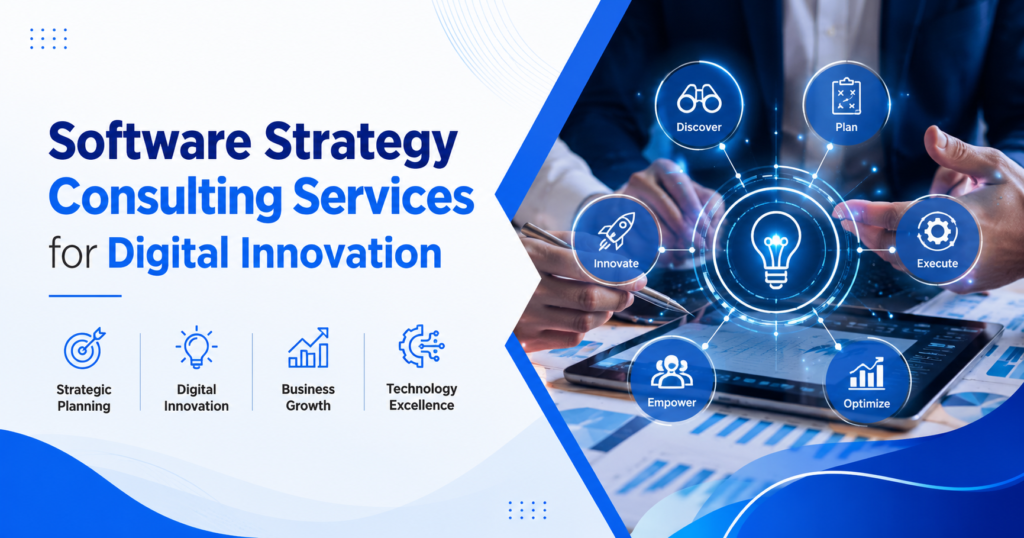

Every business owner eventually hits the same wall — the moment when the spreadsheets, legacy tools, and patchwork systems that once got the job done start slowing everything down instead. It’s rarely a dramatic collapse. More often it’s a slow accumulation of inefficiencies: a sales team re-entering the same data three times, a warehouse system that can’t talk to the accounting software, a product idea that dies in committee because nobody can agree on the right technology approach. This is usually the point where owners realize they don’t need another developer or another tool — they need a strategy. And that’s precisely the gap that thoughtful, business-first consulting is built to close.
The Real Problem With “Just Building Something”
Most technology failures don’t happen because the code was bad. They happen because nobody stepped back and asked whether the right thing was being built in the first place. A business owner under pressure to modernize often jumps straight to hiring developers or buying software licenses, skipping the harder question of what problem is actually worth solving and in what order. This is where strategic thinking earns its value — not by writing code faster, but by making sure the code being written actually moves the business forward. Companies that skip this step tend to end up with expensive systems nobody uses, while those that invest time upfront in planning see far higher returns on every dollar spent afterward.
- Misaligned priorities lead to tools that solve the wrong problem
- Rushed technology decisions create costly rework within a year or two
- Teams without a shared roadmap end up duplicating or contradicting efforts
- Poor sequencing of projects delays the return on technology investment
- Lack of measurable goals makes it impossible to judge if a project succeeded
What Software Consulting Services Bring to the Table
At its core, working with software consulting services means gaining access to people who’ve already seen the mistakes other companies made — and who can help you avoid repeating them. Rather than diving straight into execution, a consulting engagement typically starts with understanding your business model, your customers, your existing tech stack, and the operational bottlenecks that are actually costing you money. From there, the consultants map out a plan that’s realistic given your budget, timeline, and team capacity, instead of recommending the flashiest technology just because it’s trendy. This outside perspective is often what internal teams, too close to daily operations, simply can’t provide on their own.
- Independent assessment of your current systems and processes
- Prioritized roadmaps based on business impact, not just technical interest
- Vendor-neutral recommendations free from internal politics or bias
- Risk identification before money is spent on execution
- Change management guidance to help teams adapt to new systems
Why Software Consulting Services India Has Become a Global Go-To
Geography has quietly become one of the smartest variables in a business owner’s technology strategy, and this is exactly why software consulting services India has grown into such a trusted category worldwide. It’s not simply about lower costs, though that remains a real advantage — it’s about access to a mature talent pool that has spent decades solving problems for global clients across finance, healthcare, retail, and manufacturing. Indian consulting firms have built reputations on combining strong technical depth with practical business sense, often delivering the kind of end-to-end thinking that smaller regional firms elsewhere struggle to match. For business owners weighing where to find a long-term technology partner, this combination of experience, scale, and cost efficiency is difficult to ignore.
- Access to a large, experienced pool of technical and strategic talent
- Competitive pricing without compromising on delivery quality
- Established track record serving clients across multiple time zones
- Strong process maturity from years of enterprise-level engagements
- Flexible engagement models, from short advisory projects to long-term partnerships
Going Beyond Generic Advice: Custom Software Consulting Services
Generic advice rarely solves specific business problems, and this is exactly why custom software consulting services exist — because your operational reality, customer base, and internal constraints are never identical to anyone else’s. A consulting firm that hands you the same recommendations they gave their last three clients isn’t really consulting; they’re templating. True custom engagements start by digging into the specific friction points unique to your business, whether that’s an outdated inventory system, a fragmented customer database, or workflows that were never designed to scale past a certain team size. The output isn’t a generic playbook — it’s a plan built around your actual constraints, your actual customers, and your actual growth goals.
- Deep-dive discovery sessions to understand your unique operational challenges
- Solutions tailored to your industry, team size, and existing infrastructure
- Flexibility to adjust recommendations as your business priorities shift
- Direct involvement of your team in shaping the final strategy
- Avoidance of one-size-fits-all software recommendations
AI Strategy & Consulting: Making Sense of the Hype
Few areas confuse business owners more right now than artificial intelligence, and that confusion is exactly why AI Strategy & Consulting has become one of the fastest-growing consulting categories in the last two years. Everyone seems to be racing to “add AI” somewhere, but very few are asking whether it actually solves a real problem for their specific business or whether it’s just noise chasing a trend. A sound AI strategy starts by identifying where automation or intelligence could genuinely reduce cost or improve decision-making, and just as importantly, where it shouldn’t be applied at all because the data isn’t ready or the use case doesn’t justify the investment. Business owners who approach AI with this kind of grounded thinking end up with tools that actually get used, rather than expensive pilot projects that quietly get abandoned.
- Identifying high-impact, low-risk use cases before scaling AI investment
- Evaluating data readiness before committing to AI-driven initiatives
- Balancing build-versus-buy decisions for AI tools and platforms
- Setting realistic expectations around accuracy, cost, and timelines
- Building internal capability so teams aren’t dependent on external vendors long-term
Turning Strategy Into Reality Through Software Development Services
A strategy document, however well-researched, is only as valuable as the execution that follows it, which is where software development services come into play as the natural next step after consulting. This is the phase where roadmaps become working products — where the prioritized list of initiatives turns into actual applications, integrations, and platforms that your team uses every day. The strength of this phase depends heavily on how well it stays connected to the original strategy; too often, development teams operate in isolation from the strategic thinking that preceded them, leading to a gap between what was planned and what actually gets built. The businesses that see the best outcomes are the ones that keep strategy and development tightly linked throughout the entire project lifecycle.
- Agile development cycles that allow for course correction along the way
- Continuous alignment between business goals and technical execution
- Quality assurance processes to catch issues before they reach end users
- Post-launch support to handle bugs, updates, and scaling needs
- Clear documentation so future teams can maintain and extend the system
Digital innovation isn’t really about chasing the newest technology trend — it’s about making deliberate, well-informed decisions about where to invest limited time and money for the biggest possible return. Business owners who treat strategy and execution as two halves of the same process, rather than separate transactions, consistently end up with systems that actually work for their teams and their customers. Whether you’re just starting to modernize outdated processes or you’re deep into an AI transformation, the right consulting partner can be the difference between years of trial and error and a clear, confident path forward. The technology landscape will keep shifting, but a solid strategic foundation is what allows a business to adapt to that change instead of constantly scrambling to catch up.