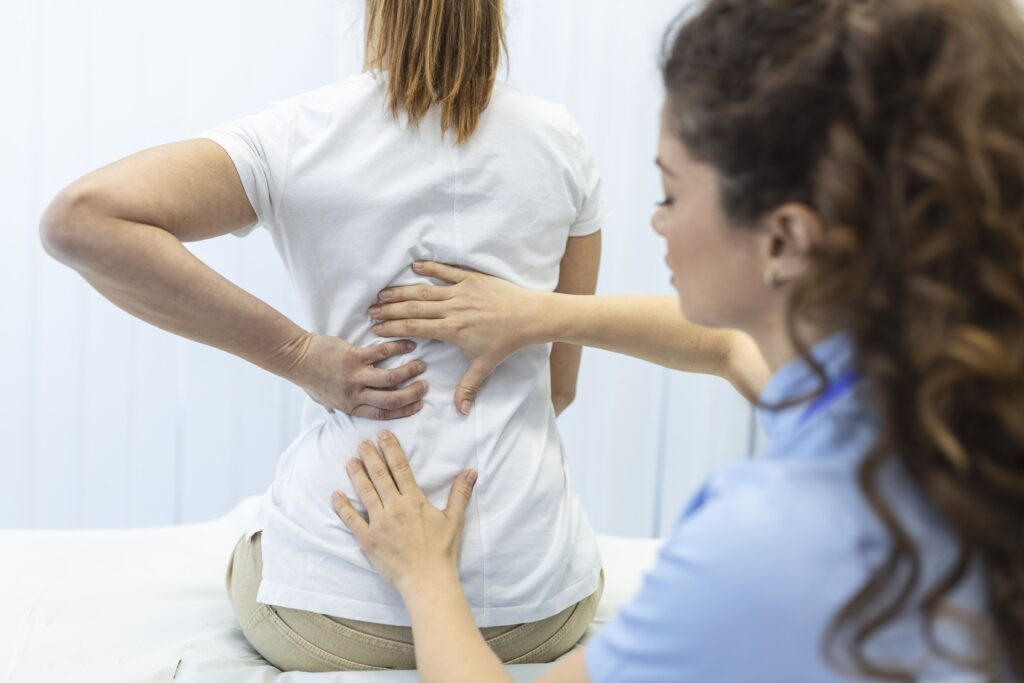

Hearing the words “slip disc” can make surgery feel like an inevitable next step, but that’s rarely the case. Most patients recover fully without ever going under the knife, and knowing the full range of treatment options makes it much easier to move forward calmly and confidently rather than assuming the worst.
Starting With Conservative Care
For most patients, treatment begins with a non-surgical approach aimed at calming inflammation and getting movement back on track.
- Physiotherapy and guided stretching routines
- Anti-inflammatory medicines to manage discomfort
- Adjusting daily activities to avoid further strain
- Epidural steroid injections for stubborn nerve pain
- Correcting posture and improving workstation ergonomics
These measures are rarely used in isolation. In most cases, doctors combine two or three of them at once, adjusting the mix as the patient’s response becomes clearer over the following weeks.
How Long Conservative Treatment Takes
Many patients start feeling noticeably better within six to eight weeks of sticking to a consistent care routine, and research shows that as many as 90% of lumbar disc cases settle down without ever needing surgery. Consistency matters here more than intensity — patients who follow through with physiotherapy and posture changes tend to see steadier improvement than those who only rely on medication.
Matching Treatment to Slip Disc Type
How quickly someone recovers, and which approach works best, often comes down to the Types of Slip Disc involved. A minor bulge tends to respond well to physiotherapy alone, whereas a fragment that has separated from the disc may need closer observation or an earlier look at surgical options. This is why an accurate diagnosis at the outset shapes almost every decision that follows.
Recognising Where Symptoms Point
Keeping an eye on the Top 5 Slip Disc Pain Areas gives both patients and doctors a useful way to track whether conservative treatment is doing its job, or whether nerve pressure is quietly getting worse. A shift in where the pain is felt, or a change from dull ache to sharp, shooting pain, is often the first clue that a treatment plan needs revisiting.
Warning Signs That Need Prompt Attention
Losing control of the bladder or bowel, leg weakness that’s getting worse quickly, or pain that simply won’t ease up are not symptoms to wait out at home — they call for immediate medical attention, since they can point to significant nerve compression.
When Surgery Becomes Necessary
Surgery usually enters the conversation only when conservative treatment hasn’t helped after several weeks, or when nerve damage is more serious. Thanks to modern, minimally invasive surgical techniques, recovery is far quicker today than with traditional open procedures, and many patients are back to light activity within just two to four weeks. Even then, surgery is approached as a targeted, last-resort step rather than a default response to a slip disc diagnosis.
Making an Informed Decision
Turning to the Best Slip Disc Doctor in Delhi means any decision about surgery is grounded in detailed imaging, proper nerve testing, and a straightforward conversation about the risks and benefits, never rushed or pushed. Patients are encouraged to ask questions and understand every alternative before committing to a particular path.
Supporting Long-Term Spinal Health
- Keep up core-strengthening exercises well after recovery
- Stay at a healthy weight to ease pressure on the spine
- Make safe lifting habits a permanent part of daily life
- Book periodic check-ins if symptoms ever return
- Steer clear of long stretches of inactivity, which weaken supporting muscles
These habits matter just as much after treatment ends as during it, since a healthy spine depends on ongoing care rather than a single course of therapy.
Slip disc recovery rarely moves in a straight line, but with a thoughtful mix of conservative care, ongoing monitoring, and surgery only when it’s truly needed, the vast majority of patients get back to an active, pain-free life.
Best Spine Surgeon in Delhi- Dr. Amit Kumar Shridhar continues to help patients navigate both non-surgical and surgical recovery journeys with clarity and care.