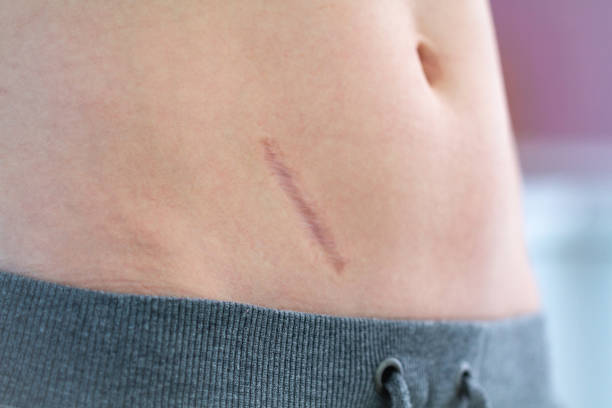

While laser technology is the gold standard for surface texture, certain marks—such as deep surgical scars, wide “stretched” scars, or prominent keloids—require a more direct structural intervention. Choosing surgical Scar Removal in Dubai involves a process known as “Scar Revision,” where the old, irregular scar tissue is physically removed and the skin is meticulously re-joined. In clinical settings, the goal is not just to “cut out” the scar, but to replace a bulky or unsightly mark with a fine, thin, and strategically placed line that follows the natural tension folds of the skin. This approach is often the most effective for scars that have become “contracted” or those that restrict physical movement.
When is Surgical Excision Better Than Laser?
In clinical settings, we observe that lasers have limits when dealing with significant volume or structural distortion. Surgery becomes the primary recommendation in specific scenarios.
The clinical indications for surgical revision include:
-
Hypertrophic Scars: Raised, thick scars that have not responded to steroid injections or silicone sheets.
-
Contracture Scars: Scars that have “shrunk” the skin, often following a burn, making it difficult to move a joint or limb.
-
Wide, Depressed Scars: Scars that have stretched over time (common on the back or shoulders) and require the edges to be brought back together.
-
Complex Shapes: Scars that are jagged or irregular and need to be “re-aligned” to match the natural contours of the face or body.
-
Keloid Removal: Large keloids that require total excision followed by immediate preventative therapy to stop regrowth.
What are the Actual Pain Levels During Surgical Revision?
The idea of “surgery” often triggers anxiety about pain, yet the localized nature of scar revision makes it a surprisingly comfortable experience.
Does surgical scar removal hurt?
The procedure is typically performed under local anesthesia, similar to a dental filling. After the initial “pinch” of the numbing injection, you will feel absolutely no sharp sensations. Based on post-procedure follow-ups, patients describe the feeling during surgery as “tugging” or “pressure.” After the anesthesia wears off, the pain is rated at a 2/10—a mild dull ache that is easily managed with standard over-the-counter pain relief. Most patients report that the “tightness” of the new stitches is more noticeable than any actual pain.
Real Patient Sensations During the Healing Process
Surgical recovery involves a physical sensation of “repair” that differs from the “burning” feeling of a laser treatment.
What should I expect the scar to feel like after surgery?
During the first 48 hours, the area will feel “firm” and slightly tender to the touch. Around day 5 to 7, as the skin begins to knit back together, a common sensation is a “deep itch.” This is a clinical sign of healing nerves and tissue. In clinical settings, we advise patients that the scar may feel “numb” or “sensitive” for several weeks. By the time the stitches are removed (usually 7 to 14 days later), the skin feels much more flexible, and the initial “pulling” sensation subsides.
Realistic Expectations: Will the Scar Disappear Completely?
It is vital to understand that a surgeon cannot “delete” a scar; they can only “revise” it into a much more favorable version.
What does a successful surgical scar revision look like?
Based on clinical observation, a successful revision results in a scar that is:
-
Flatter: The raised or “pitted” volume is leveled with the surrounding skin.
-
Thinner: A wide, 1cm scar might be reduced to a hairline width of 1mm.
-
Better Positioned: The scar is moved into a natural skin crease or shadow.
-
More Flexible: The “tight” feeling of a contracture scar is released, restoring full range of motion. While the line will initially be pink, it will fade to a pale white over 12 months, eventually becoming almost imperceptible to the casual observer.
Safety Considerations: The Risk of Recurrence
The primary clinical risk with surgical excision, especially for keloids, is that the body may try to “over-heal” the area again.
Who is at risk for complications after surgical removal?
-
Keloid-Prone Individuals: Those with a history of keloids have a 50-80% chance of the scar returning if surgery is not combined with “adjuvant” therapies like steroid injections or superficial radiation.
-
High-Tension Areas: Scars on the chest, shoulders, or upper back are prone to stretching again because the skin in these areas is constantly moving.
-
Smokers: Nicotine significantly impairs blood flow to the new incision, which can cause the wound to “dehisce” (open up) or heal with a wider scar.
-
Sun Seekers: Exposing a fresh surgical scar to the Dubai sun too early can cause permanent darkening (hyperpigmentation) of the line.
Why Choose Tajmeels Clinic for Surgical Scar Revision?
At Tajmeels Clinic, our surgical approach is rooted in “Micro-Precision.” We understand that the way a wound is closed determines the final look of the scar. Our surgeons utilize “Sub-Cuticular” suturing techniques, placing the stitches under the skin so there are no “track marks” from the thread. Our approach to Scar Removal in Dubai often involves a “Hybrid Protocol”—performing the surgical excision first, then following up with laser treatments once the wound has healed to “blur” the edges of the new line. By choosing Tajmeels Clinic, you are accessing a team that combines surgical artistry with advanced wound-care technology to give you the cleanest possible result.
Genuine Patient Perspectives
“I had a thick, raised scar on my arm from a childhood accident. I tried every cream and two laser sessions with no luck. The surgery at Tajmeels was so quick—only 45 minutes. Now the ‘bump’ is totally gone, and I just have a very thin, flat line that is getting lighter every day.” — Laila K.
“I was worried that cutting the scar would just make a bigger one. But the surgeon explained how they’d hide the new line in my skin’s natural fold. The stitches didn’t even hurt, and the relief of finally getting rid of that hard, tight tissue was immediate.” — Christopher W.
Frequently Asked Questions
How long do the stitches stay in?
For the face, stitches are usually removed in 5 to 7 days; for the body, they may stay in for 10 to 14 days to ensure the wound is strong.
Can I exercise after surgical scar removal?
You should avoid heavy lifting or “stretching” the area for at least 3 to 4 weeks to prevent the new, delicate scar from widening.
Will the surgery leave a “railroad” stitch mark?
No, modern plastic surgery techniques use internal, dissolvable stitches or very fine external sutures to avoid the “railroad” appearance.
Can I have surgery and laser on the same day?
No, you must wait until the surgical site is fully healed (usually 3 months) before using a laser to further refine the texture.
Does insurance cover surgical scar removal?
If the scar is “functional” (limiting movement) or resulting from a previous surgery/accident, some insurance providers may cover it.
How do I stop the scar from coming back?
We often use silicone gel sheets or pressure garments for several months post-surgery to keep the new scar flat and soft.