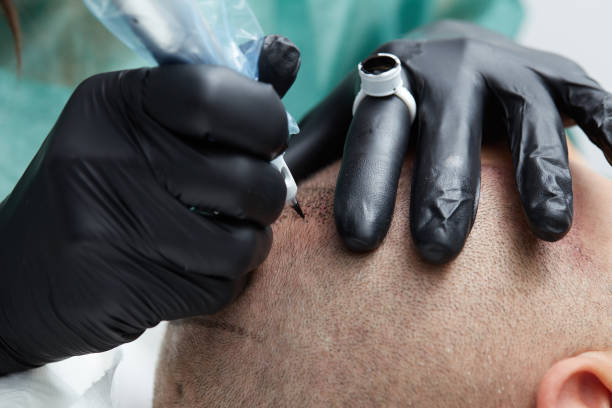

The psychological impact of a receding hairline or thinning crown often leads to a frantic search for solutions that are either invasive or temporary. While hair transplants are a gold standard for many, not every patient has the donor hair or the desire for surgery. Scalp Micropigmentation in Dubai has emerged as a high-precision, non-surgical alternative that effectively “camouflages” hair loss by depositing specialized pigments into the upper dermal layer. This procedure does not just mask baldness; it meticulously replicates the appearance of natural hair follicles, providing an immediate visual restoration of density. However, achieving a realistic result requires more than just pigment—it demands an understanding of scalp anatomy, pigment stability, and the unique sensory experience of the treatment itself.
Is Scalp Micropigmentation a Traditional Tattoo?
How does SMP differ from standard body art?
No, Scalp Micropigmentation (SMP) is a specialized medical-aesthetic procedure that differs from traditional tattooing in needle gauge, ink composition, and depth. While a standard tattoo penetrates five layers of the dermis to create permanent art, SMP targets only the upper two layers (approximately 0.5mm to 1.5mm deep). This shallow placement prevents the “blurring” or “bleeding” of dots, ensuring each impression remains a crisp, follicle-sized point. Furthermore, SMP uses carbon-based grayscale pigments that fade into lighter shades of the original color, whereas traditional tattoo inks often contain blue or green undertones that can discolor over time on the scalp.
What Does the Procedure Actually Feel Like?
What are the real pain levels during an SMP session?
Most patients describe the sensation of SMP as a repetitive “pinprick” or a light scratching, significantly less intense than a traditional tattoo. On a pain scale of 1 to 10, clinical feedback typically places the experience between a 2 and 4. The discomfort is not constant; it occurs in rhythmic pulses as the micro-needle deposits the pigment. Certain areas of the scalp are more sensitive than others—specifically the temples and the area just above the ears, where the skin is thinner and closer to the bone. In these “high-sensitivity zones,” you might feel a slight burning sensation, while the crown often feels like nothing more than a dull vibration.
“I was braced for a lot of pain because I don’t have any tattoos, but it was surprisingly manageable. It felt more like someone was tapping a ballpoint pen against my head. I actually found myself nearly nodding off during the second hour.”
— Marcus
The Realistic Recovery Timeline: Day by Day
How much downtime is required after the session?
Recovery from SMP is rapid, but the visual evolution of the pigment requires patience. You can return to work the next day, provided your environment does not involve heavy dust or physical exertion.
-
Days 1–3: The scalp will appear red and the dots will look significantly darker and larger than the final result. This is due to localized inflammation and “scabbing” over the pigment.
-
Days 4–7: The initial scabs begin to flake off (similar to fine dandruff). You may feel an itchy sensation; it is critical not to scratch, as this can pull pigment out before it has “set.”
-
Days 8–14: The pigment may appear to “disappear” or look very faint. This is a normal part of the skin’s renewal process as new skin grows over the ink.
-
Day 30: The color “settles” and resurfaces, revealing the true tone and density.
Who Should Avoid Scalp Micropigmentation?
Are there specific contraindications for this treatment?
While SMP is non-invasive, it is not suitable for individuals with certain medical conditions that affect skin integrity or immune response.
-
Active Scalp Conditions: Patients with psoriasis, eczema, or seborrheic dermatitis in the treatment area should avoid SMP until the condition is fully managed, as inflammation can cause uneven pigment absorption.
-
Keloid Scarring: If you are prone to keloid or hypertrophic scars, the micro-injuries from the needle could trigger abnormal scar tissue.
-
Compromised Immune Systems: Those undergoing chemotherapy or with autoimmune disorders may face higher infection risks or poor pigment retention.
-
Pregnancy/Breastfeeding: Due to hormonal fluctuations and a lack of clinical studies on pigment migration during pregnancy, it is standard practice to defer treatment.
Comparing Hair Restoration Options
| Feature | Scalp Micropigmentation (SMP) | FUE Hair Transplant |
| Invasiveness | Non-surgical / No incisions | Surgical / Individual grafts moved |
| Downtime | 24–48 hours (Redness) | 7–10 days (Physical healing) |
| Time to Results | Immediate (Fully set in 4 weeks) | 6–12 months for growth |
| Maintenance | Touch-up every 3–5 years | Permanent (Requires meds to keep) |
| Pain Level | Low (2-3/10) | Moderate (Managed with anesthesia) |
Technology and Technique Specifics
How do practitioners adjust the treatment for different skin types?
In clinical settings, we observe that “one size fits all” leads to artificial results. Practitioners adjust the cycles per minute (CPM) on the digital rotary machine based on the scalp’s resistance. For example, scar tissue is often denser and requires a higher speed (around 7,000–8,000 CPM) to ensure the needle penetrates cleanly, whereas a standard thinning crown might only require 5,500 CPM. The angle of the needle is also critical; it must stay perpendicular to the scalp to prevent “blowouts,” where the ink spreads horizontally under the skin.
“My biggest fear was that it would look like a helmet or a solid block of ink. But seeing the artist use different shades of gray to create depth really put me at ease. It looks like actual stubble even when I’m standing under bright sunlight.”
— Omar
FAQ: Your Questions Answered Honestly
Will the sun fade my SMP?
Yes, UV rays are the primary cause of pigment fading. While the pigments are stable, consistent sun exposure without SPF 50+ will cause the dots to lighten prematurely. We recommend wearing a hat or applying high-quality sunscreen daily once the initial 14-day healing period is over.
Can I get SMP if I have grey hair?
Absolutely. SMP is not just for dark hair. We use diluted grayscale pigments to match the “salt and pepper” look or the specific tone of silver-grey hair. The goal is to match the shadow of the follicle, not necessarily the long hair itself.
Is it possible to remove if I change my mind?
SMP is semi-permanent, but it can be removed or adjusted using specialized Q-switch lasers. Because the ink is shallower than a traditional tattoo, removal is typically faster and requires fewer sessions, though most patients prefer simply letting it fade naturally over 5+ years.
Can I have SMP if I already had a hair transplant?
Many patients use SMP to “boost” the results of a transplant. It is excellent for camouflaging FUE or FUT scars at the back of the head or adding a “shading” effect behind transplanted hair to make the density look twice as thick.
Why Choose Tajmeels Clinic
Success in Scalp Micropigmentation in Dubai is defined by the subtle details that the eye doesn’t consciously see but the brain recognizes as “natural.” At Tajmeels Clinic, we bridge the gap between medical expertise and aesthetic artistry. We don’t just apply ink; we analyze your unique facial structure and hair growth patterns to design a hairline that looks age-appropriate and authentic. Our clinicians utilize medical-grade pigments and the latest digital SMP technology to ensure every impression is stable, crisp, and perfectly matched to your skin undertones. By choosing a clinical environment, you ensure the highest standards of sterilization and anatomical knowledge, resulting in a transformation that restores your profile and your confidence without the need for surgery.