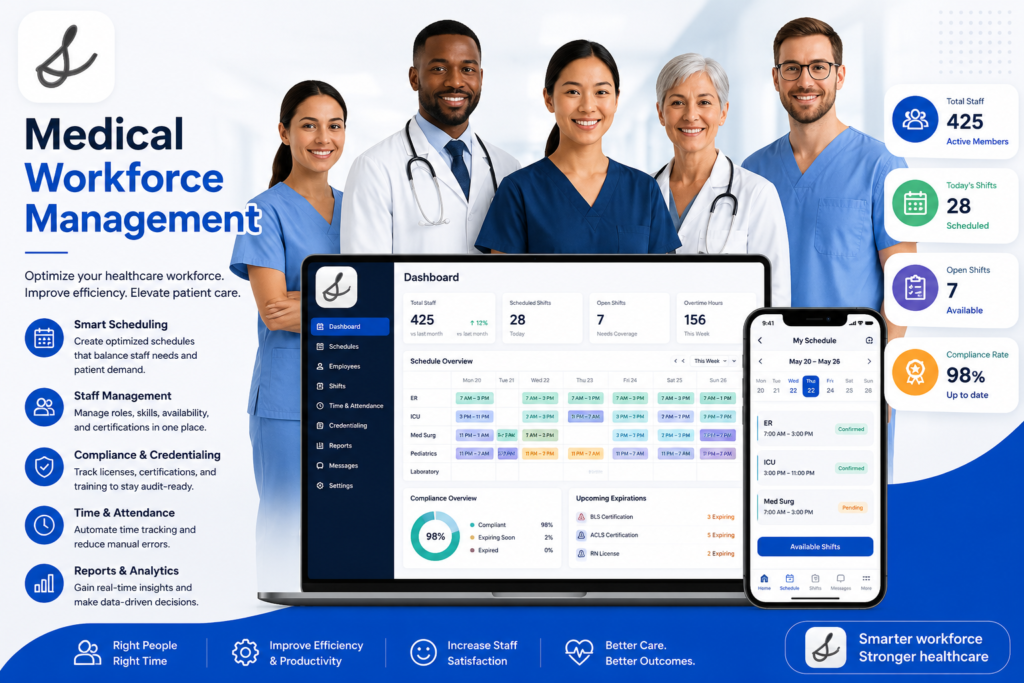

Healthcare organizations today face growing challenges, including staffing shortages, rising patient demands, regulatory compliance requirements, and increasing operational costs. To deliver quality patient care while maintaining efficiency, hospitals, clinics, and healthcare systems must adopt smarter approaches to workforce management. Smart workforce management has emerged as a critical strategy for optimizing healthcare operations, improving staff productivity, and enhancing patient outcomes.
By leveraging technology, automation, and data-driven decision-making, healthcare organizations can streamline workforce processes and build more resilient teams.
Understanding Healthcare Workforce Management
Healthcare workforce management refers to the planning, scheduling, tracking, and optimization of healthcare personnel. It involves ensuring the right healthcare professionals are available at the right time while balancing patient needs, employee preferences, compliance requirements, and organizational goals.
Effective workforce management covers several key areas:
- Staff scheduling
- Shift management
- Time and attendance tracking
- Credential management
- Workforce analytics
- Compliance monitoring
- Communication and collaboration
When these processes are managed efficiently, healthcare organizations can operate more smoothly and provide better patient care.
Challenges Facing Healthcare Organizations
Managing healthcare teams is more complex than ever. Many organizations struggle with operational issues that directly impact workforce performance.
Staffing Shortages
The healthcare industry continues to experience shortages of qualified professionals. Finding adequate coverage for shifts while preventing burnout remains a major challenge.
Complex Scheduling Requirements
Healthcare facilities operate around the clock. Creating schedules that meet patient demand, staffing requirements, and employee availability can be difficult and time-consuming.
Compliance and Credential Tracking
Healthcare organizations must ensure that providers maintain active licenses, certifications, and training requirements. Manual tracking often leads to compliance risks.
Employee Burnout
Heavy workloads, long shifts, and scheduling inconsistencies can contribute to employee dissatisfaction and burnout, ultimately affecting retention rates.
Rising Administrative Burden
Manual workforce management processes consume valuable time that could otherwise be spent on patient-focused activities.
The Role of Smart Workforce Management
Smart workforce management combines advanced technology with workforce planning strategies to address these challenges. Modern workforce management solutions automate routine tasks and provide real-time visibility into staffing operations.
By adopting intelligent workforce management systems, healthcare organizations can improve efficiency while creating a more supportive work environment for employees.
Benefits of Smart Workforce Management
Improved Scheduling Efficiency
Automated scheduling tools help managers create optimized schedules quickly and accurately. These systems can consider factors such as employee availability, qualifications, overtime limits, and staffing requirements.
This reduces scheduling conflicts and ensures appropriate coverage across departments.
Enhanced Staff Utilization
Smart workforce management platforms provide insights into staffing patterns and workforce capacity. Healthcare leaders can identify underutilized resources and allocate staff more effectively.
This helps maximize productivity without overburdening employees.
Reduced Labor Costs
Labor expenses represent one of the largest operational costs for healthcare organizations. Smart workforce management solutions help reduce unnecessary overtime, agency staffing expenses, and scheduling inefficiencies.
Better workforce planning leads to more predictable and cost-effective staffing models.
Better Compliance Management
Healthcare organizations must comply with numerous regulations and accreditation standards. Workforce management systems can track credentials, certifications, and training requirements while generating alerts for upcoming expirations.
This proactive approach reduces compliance risks and supports audit readiness.
Improved Employee Satisfaction
Employees value flexibility, transparency, and fair scheduling practices. Modern workforce management platforms often include self-service features that allow staff to view schedules, request time off, swap shifts, and receive real-time updates.
These capabilities contribute to higher job satisfaction and improved workforce retention.
Leveraging Data for Smarter Decisions
One of the most significant advantages of modern workforce management is access to actionable data.
Workforce analytics provide valuable insights into:
- Staffing trends
- Overtime utilization
- Shift coverage gaps
- Employee attendance patterns
- Productivity metrics
- Workforce forecasting
Healthcare leaders can use this information to make informed decisions that improve operational performance and patient care delivery.
For example, predictive analytics can help organizations anticipate staffing needs during seasonal demand fluctuations, reducing the likelihood of shortages or overstaffing.
The Impact on Patient Care
Effective workforce management directly influences patient outcomes. When healthcare facilities maintain appropriate staffing levels and ensure qualified professionals are available when needed, patients receive more timely and consistent care.
Benefits include:
- Reduced patient wait times
- Improved care coordination
- Enhanced patient satisfaction
- Lower risk of medical errors
- Better clinical outcomes
By optimizing workforce operations, healthcare organizations can create an environment where both patients and healthcare professionals thrive.
The Importance of Workforce Flexibility
Healthcare environments are constantly changing. Unexpected patient surges, staff absences, and emergency situations require organizations to respond quickly.
Smart workforce management systems provide flexibility through:
- Open shift management
- Real-time staffing adjustments
- Mobile scheduling access
- Automated notifications
- Workforce marketplace capabilities
These features enable healthcare organizations to adapt rapidly while maintaining service quality.
Future Trends in Healthcare Workforce Management
As technology continues to evolve, workforce management solutions are becoming increasingly sophisticated. Emerging trends include:
Artificial Intelligence
AI-powered scheduling tools can analyze staffing patterns and automatically recommend optimized schedules.
Mobile Workforce Solutions
Healthcare professionals increasingly expect mobile access to schedules, credentials, communication tools, and shift opportunities.
Predictive Workforce Analytics
Advanced forecasting capabilities help organizations anticipate future workforce demands and prepare proactively.
Integrated Workforce Platforms
Organizations are moving toward unified systems that combine scheduling, credentialing, communication, compliance, and workforce analytics in a single platform.
These innovations are helping healthcare organizations become more agile, efficient, and patient-focused.
Conclusion
Smart workforce management plays a vital role in optimizing healthcare operations by improving scheduling efficiency, reducing administrative burdens, supporting compliance, and enhancing employee satisfaction. As healthcare organizations face growing operational challenges, adopting modern workforce management solutions can significantly improve both workforce performance and patient outcomes.
Platforms like Shiftolic are helping healthcare organizations streamline workforce operations through intelligent scheduling, credential management, shift coordination, and workforce optimization tools. By leveraging solutions such as Shiftolic, healthcare teams can build a more efficient, compliant, and adaptable workforce while maintaining their focus on delivering exceptional patient care.