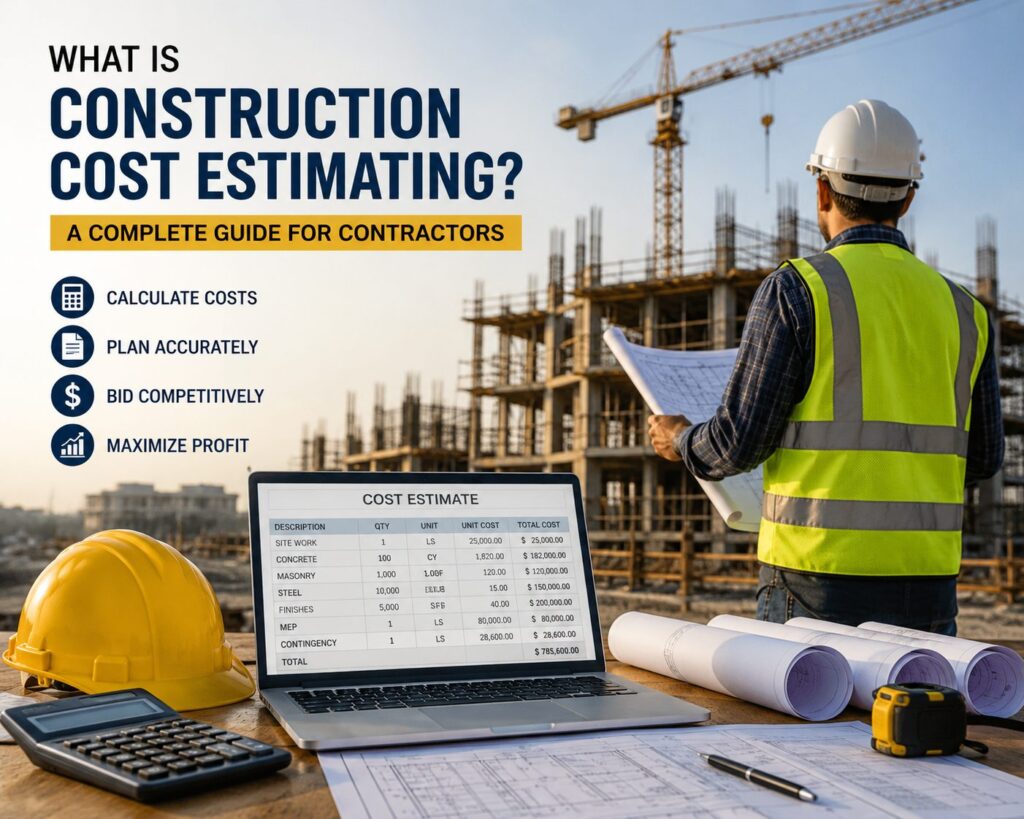

In the construction industry, the terms material takeoff and cost estimation are often used interchangeably. While they are closely connected, they serve different purposes in the planning and bidding process. Understanding the distinction between these two services is essential for contractors, builders, developers, architects, and project owners who want to prepare accurate bids and manage project budgets effectively.
A material takeoff focuses on identifying and quantifying the materials needed for a project, while a cost estimate goes a step further by assigning monetary values to labor, materials, equipment, overhead, and other project expenses.
In this guide, we’ll explain the differences between material takeoffs and cost estimation, how they work together, and why both are essential for successful construction projects.
What Is a Material Takeoff?
A Material Takeoff (MTO) is the process of measuring and listing every material required to complete a construction project. Estimators review architectural and engineering drawings to calculate the exact quantities of materials needed before construction begins.
A material takeoff typically includes:
- Concrete
- Reinforcing steel
- Lumber
- Drywall
- Roofing materials
- Flooring
- Masonry units
- Paint and finishes
- Doors and windows
- Plumbing fixtures
- Electrical components
- HVAC materials
The goal is to provide contractors with a detailed list of materials so they can purchase the right quantities, reduce waste, and improve project planning.
What Is Construction Cost Estimation?
Construction cost estimation is the process of calculating the total projected cost of a construction project. It includes not only the cost of materials but also every other expense required to complete the project successfully.
A comprehensive cost estimate generally includes:
- Material costs
- Labor costs
- Equipment expenses
- Subcontractor pricing
- Project overhead
- Permits and inspections
- Insurance
- Administrative costs
- Profit margin
- Contingency allowance
Unlike a material takeoff, cost estimation provides a complete financial picture of the project and is used for budgeting, bid preparation, and project planning.
Why Material Takeoffs Matter
A detailed material takeoff provides contractors with accurate quantities before ordering supplies. This offers several important benefits.
Reduces Material Waste
Ordering too much material increases costs, while ordering too little can delay the project. Accurate takeoffs help strike the right balance.
Improves Purchasing Decisions
Knowing exact quantities allows contractors to negotiate with suppliers and plan deliveries more efficiently.
Saves Time
A professionally prepared material takeoff eliminates the need for repeated manual calculations, allowing contractors to focus on project execution.
Supports Better Inventory Management
Proper quantity planning prevents shortages, excess inventory, and unnecessary storage costs.
Why Cost Estimation Is Essential
While a material takeoff identifies what is needed, a cost estimate determines how much the entire project will cost.
Helps Win Competitive Bids
Accurate estimates allow contractors to submit bids that are both competitive and profitable.
Improves Financial Planning
Developers and owners can determine whether a project fits within their available budget before construction begins.
Minimizes Financial Risk
A detailed estimate reduces the chances of unexpected expenses and budget overruns during construction.
Supports Better Decision-Making
Project stakeholders can compare design options, evaluate project feasibility, and make informed investment decisions.
Can You Have One Without the Other?
Technically, yes—but relying on only one can create challenges.
A material takeoff without cost estimation tells you how much material is required, but not the total cost of completing the project.
A cost estimate without an accurate material takeoff can lead to pricing errors because the material quantities may be incorrect.
For this reason, professional estimators typically prepare the material takeoff first and then use it as the foundation for a complete construction cost estimate.
When Do You Need a Material Takeoff?
A material takeoff is ideal when you need to:
- Purchase construction materials
- Prepare supplier quotations
- Plan inventory
- Reduce material waste
- Support subcontractor pricing
- Verify project quantities
When Do You Need a Full Cost Estimate?
A complete construction cost estimate is recommended when you need to:
- Submit a competitive bid
- Create a project budget
- Secure financing
- Evaluate project feasibility
- Control construction costs
- Plan labor and equipment requirements
How Able Estimating Supports Your Construction Projects
At Able Estimating, we provide both professional material takeoff services and construction cost estimating services to help contractors make informed decisions at every stage of the project.
Our experienced estimators carefully review construction drawings, calculate precise material quantities, and prepare detailed cost estimates tailored to residential, commercial, industrial, and specialty trade projects.
Our services include:
- Material Takeoffs
- Quantity Takeoffs
- Construction Cost Estimating
- Bid Preparation
- Residential Estimating
- Commercial Estimating
- Industrial Estimating
- MEP Estimating
- Trade-Specific Estimating Solutions
With accurate data, advanced estimating software, and industry expertise, Able Estimating helps clients save time, reduce costs, and submit competitive bids with confidence.
Final Thoughts
Material takeoffs and cost estimates are two of the most important tools in modern construction planning. While they serve different purposes, they work best when used together. A detailed material takeoff provides the accurate quantities needed for procurement, while a comprehensive cost estimate transforms those quantities into a realistic financial plan.
Contractors who invest in both services are better equipped to control costs, reduce waste, improve project planning, and increase profitability.
Conclusion
Understanding the difference between material takeoffs and construction cost estimation is essential for anyone involved in construction projects. Material takeoffs ensure you know exactly what materials are required, while cost estimates provide a complete picture of the financial investment needed to complete the project successfully.
If you’re looking for dependable estimating support, Able Estimating offers professional material takeoff and construction cost estimating services designed to help contractors, builders, developers, and project owners achieve greater accuracy and better project outcomes. Whether you’re preparing your next bid or planning a new development, Able Estimating is your trusted partner for precise, reliable, and timely estimating solutions.