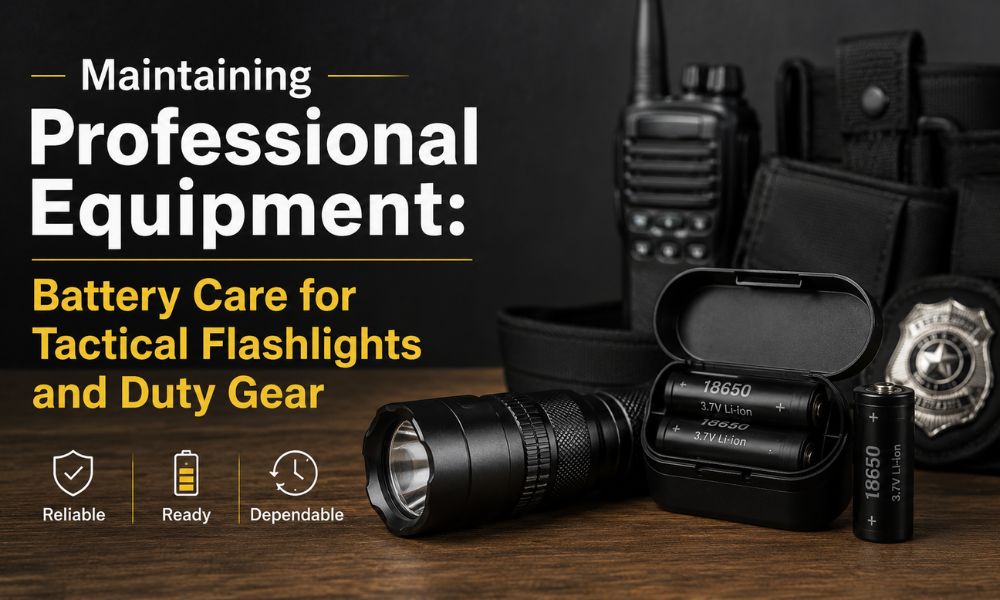

Professional equipment is only as reliable as its maintenance. Whether you’re in law enforcement, security, military service, emergency response, or responsible civilian training, your tactical gear must perform when it matters most. A flashlight with a weak battery or poorly maintained equipment can create unnecessary risks during critical situations.
One of the most overlooked aspects of gear maintenance is caring for flashlight batteries. Proper battery care helps extend equipment life, maintain consistent brightness, and ensure dependable performance in demanding environments. When paired with quality tactical gear, regular maintenance helps professionals stay prepared for every mission.
In this guide, we’ll explain how to properly maintain tactical flashlight batteries, maximize battery lifespan, store equipment safely, and keep your duty gear ready for action.
Why Battery Maintenance Matters
A tactical flashlight isn’t just another accessory, it’s an essential safety tool. Whether you’re conducting building searches, nighttime patrols, emergency rescues, or outdoor operations, dependable illumination is critical.
Poor battery maintenance can lead to:
- Reduced brightness
- Unexpected power loss
- Shortened battery lifespan
- Corrosion inside the flashlight
- Equipment failure during critical moments
Taking just a few minutes to inspect and maintain your flashlight regularly can significantly improve reliability.
Understanding Different Flashlight Batteries
Different tactical flashlights use different battery types. Understanding which one your equipment requires helps ensure optimal performance.
Lithium Batteries
A lithium battery flashlight is one of the most popular choices among professionals because lithium batteries provide:
- Longer operating time
- Better performance in extreme temperatures
- Lightweight construction
- Lower self-discharge during storage
- Longer shelf life
These advantages make lithium batteries ideal for tactical and emergency-use equipment.
Rechargeable Batteries
Rechargeable lithium-ion batteries are commonly used in modern tactical flashlights. They offer:
- Lower long-term operating costs
- Environmentally friendly performance
- Consistent power output
- Convenient charging options
Always use chargers recommended by the flashlight manufacturer.
Disposable Batteries
Alkaline batteries remain suitable for backup or occasional use but generally provide:
- Shorter runtime
- Increased leakage risk during long-term storage
- Reduced performance in cold environments
Best Practices for Maintaining Flashlight Batteries
Proper care helps maximize battery life while ensuring your equipment remains ready.
1. Inspect Batteries Regularly
Check batteries for:
- Corrosion
- Swelling
- Leaking
- Physical damage
Replace damaged batteries immediately to prevent internal flashlight damage.
2. Avoid Complete Battery Drain
Frequently allowing rechargeable batteries to fully discharge may shorten their lifespan.
Instead:
- Recharge before batteries reach extremely low levels
- Follow manufacturer charging recommendations
- Avoid unnecessary overcharging
3. Store Batteries Properly
Storage conditions significantly affect battery performance.
Store batteries:
- In cool, dry locations
- Away from direct sunlight
- Away from excessive heat
- Away from metal objects that may cause short circuits
If storing your flashlight for several months, remove the batteries whenever possible.
4. Keep Battery Contacts Clean
Dirty battery contacts reduce electrical efficiency.
Use:
- A clean microfiber cloth
- Cotton swab
- Small amount of isopropyl alcohol (if recommended)
Ensure contacts are completely dry before reinstalling batteries.
5. Use Quality Replacement Batteries
Using low-quality batteries often leads to inconsistent performance.
Always choose:
- Trusted manufacturers
- Correct battery size
- Recommended voltage
- Compatible battery chemistry
This helps protect both the flashlight and its internal electronics.
Caring for Tactical Flashlights
Battery maintenance is only part of keeping professional lighting equipment reliable.
Regular flashlight maintenance should include:
Clean the Lens
Dust, fingerprints, and debris reduce light output.
Wipe lenses gently using:
- Lens cloth
- Soft microfiber cloth
- Approved lens cleaner
Inspect Seals
Rubber O-rings protect against water and dust.
Check for:
- Cracks
- Dryness
- Damage
Replace worn seals as needed.
Test Brightness Levels
Operate every lighting mode regularly.
Confirm:
- High output
- Low output
- Strobe functions
- Momentary activation
Routine testing helps identify problems before they’re needed in the field.
Battery Care for Complete Duty Gear
Professional equipment extends beyond lighting devices. Many pieces of modern duty equipment rely on batteries.
Examples include:
- Weapon-mounted lights
- Electronic hearing protection
- Red dot optics
- Communication equipment
- Body cameras
- GPS devices
Routine inspections help ensure every battery-powered device remains mission-ready.
Maintaining Tactical Lighting Equipment During Long-Term Storage
Many professionals rotate equipment or maintain backup kits.
Before storing tactical lighting equipment:
- Clean the flashlight thoroughly
- Remove batteries if recommended
- Charge rechargeable batteries to approximately 40–60% for extended storage
- Store in a protective case
- Label maintenance dates
Every few months:
- Inspect batteries
- Recharge if necessary
- Test flashlight functionality
Choosing Reliable Tactical Equipment
Even excellent maintenance cannot compensate for poorly manufactured equipment.
When evaluating tactical flashlights for sale, consider:
- Aircraft-grade aluminum construction
- Water resistance
- Impact resistance
- High lumen output
- Reliable switches
- Long battery runtime
- Manufacturer warranty
- Availability of replacement batteries and accessories
Quality equipment often performs more consistently under demanding conditions.
Building a Complete Professional Gear Kit
Reliable tactical readiness comes from combining dependable equipment with routine maintenance.
Many professionals build comprehensive kits that include:
- A military tactical flashlight
- Backup batteries
- Battery charger
- Duty holster
- Cleaning supplies
- Multi-tool
- Protective gloves
Depending on operational requirements, additional military police accessories and a durable military baton may also be included as part of a complete duty setup. Regular inspections ensure every component remains ready for deployment.
Common Battery Care Mistakes to Avoid
Avoid these common errors that reduce battery life:
- Mixing old and new batteries
- Mixing battery brands
- Using incorrect battery types
- Leaving depleted batteries inside flashlights
- Exposing batteries to extreme temperatures
- Ignoring corrosion
- Overcharging rechargeable batteries
- Storing equipment in humid environments
Small maintenance habits can prevent costly equipment failures.
Preventive Maintenance Schedule
A simple maintenance routine helps keep professional equipment dependable.
After Every Use
- Clean the flashlight exterior
- Inspect battery level
- Remove dirt and moisture
Monthly
- Test all brightness modes
- Check battery contacts
- Inspect seals
- Recharge rechargeable batteries
Every 3–6 Months
- Replace worn batteries if needed
- Inspect chargers
- Check backup equipment
- Verify all tactical gear operates properly
Consistency is the key to long-term reliability.
Conclusion
Proper battery maintenance is one of the easiest ways to improve the reliability and lifespan of your professional equipment. By caring for your flashlight batteries, performing regular inspections, and choosing dependable tactical gear, you can reduce equipment failures and stay prepared for critical situations. If you’re looking for high-quality tactical lighting, military tactical flashlight solutions, and dependable military police accessories, explore ASP’s professional equipment lineup. Contact us today to find reliable gear built for performance when it matters most.
Frequently Asked Questions
1. How long do flashlight batteries typically last?
The lifespan depends on battery type and usage. High-quality lithium batteries generally last longer than alkaline batteries, while rechargeable lithium-ion batteries can provide hundreds of charging cycles when properly maintained.
2. Are lithium batteries better for tactical flashlights?
Yes. A lithium battery flashlight typically offers longer runtime, better cold-weather performance, lighter weight, and a longer shelf life, making it a preferred choice for professional tactical applications.
3. Should I remove batteries from my flashlight during storage?
If you plan to store your flashlight for an extended period, removing the batteries is generally recommended. This helps reduce the risk of leakage and protects the flashlight from internal corrosion.
4. How often should I inspect my tactical lighting equipment?
Professionals should inspect their tactical lighting equipment before each shift or deployment. Monthly maintenance should include checking battery health, cleaning contacts, testing all light modes, and examining seals for wear.
5. What should I look for when purchasing tactical flashlights?
When comparing tactical flashlights for sale, prioritize durability, reliable battery performance, water resistance, impact resistance, brightness levels, runtime, and compatibility with your professional equipment and operational needs.