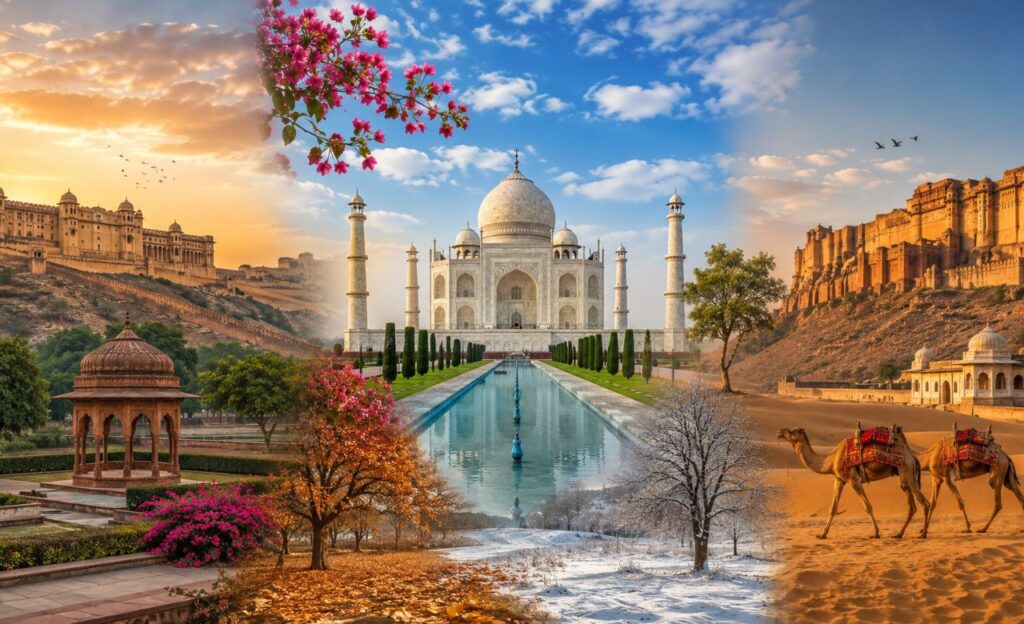

Planning a trip through India’s Golden Triangle — Delhi, Agra, and Jaipur — or extending it into Rajasthan? Timing your visit right can make the difference between a comfortable, memorable trip and one spent battling extreme heat or unexpected rain. Here’s a complete season-by-season breakdown to help you choose the best time to visit, along with festival dates worth planning around.
Why Timing Matters for a Golden Triangle Trip
India’s climate swings dramatically across the year, and the Golden Triangle region — spanning Delhi, Agra, and Jaipur — sits in a zone that gets scorching summers, a short but intense monsoon, and a long, pleasant winter. Rajasthan, being largely desert, amplifies these extremes even further: blistering days in summer and surprisingly cold nights in winter.
If you’re booking a 3 Day Golden Triangle Tour, getting the season right matters even more, since you’ll be covering three cities in a tight window with little room to adjust for weather delays — fog, for instance, is notorious for pushing back Taj Mahal sunrise visits in peak winter.
Winter (October to March): The Best Time to Visit
Winter is hands-down the most popular and comfortable season for the Golden Triangle and Rajasthan. Daytime temperatures in Delhi, Agra, and Jaipur typically range from 15°C to 25°C, with cool, crisp mornings and pleasant evenings — ideal for sightseeing without exhaustion.
What to expect:
- October–November: Transitional weather, warm days but comfortable nights. Fewer crowds than peak December-January.
- December–January: Peak tourist season. Expect cooler temperatures, occasional morning fog (especially in Delhi and Agra, which can delay early monuments visits), and the highest hotel rates of the year.
- February–March: Still comfortable, with blooming desert landscapes in Rajasthan and gradually rising temperatures toward the end.
This is also the best window if you’re planning to combine your Golden Triangle trip with a deeper dive into Rajasthan’s cities — Jaipur, Udaipur, Jodhpur, and Jaisalmer are all far more enjoyable to explore on foot in cooler weather. If you’re considering this extension, our Rajasthan Tour Packages are built specifically around this comfortable travel window.
Best for: First-time visitors, families, photography, walking tours, camel safaris in the Thar Desert.
Summer (April to June): Hot, But Budget-Friendly
Summer is the low season for a reason — temperatures across Delhi, Agra, and especially Rajasthan can soar past 40°C, with some desert areas touching 45-48°C in peak May and June. It’s intense, dry heat, and midday sightseeing becomes genuinely difficult.
What to expect:
- Early mornings and late evenings are the only comfortable windows for outdoor activity
- Air-conditioned vehicles and hotels become essential, not optional
- Significantly lower prices on tours, hotels, and flights
- Thinner crowds at major monuments like the Taj Mahal and Amber Fort
Who this suits: Budget travelers who don’t mind adjusting their schedule around the heat, and those specifically wanting to avoid crowds at major sites. If you go this route, prioritize early starts, indoor/shaded attractions midday, and plenty of hydration built into your itinerary.
Best for: Budget-conscious travelers, those prioritizing lower prices over ideal weather, off-season photography without crowds.
Monsoon (July to September): Green Landscapes, Fewer Tourists
Monsoon season brings much-needed relief from the summer heat, along with intermittent rainfall, humidity, and a noticeably greener landscape — especially striking in Rajasthan, where the usually arid terrain briefly turns lush.
What to expect:
- Rain is typically not constant — expect short, heavy spells rather than all-day downpours
- Humidity is high, particularly in Delhi and Agra
- Some rural roads in Rajasthan may see minor disruptions during heavy rain
- Monuments and forts look dramatically different against monsoon skies — a favorite season for photographers
Best for: Travelers who enjoy dramatic skies and don’t mind occasional rain delays, those looking for the lowest off-season rates, and photographers wanting a different visual take on iconic sites like the Taj Mahal and Amber Fort.
Rajasthan’s Festival Calendar: Time Your Trip Around Culture
Beyond weather, festivals are one of the best reasons to time a Rajasthan trip precisely. A few worth planning around:
- Pushkar Camel Fair (October/November) — One of the world’s largest camel and livestock fairs, combined with cultural performances and a lively carnival atmosphere in Pushkar.
- Jaipur Elephant Festival (March, around Holi) — A colorful procession of decorated elephants, folk dances, and traditional games in the Pink City.
- Holi (March) — Celebrated with particular energy across Rajasthan, especially in Jaipur and Pushkar.
- Diwali (October/November) — Cities across the Golden Triangle and Rajasthan light up with lamps and fireworks; hotels book up fast around this period.
- Desert Festival, Jaisalmer (January/February) — Folk music, turban-tying competitions, and camel races set against the Thar Desert dunes.
If your travel dates are flexible, building your trip around one of these festivals adds a layer of cultural experience that a standard sightseeing itinerary won’t give you.
When to Avoid: The Off-Season Reality Check
If comfort is your priority, it’s worth being direct about when not to go:
- Late May to June: The peak of summer heat, particularly punishing in Rajasthan’s desert cities
- Late July to August: Peak monsoon humidity in Delhi and Agra, with the highest chance of rain disrupting outdoor plans
That said, neither season makes travel impossible — they simply require more flexibility, more hydration, and realistic expectations about midday sightseeing.
Matching Trip Length to Season
The season you choose should also inform how long your trip is and how much ground you cover.
Short on time? Winter is ideal for a compact, high-impact trip. Our 3 Day Golden Triangle Tour is designed to make the most of the cooler months, covering Delhi, Agra, and Jaipur efficiently without the heat working against you.
Want to go deeper into Rajasthan? Winter and early spring give you the widest window to comfortably extend beyond the Golden Triangle into cities like Udaipur, Jodhpur, and Jaisalmer. Our Rajasthan Tour Packages are structured around this extended, more relaxed pace — ideal for travelers with 7-14 days to spare.
Not sure which fits your trip? Our full Golden Triangle Tours page breaks down every itinerary option — from the classic 3-day circuit to longer, customizable journeys — so you can match your travel dates to the right trip length.
Quick Reference: Best Time by Priority
| Priority | Best Season |
|---|---|
| Ideal weather overall | October–March |
| Lowest prices | April–June, July–September |
| Festival experiences | October–November, March |
| Fewer crowds | May–September |
| Desert safaris & camel treks | October–March |
| Photography (dramatic skies) | July–September |
Final Thoughts
There’s no single “perfect” time to visit the Golden Triangle and Rajasthan — it depends on what you’re optimizing for: ideal weather, lower costs, cultural festivals, or fewer crowds. For most first-time travelers, October through March remains the sweet spot, offering comfortable temperatures for sightseeing across Delhi, Agra, Jaipur, and beyond.
Whatever your travel dates, matching your itinerary length and route to the season will make a noticeable difference in how enjoyable your trip feels — whether that’s a quick 3-day circuit or a fuller Rajasthan exploration.