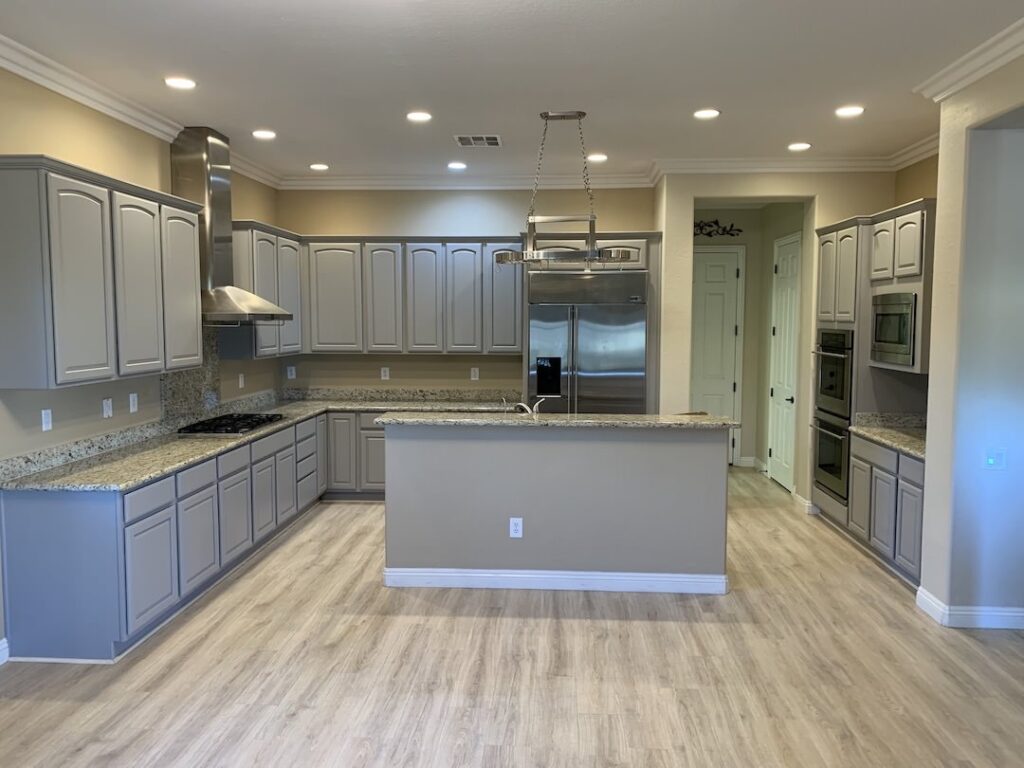

You have invested in a professional cabinet paint job for your Ramsey Minnesota kitchen. The colors are beautiful and the finish is flawless on your cabinets. Now you want that paint job to last as long as possible for your investment. Kitchen cabinets face daily wear from cooking cleaning and constant touching. Grease splatters food spills and sticky fingers can take a toll on your cabinets. The good news is that simple maintenance makes a big difference in how long your paint lasts. This guide explains how to maintain your painted cabinets in Ramsey.
Clean Your Cabinets Regularly with Gentle Products
Dust and grease settle on your kitchen cabinets throughout the week during cooking. These particles can make your paint look dull and dingy over time. Wipe your cabinets down every week with a soft microfiber cloth or sponge. Use a mild dish soap mixed with warm water for your cleaning solution. Dip your cloth in the soapy water and wring it out well before wiping. Do not use abrasive scrubbers or harsh chemicals which can damage the paint finish.
For tough grease spots near your stove use a solution of warm water and mild dish soap. Let the solution sit on the grease for a minute to loosen it before wiping. Use a soft sponge and gentle pressure to remove the grease from your cabinets. Rinse with a clean damp cloth to remove any soap residue from the surface. Dry immediately with a soft towel to prevent water spots on your painted cabinets. Regular gentle cleaning keeps your cabinets looking fresh and beautiful for years.
For homeowners who want professional maintenance Painters in Ramsey MN can inspect and touch up your cabinets during regular visits.
What to Avoid When Cleaning Your Painted Cabinets
Never use abrasive cleaners like Comet or Soft Scrub on your painted cabinets. These products will scratch the paint finish and make it look dull over time. Avoid using scrub brushes steel wool or scouring pads on your cabinet surfaces. These tools will leave visible scratches that ruin the smooth finish of your paint. Do not use vinegar or ammonia based cleaners which can break down the paint over time. Stick to mild dish soap and warm water for the safest cleaning results.
Do not let cleaning solutions sit on your cabinet surfaces for extended periods. Wipe up spills immediately to prevent them from damaging the paint finish. Avoid spraying cleaners directly onto your cabinet doors and drawer fronts. Spray your cloth instead then wipe the cabinets to control where the cleaner goes. Do not use excessive water which can seep into cabinet seams and cause damage. A little care in your cleaning routine goes a long way in protecting your painted cabinets.
Touch Up Small Problems Before They Grow
A small chip or scratch in the paint can lead to bigger problems if ignored. Touch up chips as soon as you notice them to keep your cabinets looking fresh. Keep leftover paint from your original cabinet paint job in a sealed container. Use a small artist brush for precise application on tiny chips on your cabinets. Apply the paint in thin layers letting each layer dry before adding another coat. Small touch ups done promptly prevent the need for major repairs later.
For scratches on cabinet doors use a matching paint marker for easy touch ups. Paint markers are available at hardware stores and are easy for homeowners to use. Shake the marker well and test on a piece of paper before touching your cabinets. Apply the marker carefully to the scratch and let it dry completely. If the scratch is still visible apply a second coat after the first dries. Keep your touch up supplies in a convenient place so you can fix problems quickly.
For professional touch up and repair services Chrave Davis Painting provides reliable maintenance for Ramsey kitchens.
Protect Your Cabinets from Daily Damage
Install soft close hinges and drawer slides to prevent slamming damage. Slamming cabinets can chip the paint and damage the cabinet structure over time. Use felt pads on the inside of cabinet doors where they meet the frame. This prevents paint from wearing off where doors close against the cabinet frame. Wipe up spills immediately especially around handles and edges where moisture collects. Grease and water left on cabinets can seep into the paint and cause damage.
Be careful when opening and closing cabinets not to hit them with rings or jewelry. Remove harsh chemicals from under your sink where they can leak and damage cabinet interiors. Use shelf liners inside cabinets to protect the painted surfaces from scratches. Keep sharp objects away from cabinet surfaces to prevent accidental scratches. A little prevention saves you from major touch up work later on your cabinets.
How to Clean Different Types of Stains on Cabinets
For greasy stains near your stove use a solution of warm water and mild dish soap. Apply with a soft sponge and blot gently rather than scrubbing the area. For stubborn grease try adding a small amount of baking soda to your cleaning solution. Make a paste with baking soda and water for tough grease spots on your cabinets. Apply the paste with a soft cloth and let it sit for a few minutes before wiping. Rinse thoroughly with a clean damp cloth and dry with a soft towel.
For sticky residue from tape or stickers use a small amount of cooking oil on a soft cloth. Rub gently and the sticky residue should lift off the painted surface. Wipe away the oil with a clean damp cloth and mild dish soap. For marker or pen ink try using rubbing alcohol on a cotton ball. Test on an inconspicuous area first to ensure it does not damage the paint. For stubborn stains you may need to touch up the area with matching paint.
When to Call a Professional for Cabinet Maintenance
If you have widespread chipping or peeling across many cabinets call a professional. If the same problems keep returning after you fix them seek expert help. If you are unsure about the best way to repair a paint problem ask a professional. If you want to refresh your entire kitchen with a new color scheme hire professionals. Professional painters can assess your cabinets and recommend the best course of action.
A professional can also identify underlying issues that may be causing paint failure. They have the tools and experience to make repairs that blend seamlessly. They can apply fresh paint efficiently and with high quality results. For major touch up or refresh projects professional help is worth the investment. Your time and sanity are valuable so let the experts handle big jobs.
Conclusion
Maintaining your Ramsey painted cabinets takes some effort but the payoff is years of beauty. Clean your cabinets weekly with mild dish soap and a soft cloth or sponge. Avoid abrasive cleaners scrub brushes and harsh chemicals that damage paint. Touch up small chips and scratches before they become big problems on your cabinets. Protect your cabinets with soft close hinges felt pads and careful use. Call a professional for widespread problems or recurring issues with your cabinets. These simple maintenance tasks take a few minutes per week for your kitchen.