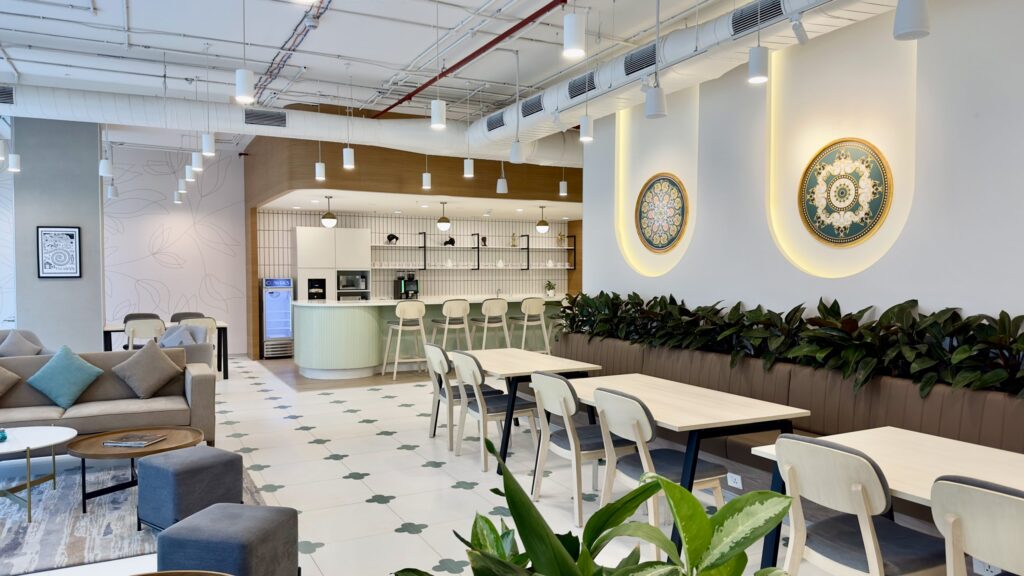

Choosing the right managed workspace in Brookefield begins with understanding the specific requirements of your organisation. The best office is not simply the one with attractive interiors or the lowest monthly price. It should support your team size, working style, security needs, and future growth plans. Estimate how many employees will use the office regularly, including hybrid workers, visiting teams, and future hires. Determine whether you need private cabins, open workstations, meeting rooms, interview spaces, phone booths, or dedicated collaboration areas. A clear requirement list prevents businesses from paying for unnecessary facilities or selecting an office that becomes restrictive as the team expands.
Evaluate Location and Daily Accessibility
Brookefield provides convenient access to prominent commercial and technology areas such as Whitefield, Marathahalli, and the Outer Ring Road. A suitable office location should reduce commuting challenges for employees while remaining accessible to clients, vendors, and business partners.
Check road connectivity, public transportation, nearby residential neighbourhoods, restaurants, healthcare facilities, and other essential services. Visit the location during peak traffic hours instead of relying entirely on online travel estimates. A well-connected office can improve attendance, punctuality, employee satisfaction, and talent retention.
Review the Workspace Infrastructure
Reliable infrastructure directly affects daily productivity and business continuity. Examine internet speed, backup connectivity, power supply, air conditioning, lighting, acoustics, and mobile network availability.
Meeting rooms should provide appropriate audiovisual equipment, comfortable seating, and adequate privacy. Phone booths and quiet zones are especially important for teams that frequently conduct virtual meetings or confidential conversations. Businesses should also review housekeeping, reception services, pantry facilities, visitor management, security systems, and storage availability. Confirm which facilities are included in the monthly fee and which require additional payment.
Check Flexibility and Scalability
A managed office should adapt to changing business requirements. Ask whether additional workstations, private cabins, or meeting rooms can be provided when the team grows. Companies may also require layout customisation, branded areas, dedicated access, or specialised technology infrastructure.
Review the minimum commitment period, notice requirements, renewal conditions, and options for increasing or reducing the number of seats. Flexible agreements can prevent the cost and disruption of relocating whenever staffing requirements change.
Compare the Total Occupancy Cost
Do not evaluate office options based only on the advertised price per workstation. Calculate the complete monthly expense, including taxes, deposits, parking, maintenance, electricity, internet, meeting-room usage, printing, access cards, and after-hours services.
Request a detailed written quotation to identify hidden or variable charges. A slightly higher inclusive price may provide better value than a lower basic rate with several additional expenses. The final comparison should consider service quality, infrastructure reliability, operational support, and overall convenience.
Assess Safety and Compliance
Review access control systems, surveillance, fire-safety equipment, emergency exits, evacuation procedures, and on-site assistance. Confirm whether the property follows applicable building and workplace regulations.
Sustainability features such as natural lighting, energy-efficient systems, responsible waste management, and green-building practices can also improve employee comfort and operational efficiency. Any safety, compliance, or sustainability certification should be verified before finalising the agreement.
Visit the Workspace Before Deciding
A physical visit is essential before signing an agreement. Observe cleanliness, noise levels, workstation spacing, common-area usage, and the responsiveness of the support team. Test the internet connection, inspect meeting rooms, and review parking and entry procedures. The best office will provide the right balance of accessibility, infrastructure, flexibility, transparent pricing, safety, and dependable operational support. A productive office should also support employee comfort and wellbeing. Review seating ergonomics, natural light, ventilation, breakout zones, pantry access, and opportunities for informal collaboration. A workspace that feels comfortable and professionally managed can improve focus, morale, attendance, and the overall experience of working from the office each working day.
Finally, examine the agreement for inclusions, exclusions, price escalation clauses, service commitments, exit conditions, and restoration charges. The best office will provide the right balance of accessibility, infrastructure, flexibility, transparent pricing, safety, and dependable operational support.