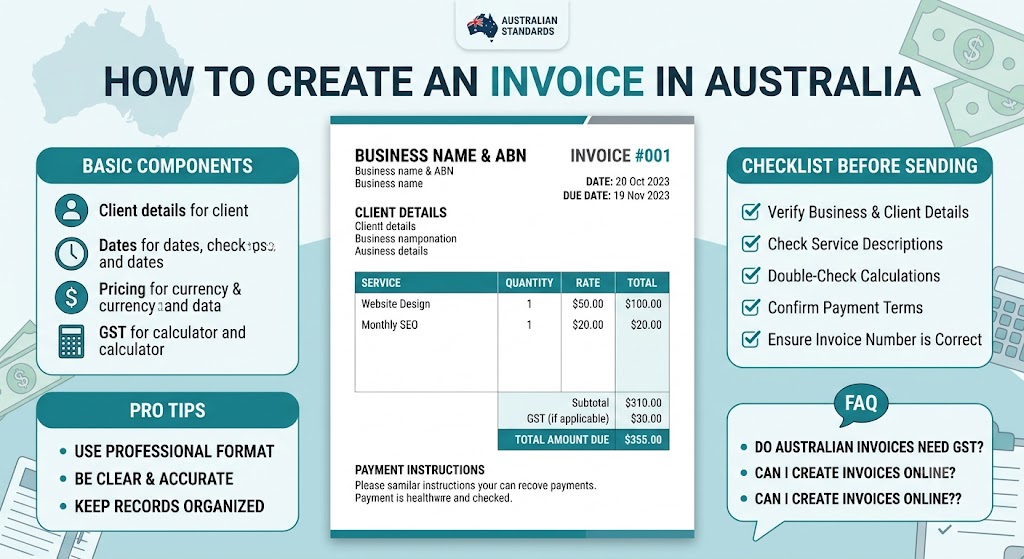

GST on an invoice shows the tax amount charged on eligible products or services, along with the final amount the customer needs to pay. If you need to understand gst on invoices, the key rule is simple: only include GST when your business is registered for GST and the transaction requires GST to be charged.
A GST invoice helps customers clearly see how the total amount has been calculated. It separates the taxable value from the GST amount, making the invoice easier to review and more transparent for both the business and the customer. This is especially important when customers need proper billing records for their own accounting, expense tracking, or business reporting.
GST invoices are commonly used by freelancers, contractors, consultants, agencies, tradies, service providers, product sellers, and small businesses that are registered for GST. When prepared correctly, they help create a more professional billing process and reduce confusion around tax charges.
A GST invoice should usually include:
- Business name and contact details
- GST registration details, if required
- Customer name and billing information
- Invoice number
- Invoice date
- Payment due date
- Product or service description
- Quantity and rate
- Taxable amount
- GST rate
- GST amount
- Total amount payable
- Payment instructions
These details help customers understand what they are paying for, how much tax has been added, and when payment is due. A clear invoice also helps businesses maintain accurate financial records and track completed transactions more easily.
If GST does not apply to your business or transaction, it should not be added as a separate charge. Adding GST incorrectly can confuse customers and may create accounting problems later. If your business is not registered for GST, your invoice should show the total amount without listing GST as a separate tax amount.
Why is GST shown separately on invoices?
GST is shown separately so customers can clearly understand the tax portion of the payment. It also helps businesses keep cleaner records for bookkeeping, reporting, and payment tracking. When the GST amount is displayed properly, both sides can see the base price, tax amount, and final total without needing extra clarification.
This level of transparency is useful for professional billing. Customers can quickly review the invoice, confirm the amount payable, and process payment with fewer questions. For business owners, it also makes it easier to check income, track tax collected, and review invoice history when needed.
When GST is listed properly, the invoice usually becomes easier to process. A customer can see:
- What product or service was provided.
- What the original price was before GST.
- How much GST was charged.
- What final amount needs to be paid.
- When the payment is due.
- How the payment should be made.
This reduces billing confusion and supports faster payment processing. A complete GST invoice also shows that your business is organized, accurate, and professional in its financial communication.
Before sending a GST invoice, check:
- Business details are correct.
- Customer details are complete.
- Invoice number is unique.
- Invoice date is accurate.
- Payment due date is mentioned clearly.
- Product or service descriptions are specific.
- GST amount is calculated correctly.
- Total amount payable is accurate.
- Payment terms are clear.
- Payment method is easy to find.
A small mistake in GST calculation, customer details, or payment terms can delay payment. It can also create extra work if the invoice needs to be corrected and resent. Taking a few minutes to review the invoice before sending it can help avoid these issues.
What happens if GST is added incorrectly?
If GST is added incorrectly, the invoice may need to be corrected before the customer completes payment or before financial records are finalized. Incorrect GST can create confusion about the total amount payable and may affect accounting records for both the business and the customer.
For example, if a business is not registered for GST but adds GST to an invoice, the customer may question the charge. On the other hand, if GST should have been included but was missing, the invoice may need to be updated with the correct tax amount and total.
To avoid mistakes, businesses should use a consistent invoice format and carefully review each invoice before sending it. A structured invoice template can help ensure that GST details, totals, payment terms, and customer information are included correctly every time.
A clear GST invoice improves trust and keeps the billing process professional. It shows customers that your business is organized, accurate, and careful with financial details. For growing businesses, proper GST invoicing also makes record keeping easier. You can review past invoices, track paid and unpaid amounts, manage customer records, and prepare financial reports more confidently.
Frequently Asked Questions
Do I need to add GST to every invoice?
No. GST should only be added if your business is registered for GST and the transaction requires GST to be charged.
What happens if GST is missing from an invoice?
If GST should have been included but is missing, the invoice may need to be corrected before payment or record keeping is finalized.
Can I send a GST invoice as a PDF?
Yes. PDF is a good format for GST invoices because it keeps the layout fixed, looks professional, and is easy for customers to download, print, and store.