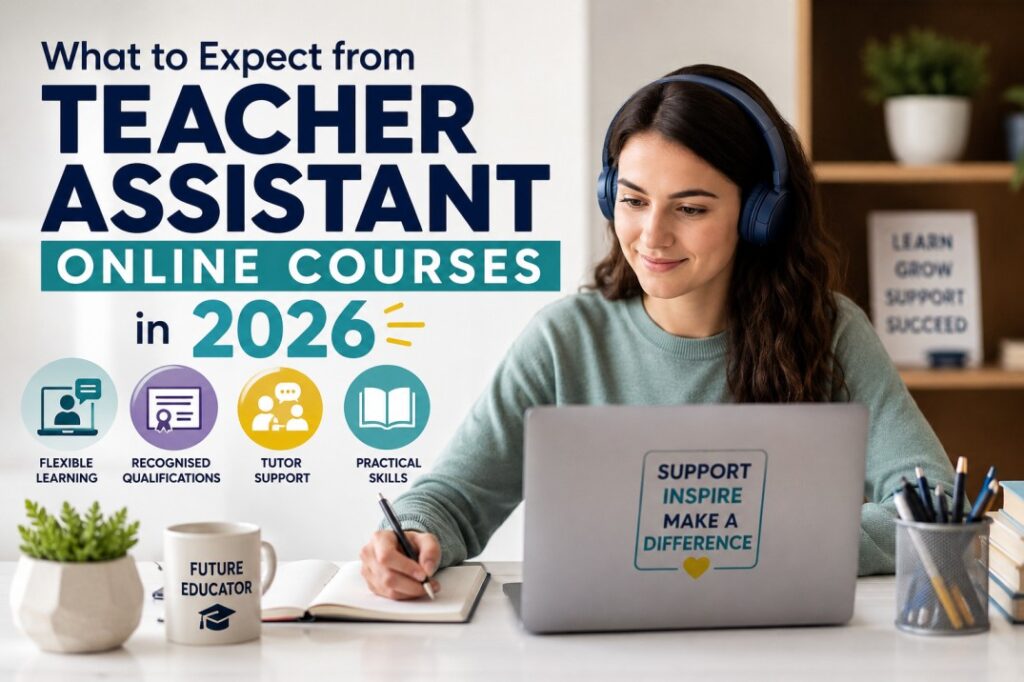

The demand for skilled teaching assistants continues to grow as schools seek professionals who can provide meaningful classroom support, assist learners with different abilities, and contribute to positive learning environments. At the same time, online education has evolved, making professional training more flexible and accessible than ever before. As a result, teacher assistant online courses have become a popular choice for individuals looking to start or advance a career in education.
In 2026, these courses offer far more than basic theory. Modern programmes combine practical knowledge, digital learning tools, tutor guidance, and recognised qualifications to prepare learners for real classroom responsibilities. Whether you are changing careers, returning to work, or taking your first step into education, understanding what today’s online courses provide can help you choose the right learning path. Many providers now offer introductory, Level 2, Level 3, and higher-level teaching assistant qualifications, allowing learners to progress according to their experience and career goals.
Greater Flexibility Than Ever Before
One of the biggest advantages of online learning in 2026 is flexibility. Unlike traditional classroom-based programmes, learners can study at times that fit around work, family, or other commitments.
Most courses allow students to:
- Access learning materials 24/7
- Study from home or any location with internet access
- Progress at their own pace
- Balance learning with full-time or part-time employment
This flexibility makes professional development achievable for people who may not be able to attend regular college classes.
A Structured Learning Journey
Today’s online teaching assistant programmes are carefully organised into manageable modules. Rather than overwhelming learners with information, the content is presented step by step.
Students can expect to study topics such as:
- Understanding child development
- Supporting learning activities
- Classroom communication
- Behaviour management
- Safeguarding responsibilities
- Equality and inclusion
- Supporting pupils with additional learning needs
- Working effectively alongside teachers
Each module builds practical knowledge that can be applied within educational settings.
Modern Digital Learning Platforms
Online education has improved significantly in recent years. Instead of relying solely on downloadable documents, many providers now use interactive learning platforms.
Students may benefit from:
- Video lessons
- Digital workbooks
- Online assessments
- Progress tracking
- Tutor messaging systems
- Resource libraries
- Mobile-friendly learning
These features create a more engaging learning experience while allowing students to study whenever convenient.
Strong Focus on Practical Skills
Although learning takes place online, course content is designed with real classroom situations in mind.
Learners develop practical skills including:
- Supporting literacy and numeracy
- Helping children remain engaged during lessons
- Encouraging positive behaviour
- Communicating with teaching staff
- Preparing classroom resources
- Promoting inclusive learning
- Building confidence with pupils
Rather than focusing only on educational theory, courses prepare learners for the daily responsibilities of a teaching assistant.
Increased Attention to Inclusive Education
Schools today welcome learners from a wide range of backgrounds and abilities. Because of this, inclusive education has become an essential part of teaching assistant training.
Many programmes now include guidance on supporting pupils with:
- Special educational needs
- Learning difficulties
- Communication challenges
- Physical disabilities
- Emotional wellbeing needs
Understanding how to adapt learning support for different pupils has become an important expectation for teaching assistants working in modern classrooms.
Recognised Qualifications
When selecting an online course, recognised qualifications remain one of the most important considerations.
In 2026, many respected providers offer accredited courses at different levels, enabling learners to build knowledge progressively and demonstrate recognised skills to employers. Course options often include introductory awards, Level 2 qualifications for beginners, Level 3 qualifications for more advanced classroom responsibilities, and Higher Level Teaching Assistant (HLTA) pathways for experienced professionals.
Choosing an accredited programme helps ensure that your qualification carries value within the education sector.
Personal Tutor Support
One common misconception about online learning is that students study completely alone. In reality, many modern providers offer ongoing tutor support throughout the course.
Learners often receive help with:
- Assignment guidance
- Academic questions
- Feedback on completed work
- Study planning
- Progress monitoring
This personalised support helps students stay motivated while improving confidence throughout their learning journey.
Opportunities to Progress
Many people begin with an introductory qualification before progressing towards higher-level certifications.
Career progression may include roles such as:
- Classroom Teaching Assistant
- SEN Teaching Assistant
- Learning Support Assistant
- Higher Level Teaching Assistant (HLTA)
- Specialist classroom support roles
Online learning provides an accessible pathway for continuous professional development without interrupting existing employment.
Digital Skills Matter More in 2026
Technology has become an everyday part of education. Teaching assistants increasingly work alongside digital learning platforms, interactive whiteboards, educational software, and online classroom resources.
As a result, many training programmes now include exposure to digital learning environments, helping future teaching assistants feel comfortable using technology to support both teachers and pupils.
These additional digital skills can improve confidence and workplace readiness.
Learning at Your Own Pace
Every learner progresses differently. One of the greatest benefits of teacher assistant online courses is the ability to move through lessons at a comfortable pace.
Some learners complete their studies quickly, while others prefer a slower schedule that fits around personal commitments. Self-paced learning reduces unnecessary pressure while allowing better understanding of each topic before moving forward.
Suitable for Career Changers
Education attracts people from many different professional backgrounds.
Individuals moving from customer service, childcare, administration, healthcare, or retail often discover that many of their existing transferable skills are valuable within schools.
Patience, communication, teamwork, organisation, and problem-solving all contribute to becoming an effective teaching assistant.
Online learning makes career transitions much easier by providing accessible education without requiring full-time attendance.
Continuous Improvements in Online Education
Online learning continues to evolve every year. Providers are improving course quality through better learning technology, updated teaching materials, improved tutor support, and more interactive resources.
Institutions such as UK Open College offer fully online teaching assistant programmes with flexible study options, tutor support, and qualifications ranging from introductory levels through Level 4 pathways, enabling learners to study around their existing commitments.
These improvements create a learning experience that is both convenient and professionally relevant.
Final Thoughts
The future of teaching assistant training is increasingly flexible, practical, and learner-focused. Modern programmes are designed to equip students with the knowledge, confidence, and professional skills needed to support teachers and pupils effectively.
From structured modules and personalised tutor support to recognised qualifications and self-paced learning, teacher assistant online courses provide an excellent route into education for aspiring professionals. As schools continue to value skilled classroom support staff, completing one of these programmes can be a positive step towards building a rewarding career. Whether you are just beginning or planning your next level of professional development, teacher assistant online courses in 2026 offer accessible opportunities to gain relevant knowledge while learning on your own schedule.
FAQs
1. Who can enrol in teacher assistant online courses?
Most courses are suitable for beginners as well as individuals already working in education who want to develop their knowledge and qualifications.
2. Can I study while working full-time?
Yes. Most online programmes are designed to be flexible, allowing learners to study around work, family, or other commitments.
3. What qualifications are available?
Many providers offer introductory courses, Level 2, Level 3, and Higher Level Teaching Assistant (HLTA) qualifications, depending on your experience and career goals.
4. What skills will I gain from these courses?
Students typically develop classroom support techniques, communication skills, behaviour management strategies, safeguarding awareness, inclusive education knowledge, and confidence in supporting children’s learning.