
In today’s competitive business landscape, organizations need more than disconnected software and manual processes to stay ahead. As companies grow, managing operations across finance, sales, inventory, purchasing, customer service, and production becomes increasingly complex.
A Cloud Enterprise Resource Planning (Cloud ERP) system helps solve these challenges by bringing every core business function into one centralized platform. Instead of working with isolated systems, departments can access the same real-time information, enabling faster collaboration, better decision-making, and greater operational efficiency.
Let’s explore how Cloud ERP transforms each department and helps businesses operate more effectively.
What Is Cloud ERP?
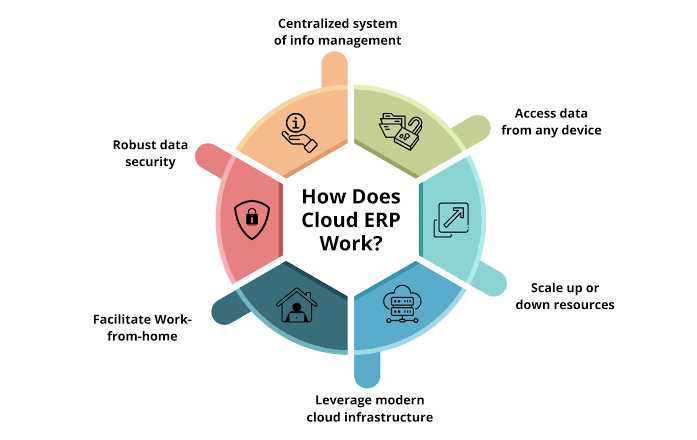
Cloud ERP is a business management system hosted on secure cloud infrastructure rather than on local servers. Employees can securely access the platform from anywhere with an internet connection, making it ideal for today’s hybrid and remote work environments.
Unlike traditional ERP systems, Cloud ERP offers automatic software updates, lower infrastructure costs, enhanced security, and the flexibility to scale as your business grows.
1. Finance: Faster Reporting and Better Financial Control
The finance department is the backbone of every organization, and accurate financial data is essential for strategic planning.
Cloud ERP streamlines financial management by automating routine tasks such as:
- General ledger management
- Accounts payable and receivable
- Bank reconciliations
- Budget tracking
- Financial reporting
With real-time dashboards and automated reporting, finance teams spend less time gathering data and more time analyzing business performance.
Key Benefits:
- Improved cash flow visibility
- Reduced manual data entry
- Faster month-end closing
- More accurate financial forecasts
2. Sales: Better Customer Insights and Faster Order Processing
Sales teams rely on accurate information to serve customers effectively. When customer records, inventory, pricing, and order history are stored in separate systems, delays and errors become inevitable.
Cloud ERP provides sales teams with instant access to:
- Customer information
- Product availability
- Pricing
- Order status
- Purchase history
This enables faster quoting, improved communication, and a more personalized customer experience.
Key Benefits:
- Shorter sales cycles
- Improved customer satisfaction
- Fewer order errors
- Better sales forecasting
3. Inventory Management: Real-Time Visibility Across the Supply Chain
Inventory management becomes increasingly difficult as businesses expand.
Cloud ERP gives organizations complete visibility into inventory across warehouses, retail locations, and distribution centers.
Instead of relying on manual stock counts or outdated reports, businesses can monitor inventory in real time.
This helps reduce:
- Overstocking
- Stock shortages
- Inventory carrying costs
- Order fulfillment delays
Key Benefits:
- Improved inventory accuracy
- Optimized stock levels
- Faster fulfillment
- Better demand planning
4. Purchasing: Smarter Procurement Processes
Purchasing teams often struggle with manual approvals, inconsistent supplier information, and delayed procurement cycles.
Cloud ERP centralizes procurement activities by managing:
- Vendor records
- Purchase orders
- Approval workflows
- Supplier performance
- Contract management
Automated purchasing workflows reduce administrative work while helping businesses negotiate better supplier relationships.
Key Benefits:
- Reduced purchasing delays
- Improved supplier management
- Lower procurement costs
- Greater purchasing transparency
5. Operations and Manufacturing: Streamlined Production
Manufacturers and operations teams need accurate production data to maintain efficiency.
Cloud ERP connects production planning, inventory, procurement, and scheduling within a single platform.
This enables businesses to:
- Track work orders
- Monitor production progress
- Manage raw materials
- Improve resource allocation
- Reduce downtime
Real-time operational data helps identify bottlenecks before they impact production schedules.
Key Benefits:
- Increased production efficiency
- Reduced waste
- Better production planning
- Improved resource utilization
6. Customer Service: Faster Response Times
Excellent customer service depends on having complete access to customer information.
Cloud ERP allows support teams to instantly view:
- Customer history
- Open orders
- Payment status
- Service requests
- Product information
Instead of transferring customers between departments, service representatives can resolve issues more efficiently.
Key Benefits:
- Faster issue resolution
- Improved customer satisfaction
- Better communication
- Increased customer retention
7. Human Resources: Simplified Workforce Management
Many organizations overlook the benefits Cloud ERP offers to HR departments.
Integrated HR functionality helps manage:
- Employee records
- Payroll integration
- Leave management
- Performance tracking
- Workforce reporting
Automation reduces paperwork while ensuring employee information remains accurate and secure.
Key Benefits:
- Reduced administrative workload
- Improved employee data accuracy
- Better compliance
- More efficient HR processes
8. Executive Leadership: Real-Time Business Intelligence
Executives need timely, accurate information to make confident business decisions.
Cloud ERP provides customizable dashboards that consolidate information from every department into one centralized view.
Leadership teams can monitor:
- Revenue
- Profitability
- Cash flow
- Inventory performance
- Sales trends
- Operational KPIs
Instead of waiting for monthly reports, decision-makers have access to real-time insights that support proactive business planning.
Key Benefits:
- Better strategic planning
- Faster decision-making
- Greater business visibility
- Improved organizational performance
Why Cloud ERP Is a Competitive Advantage
Cloud ERP doesn’t simply improve individual departments—it transforms how the entire organization operates.
When every department shares the same data, businesses experience:
- Better collaboration
- Improved communication
- Fewer manual processes
- Reduced operational costs
- Increased productivity
- Faster response to changing market conditions
This connected approach enables businesses to adapt quickly, improve customer service, and support long-term growth.
Final Thoughts
Operational efficiency isn’t achieved by working harder—it’s achieved by working smarter. Cloud ERP empowers businesses to replace fragmented systems with a unified platform that connects people, processes, and data across the organization.
As businesses continue to grow, having access to accurate, real-time information becomes essential for maintaining efficiency, improving customer experiences, and making informed decisions.
Conclusion
Investing in a Cloud ERP solution is more than a technology upgrade—it’s a strategic move toward greater agility, scalability, and operational excellence. By streamlining processes across finance, sales, inventory, purchasing, operations, HR, and customer service, businesses can eliminate inefficiencies and focus on sustainable growth.
At Premier Tech Partner, we help organizations implement Cloud ERP solutions that align with their unique business goals. From ERP consulting and cloud migration to implementation, customization, and ongoing support, our team works closely with clients to ensure they maximize the value of their technology investment.
Whether you’re modernizing existing systems or planning your digital transformation journey, Premier Tech Partner provides the expertise and support needed to help your business operate more efficiently and grow with confidence.