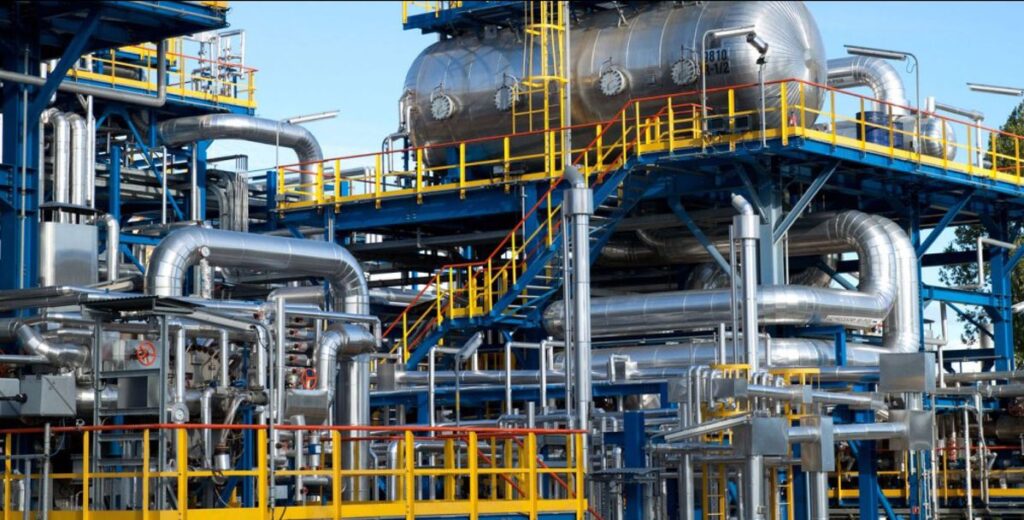

Manufacturing teams spend countless hours tracking production speed, machine uptime, and quality metrics. Yet one of the biggest opportunities for improving efficiency often escapes attention—not because it’s hidden, but because it’s everywhere.
Rises, runs through stacks, hangs around equipment, goes into the atmosphere only to vanish after each cycle of production. Factories pay great attention to electricity and cost of raw materials – yet unutilized heat quietly exits the premises, nobody wondering where it goes.And how ironic is this? A paper that a wasted heat would make out if it could, I think, would probably get rejected on a daily basis.Unfortunately, factories pay the bill anyway.
Here’s why more manufacturers are treating heat like a valuable resource instead of an unavoidable side effect.
The Budget Leak Nobody Can Actually Sweep Off the Floor

Every facility has that one cost everyone accepts until someone finally questions it.
Production equipment naturally generates heat. Furnaces, dryers, combustion systems, curing lines, and processing equipment all create thermal energy during normal operation.
The challenge isn’t producing heat.
The challenge is letting too much of it disappear.
Rather than creating additional energy from scratch, manufacturers begin using energy they’ve already paid for once.
That’s a much easier conversation for both operations teams and finance departments.
Waste Isn’t Always a Trash Problem

Sometimes “waste” is simply a missed opportunity wearing work boots.
Imagine filling a bucket with water every hour—and dumping half of it onto the ground before walking home to buy more water.
That sounds ridiculous.
Yet many industrial facilities have traditionally handled thermal energy in almost exactly that way.
Modern waste heat recovery systems reduce unnecessary energy loss while helping facilities improve overall operating efficiency.
Depending on the application, recovered heat may support multiple processes simultaneously, reducing dependence on additional fuel consumption.
Your Equipment Is Already Working Hard Enough

It doesn’t need extra energy bills as a performance review.
Every industrial operation contains equipment that produces or consumes heat.
An industrial oven is a perfect example.
Industrial ovens that are used for curing coatings, baking components, drying materials, or processing products are operated at exactly defined temperature ranges.Of course, keeping a constant temperature involves high energy consumption.Manufacturers are now finding ways to reduce fuel use by using heat energy recovery systems, where instead of simply letting the exhaust gas escape, they use it again for their operational needs.
The result isn’t magic.
It’s simply better engineering.
Less wasted energy often means:
- More consistent temperatures
- Reduced operating costs
- Improved process efficiency
- Better sustainability goals
- Lower overall emissions
Efficiency improvements usually arrive through dozens of small gains—not one dramatic change.
The Paint Booth Isn’t Just About Great Finishes
It has a second job people rarely notice.
Most people think of a paint booth as a place where products receive clean, controlled finishes.
They’re absolutely right.
But there’s another side to the story.
We have painting booths which at the same time control the flow of air, the temperature, the amount of paint spray mist, and the ventilation.Sometimes the ventilation systems carry large quantities of warm air, for example, exhaust air.Energy escapes outside the building through exhaust air when there is no recovery process in place.In today’s world facilities checking their energy performance do not look at painting quality as the only factor.
They’re asking questions like:
- Can exhaust air be used elsewhere?
- Can heating loads be reduced?
- Can airflow management become more efficient?
These questions often reveal opportunities that were invisible during older facility designs.
The Quiet Hero Behind Cleaner Manufacturing
It rarely gets attention until environmental goals become everyone’s responsibility.
A thermal oxidizer performs an essential role in many manufacturing environments by destroying volatile organic compounds (VOCs), hazardous air pollutants, and other emissions generated during production.
Its primary purpose is environmental compliance.
But modern system design often goes beyond emissions control.
Many facilities now integrate heat recovery systems directly with thermal oxidizer installations.
Instead of allowing high-temperature exhaust gases to leave unused, thermal energy can be recovered for additional industrial processes.
This creates two important advantages:
Environmental performance improves.
Energy efficiency improves.
Rather than treating compliance and efficiency as separate investments, manufacturers increasingly design systems that accomplish both objectives together.
Cleaning Equipment Can Also Teach Efficiency
Maintenance isn’t exciting—until downtime appears on Monday morning.
Production equipment gradually accumulates coatings, polymers, paint residue, carbon buildup, and manufacturing contaminants.
Safer disposal of these substances ensures a higher quality product and prevents contamination. One of the most efficient methods for this purpose is using thermal cleaning equipment. Thermal cleaning techniques work by employing heating to carefully eliminate the residue without adversely affecting any of the major components of your equipment. These methods are different from mechanical scraping or using harsh chemicals.
- Extruder parts
- Spinnerets
- Dies
- Filters
- Coating fixtures
- Production tools
Because thermal processes reduce manual cleaning effort, facilities often improve maintenance consistency while extending equipment life.
Less damage during cleaning frequently means fewer replacement parts later.
Cleaning Smarter Is Usually Faster
People love doing maintenance, but they really don’t enjoy it when performing maintenance means delaying production.Making things clean used to be a mess because it usually needed different kinds of chemical cleaners, long soaking times, and lots of hand work scraping things off, and results were not very good either.Thermal cleaning processes today have removed most of that work.Heat cycles controlled at just the right points of time dissolve unwanted deposits very well and at the same time, they don’t cause much damage to your machines.
Benefits commonly include:
- More repeatable cleaning
- Reduced manual labor
- Lower chemical usage
- Improved worker safety
- Better equipment longevity
The goal isn’t simply cleaner equipment.
The goal is returning production assets to service faster while maintaining consistent quality.
When One Improvement Helps Three Departments
Operations, maintenance, and finance rarely celebrate the same project—but this is one of them.
One reason energy optimization has gained momentum is that improvements rarely benefit only one team.
Installing waste heat recovery systems may reduce fuel costs.
Maintenance teams often see reduced equipment stress.
Environmental teams may report lower emissions.
Operations may experience greater process stability.
Finance appreciates lower utility expenses.
Instead of solving a single problem, energy recovery frequently creates a ripple effect throughout the facility.
That’s why many modernization projects begin with energy audits rather than equipment replacement.
Understanding where heat moves often reveals opportunities that were hiding in plain sight.
The New Factory Metric Isn’t Just Speed
Fast production means very little if energy keeps disappearing.
Manufacturing performance has evolved.
Years ago, production volume dominated every conversation.
Facilities that understand their energy flow usually discover opportunities for incremental improvements that accumulate into meaningful annual savings.
Curiosity Corner: Questions Worth Asking Before Your Next Energy Meeting
The smartest improvements usually begin with simple questions.
“If our equipment already creates heat, why buy more energy?”
Because recovered heat isn’t always available in the right place or at the right temperature. Effective heat recovery systems capture usable energy and redirect it where it creates measurable value.
“Are waste heat recovery systems only practical for massive factories?”
No. While larger facilities often achieve larger total savings, many medium-sized operations also benefit. The key factor is the amount of recoverable thermal energy—not simply building size.
“Can an industrial oven become more energy efficient without replacing it?”
Often, yes. Better insulation, optimized airflow, improved controls, preventive maintenance, and heat recovery opportunities can improve performance without purchasing entirely new equipment.
“Does a thermal oxidizer always increase operating costs?”
It requires energy to operate, but modern designs frequently include energy recovery features that offset a portion of those costs through recovered thermal energy.
“Is thermal cleaning equipment safer than aggressive chemical cleaning?”
Many facilities prefer thermal methods because they reduce chemical handling while providing consistent cleaning for suitable applications. The best approach depends on equipment design and production requirements.
“Where should manufacturers start?”
Begin with an energy assessment. Understanding where heat is produced, transferred, and lost provides the foundation for selecting practical thermal cleaning solutions, recovery technologies, or process improvements.
The best question isn’t “Which technology should we buy first?”
It’s “Where is our energy actually going?”
Small Adjustments Often Beat Big Announcements

The most impressive factory improvements usually don’t make dramatic headlines.
Manufacturing excellence rarely comes from one revolutionary machine.
Instead, it grows through hundreds of thoughtful improvements that quietly reduce waste, improve consistency, and support smarter operations.
Recovering heat that would otherwise disappear.
Improving how an industrial oven manages thermal energy.
Finding additional value from a paint booth ventilation system.
Integrating a thermal oxidizer with energy recovery.
Using thermal cleaning equipment to reduce downtime.
Choosing practical thermal cleaning solutions that improve maintenance efficiency.
Each decision may appear relatively small on its own.
Together, they reshape how a facility consumes energy, manages maintenance, and controls operating costs.
The factories making the biggest gains aren’t necessarily working harder.
They’re simply paying closer attention to the energy that’s already working for them—and making sure it finally gets a second shift instead of heading straight out the exhaust stack.