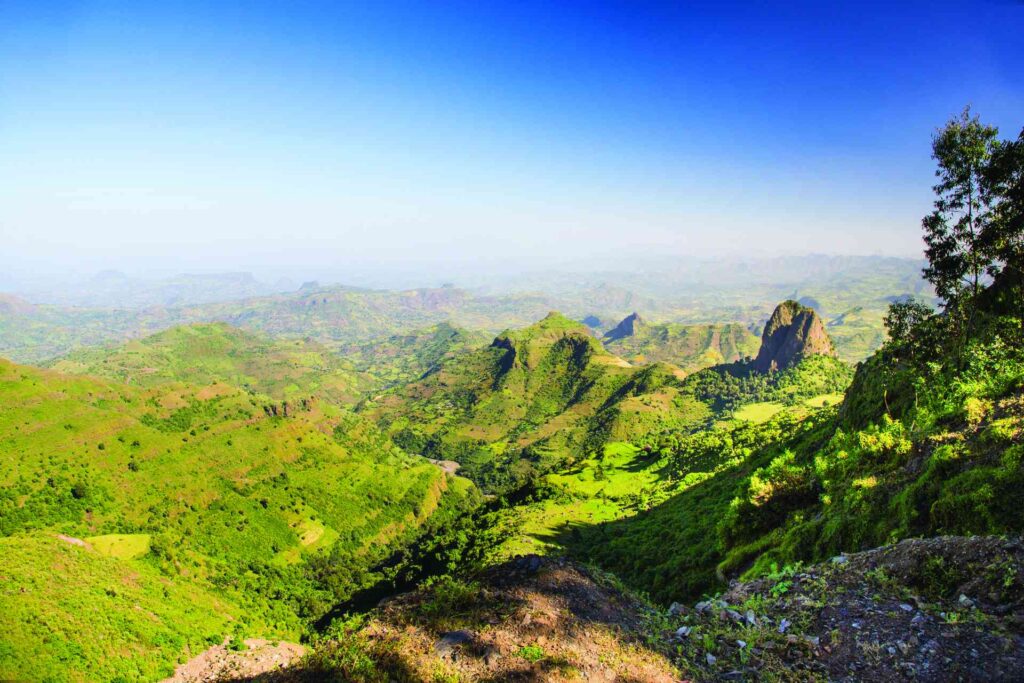
Imagine walking on a landscape so surreal that you instantly forget you are still on Earth. Brilliant yellow and neon green acid pools bubble right next to massive salt flats, while an active volcano glows deep red in the distance.
This is the Danakil Depression in northeastern Ethiopia. It is one of the most extreme, harsh, and beautiful places on our planet.
If you are an adventurer looking for a travel experience that defies words, this remote desert should be at the top of your bucket list. In this guide, we answer the most common questions travelers ask before heading to this Martian landscape.
What is the Danakil Depression and where is it?
The Danakil Depression is a massive geological geological basin located in the Afar Region of northeastern Ethiopia, near the border with Eritrea.
What makes it unique is its location. It sits at the junction of three tectonic plates—the Arabian, Nubian, and Somalian plates. As these giant plates slowly pull apart, they stretch and thin the Earth’s crust. This process has created a deep sinkhole that plunges to about 125 meters (410 feet) below sea level, making it one of the lowest land depressions on the entire planet.
This geological tearing-away also opens up the earth to intense volcanic activity, geothermal hot springs, and strange mineral formations that you cannot find anywhere else.
Why is the Danakil Depression called the hottest place on Earth?
While some deserts record higher individual temperature spikes in mid-summer, the Danakil Depression holds the record for having the highest average year-round temperature on Earth.
The annual average temperature sits around 34.4°C (94°F), and daytime temperatures during the summer months regularly shoot past 48°C (118°F).
Because it sits deep below sea level and is shielded by surrounding mountains, the hot air gets trapped inside the basin. There is very little rain, and the warm winds blowing from the nearby Red Sea offer zero relief. When you visit, the heat feels solid, like walking into a massive, invisible wall of warm air.
What are the top things to see in the Danakil Depression?
Despite the brutal climate, the Danakil Depression is packed with stunning natural wonders. A standard tour usually covers three major highlights:
1. The Psychedelic Springs of Dallol
Dallol is a dormant volcano, but beneath the surface, it is very much alive. Acidic hot springs, sulfur, iron deposits, and salt have formed a mind-boggling maze of bright yellow, neon green, and deep orange pools. It looks like a futuristic painting, but be careful where you step—the water is boiling hot and highly acidic.
2. Erta Ale Active Volcano
Erta Ale, known by the local Afar people as the “Smoking Mountain,” is one of the very few volcanoes on Earth with a persistent active lava lake. Watching the bubbling, glowing red magma rise and fall in the dark is an experience you will never forget. Most tours hike up to the rim in the cool of the evening and camp nearby.
3. Lake Assale and the Salt Caravans
This giant, white salt flat stretches as far as the eye can see. Here, local Afar miners manually cut blocks of salt from the ground under the hot sun, just as their ancestors did for centuries. They load these heavy blocks onto long caravans of camels and donkeys to transport them to the highland towns. Watching the camel silhouettes cross the salt flats at sunset is incredibly peaceful.
Is it safe to visit the Danakil Depression?
Yes, but only if you travel with a reputable, organized tour. Because of the extreme heat, rugged off-road tracks, and the proximity to international borders, you cannot visit the Danakil Depression independently.
All tour groups travel in a convoy of 4WD vehicles and are accompanied by armed local security escorts and professional guides. This is a standard safety protocol that keeps travelers safe and ensures you navigate the local communities smoothly.
The biggest safety threat is actually the environment itself. Dehydration and heatstroke can happen quickly. You must carry plenty of bottled water, wear a wide-brimmed hat, apply sunblock, and strictly follow your guide’s instructions.
When is the best time to visit the Danakil Depression?
The best time to plan your trip is between November and February.
During these winter months, the daytime temperatures drop to a slightly more manageable 35°C (95°F). This makes hiking the volcano and walking around Dallol much safer and more comfortable. Traveling here during the summer months (June to August) is highly discouraged due to the dangerous, suffocating heat.
What should you expect in terms of food and accommodation?
You must leave your expectations of luxury at home. The Danakil Depression is raw, remote wilderness, and the lack of infrastructure is part of the adventure.
Sleeping: Most nights are spent camping under the open sky on simple wooden frames with thin mattresses. Sleeping outdoors is actually a major highlight, as the desert sky is completely free of light pollution, offering breathtaking views of the stars.
Facilities: There is no running water, electricity, or Wi-Fi in the desert camps. You will be using basic dry toilets and wet wipes instead of showers for a couple of days.
Food: Tours travel with professional camp cooks who prepare surprisingly fresh, warm meals (like pasta, stews, rice, and fresh fruit) using portable gas stoves.
Do you need a visa to travel to Ethiopia and the Danakil Depression?
Yes, most international travelers need a visa to enter Ethiopia before they can head to the Danakil region. Fortunately, the process is now incredibly simple. You can easily apply for an electronic visa (e-Visa) online before you book your flights.
To see if your passport qualifies and to start your application, check out the list of all eligible countries for Ethiopia visa.
Why Choose Us for Your Ethiopia Visa?
Planning a trip to one of the most remote places on Earth can feel overwhelming. Let us handle the paperwork so you can focus on the adventure of a lifetime.
Reliable Travel Visa Services: Our global approach has assisted numerous travelers in obtaining their Visa quickly and without stress.
Round-the-Clock Assistance: Reach out to us 24/7, and our dedicated experts will respond to your queries within 72 hours.
Experienced Visa Consultants: Receive expert, personalized guidance to ensure the complete accuracy and acceptance of your application.
Efficient Visa Application Process: Skip the long embassy lines. Apply for your Ethiopia Visa in minutes using our simplified, user-friendly form.