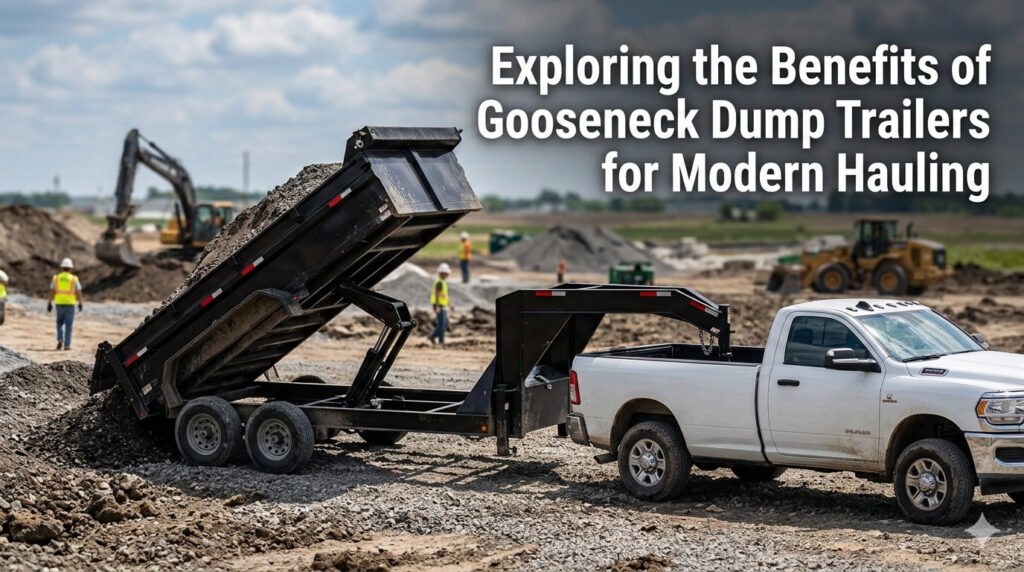

Early mornings on a work site have a certain rhythm. Engines warming up, gravel crunching under boots, someone sipping coffee out of a dented thermos. If you spend enough time around construction crews, landscapers, or even serious DIY folks, you start noticing the equipment they rely on every day. One thing that keeps popping up in those conversations—almost casually—is gooseneck dump trailers.
Not in a flashy way. More like, “Yeah… once you haul with one, it’s hard to go back.”
And honestly, that says a lot.
The First Thing People Notice: Stability
Hauling heavy loads can feel a little nerve-racking. Anyone who’s pulled a trailer down a narrow road with loose gravel knows the feeling. A slight sway and your hands grip the steering wheel tighter than usual.
This is where a gooseneck dump trailer starts making sense.
The hitch connects inside the bed of a truck rather than hanging off the back bumper. That one design change shifts the weight forward, closer to the axle of the truck. The result? A trailer that tracks straighter and feels calmer behind you.
Some drivers describe it like this: the trailer feels “part of the truck” instead of something being dragged along.
Long drives. Highway speeds. Tight turns at job sites. All of that gets a bit easier.
Heavy Loads Without the Nervous Feeling
Not every hauling job is small. Dirt piles, broken concrete, roofing materials, construction debris… these things add up fast.
A heavy duty gooseneck dump trailer handles bigger payloads without the uneasy wobble people sometimes get with lighter bumper pull setups. The weight distribution is just different. Better balanced.
A contractor I met once joked that his trailer carries “half the job site.” That might be exaggerating a little, though the idea is clear.
High-capacity hauling matters.
Loads like gravel, demolition waste, or landscaping stone can easily push the limits of smaller trailers. A high capacity dump trailer with a gooseneck hitch allows crews to move more material in fewer trips. Less driving back and forth. Less fuel burned. Less time lost during the day.
And time… yeah, that’s always the thing everyone wants more of.
Dumping the Load Is Surprisingly Easy
Another part people talk about is the dump function itself. If you’ve ever shoveled a trailer full of dirt by hand, you already know why this matters.
Most hydraulic gooseneck dump trailers use a hydraulic lift system that raises the bed with the push of a button. The trailer tilts up, gravity takes over, and the load slides right out.
No wrestling with a shovel for half an hour.
No aching back at the end of the day.
It’s oddly satisfying, actually. You watch the material slide off the steel bed and think… okay, that was quick.
A lot of crews rely on that speed. Landscaping companies dumping soil. Construction teams unloading broken asphalt. Farmers clearing feed or manure. The hydraulic lift turns a heavy chore into something that takes a couple minutes.
Built for Rough Work
Some trailers look good in a parking lot. Clean paint, shiny metal. Then they meet a muddy construction site and things change quickly.
A gooseneck dump trailer for construction work tends to be built thicker and stronger than lighter hauling options. Steel frames, reinforced sides, thicker floors. The kind of structure that can handle rough materials like bricks, chunks of concrete, or wet soil.
And honestly, job sites are rarely gentle places.
Mud gets everywhere. Rocks bounce around inside the trailer bed. Sometimes equipment accidentally bumps the sidewalls while loading.
A solid trailer shrugs that off.
Not perfectly, of course. Nothing stays flawless forever in this line of work. Still… sturdier equipment means fewer headaches down the road.
Turning Radius That Surprises People
Here’s something a lot of first-time users notice right away: maneuvering.
It sounds odd at first. A larger trailer turning easier than a smaller one?
Yet the pivot point of a gooseneck dump trailer sits above the truck axle. That location allows tighter turns compared to many bumper pull trailers. Backing into narrow job site entrances or adjusting position near a pile of gravel suddenly feels less awkward.
You still need practice. No trailer magically drives itself.
Though after a few attempts, many drivers get comfortable with it. The control just feels… smoother.
Gooseneck Dump Trailer vs Bumper Pull: The Ongoing Debate
People love debating this topic around job sites.
The gooseneck dump trailer vs bumper pull trailer discussion comes up a lot, especially among new buyers. Both styles have their place. Smaller projects, lighter loads, or limited truck capacity might lean toward bumper pull trailers.
Yet once hauling starts getting serious, many operators switch.
The reasons pop up again and again:
-
Better weight balance
-
Larger hauling capacity
-
Smoother towing at higher speeds
-
Improved stability on rough roads
Some drivers hesitate at first because the hitch sits inside the truck bed. Losing a bit of bed space feels inconvenient. Then they tow a heavy load with a gooseneck setup and the hesitation fades pretty quickly.
Funny how experience changes opinions.
One Trailer… Many Jobs
Versatility might be the quiet advantage people overlook.
A gooseneck dump trailer for sale often attracts buyers from several industries. Construction crews, landscaping businesses, farmers, property managers, even homeowners tackling serious land projects.
The tasks vary quite a bit:
-
Hauling gravel and sand
-
Moving demolition debris
-
Carrying logs or brush
-
Transporting roofing shingles
-
Clearing out yard waste
One day the trailer might haul stone for a retaining wall project. The next day it’s loaded with tree branches after storm cleanup.
That kind of flexibility makes the trailer feel less like a single-purpose tool and more like a reliable work partner.
Long Days Become a Little Easier
Most hauling jobs aren’t glamorous. They involve dust, noise, and long hours behind the wheel. Anything that saves effort starts to matter more than people expect.
A hydraulic gooseneck dump trailer cuts down unloading time.
A heavy duty gooseneck dump trailer carries bigger loads safely.
A high capacity dump trailer reduces repeated trips.
Add those small advantages together and the workday flows a bit smoother.
Which is probably why experienced operators talk about them in that relaxed, confident tone.
Not excitement. Just quiet approval.
So… Is It Worth It?
Some equipment purchases feel like a gamble. You buy it hoping it holds up.
Gooseneck dump trailers usually earn their reputation over time. Day after day of hauling dirt, rock, debris, scrap. The kind of work that reveals weaknesses fast.
Yet many keep showing up at job sites year after year, scratched paint and all.
That tells a story on its own.
And once someone spends a few months hauling with one… well, the old trailer sitting in the yard tends to collect a little dust.