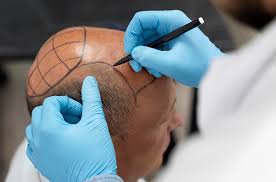

Nobody really notices it happening at first. You’re getting ready in the morning, and something just looks slightly off maybe the parting looks wider, or the light catches your scalp in a way it didn’t used to. You brush it off. A week later, you notice again. Then again. And at some point, you stop brushing it off.
Hair loss doesn’t announce itself. It just quietly changes the way you look at yourself in the mirror — and for many people, that shift goes much deeper than appearance alone.
Here’s the thing, though—the options available today are genuinely different from what existed even five years ago. Today, there is not only better technology but also a more thoughtful understanding of how hair grows, why it stops, and what it takes to restore it in a way that looks real. Whether it’s early-stage solutions like PRP hair treatment to strengthen thinning hair or more advanced options like choosing the best hair transplant in Bangalore for natural-looking results, the approach today is far more personalized and effective.
First, Why Is This Happening?
It is important to understand this before proceeding further. Hair loss isn’t one-size-fits-all—it shows up differently depending on the person, and the reason behind it shapes the treatment entirely.
Genetics is the primary factor for most individuals. If your father or grandfather had thinning hair, chances are you’re dealing with the same pattern. But genetics isn’t the only story. Hormonal shifts — especially in women after pregnancy or during menopause — can trigger significant shedding. So can prolonged stress, nutritional gaps, thyroid issues, or even certain medications.
Knowing what’s driving your hair loss isn’t just useful — it’s essential. Jumping into a treatment without that clarity is like taking medicine without knowing your diagnosis.
What’s Actually Working Right Now
FUE—THE One Most People Have Heard Of
Follicular Unit Extraction, or FUE, is probably the most talked-about technique in hair restoration today — and for good reason. The idea is straightforward: individual hair follicles are taken from a part of the scalp where hair is still growing well (usually the back of the head) and carefully placed into areas where it isn’t.
What changed the game with FUE isn’t the concept — it’s the precision. Surgeons now place each follicle at a specific angle and direction to match how your natural hair grows. That detail alone is the difference between a result that looks transplanted and one that just looks like… your hair.
There’s also no linear scar involved, which matters more than people realise. It means you’re not locked into wearing your hair a certain length to hide anything.
For anyone researching the best hair transplant in Bangalore, this is typically the technique worth asking about first — though the right surgeon will tell you honestly whether it’s the best fit for your situation.
FUT — Still Relevant, Just Different
FUT (Follicular Unit Transplantation) tends to get overshadowed by FUE in conversations, but it’s not outdated it’s just suited to a different situation. Instead of extracting follicles one by one, a thin strip of scalp is removed from the donor area, and grafts are prepared from it.
It does leave a scar along the back of the scalp, which is the main trade-off. But it also allows for a higher number of grafts in a single session, which means it’s often the more practical route for someone dealing with more extensive hair loss who needs broader coverage quickly.
PRP — When You’re Not Ready for Surgery
Many people are somewhere in the middle hair is thinning, but they’re not at the point where a transplant feels necessary or right. That’s where PRP hair treatment has genuinely carved out its place.
PRP stands for Platelet-Rich Plasma. Your own blood is drawn, spun in a centrifuge to concentrate the platelets, and then injected into the scalp. Those platelets carry growth factors that essentially wake up sluggish follicles, improve circulation to the scalp, and help existing hair grow in thicker and stronger.
It’s not a dramatic overnight fix results build over three to six months, and most people need several sessions. But for early to moderate hair loss, the improvement can be quite significant. It’s also commonly used alongside transplants to help the scalp heal faster and improve graft survival.
Combining Both—THE Approach That’s Gaining Traction
One shift worth noting in how hair restoration is being approached today is the move away from single treatments toward combinations. Transplant plus PRP, for instance, isn’t just about doing more it’s about each treatment supporting the other. The PRP helps the transplanted follicles settle in better, which means better density in the final result.
At Kosmoderma, this kind of layered thinking shapes how treatment plans are built. Rather than fitting patients into a standard protocol, the focus is on understanding each person’s scalp health, the extent of their hair loss, and what they’re realistically hoping for — and then designing something around that.
What to Actually Expect
Transplant results don’t show up immediately. The transplanted hair typically sheds in the first few weeks which can feel alarming if you’re not expecting it—before new growth begins coming in around the three to four-month mark. Full results usually settle in somewhere between nine and twelve months.
PRP timelines are gentler but similarly gradual. Most people start noticing a difference after the second or third session.
Long-term, maintenance plays a bigger role than many people expect. Diet, scalp care, and occasional follow-up treatments all contribute to how well results hold over time.
Picking the Right Place in Bangalore
Bangalore has genuinely become one of the stronger cities in India for hair restoration there are experienced dermatologists here and clinics that have invested seriously in the technology. That said, quality varies, and it’s worth being selective.
A few things to pay attention to: look at real before-and-after results from actual patients, not stock images. Ask about the surgeon’s specific experience with hairline design it’s a nuanced skill. And notice how the consultation feels. A good clinic takes time with you. A rushed consultation where someone hands you a package price before properly assessing your scalp is a sign to keep looking.
Those searching for the best hair transplant in Bangalore will find Kosmoderma consistently mentioned the clinic’s reputation rests on individualized care and clinical depth rather than volume.
Wrapping Up
Hair loss is personal in a way that’s hard to explain to someone who hasn’t experienced it. But the gap between where things are and where they could be is smaller than it’s ever been. The techniques are genuinely good now — precise, natural-looking, and increasingly accessible.
The most important first step is just an honest conversation with someone who actually knows what they’re looking at. From there, the right path forward becomes a lot clearer.