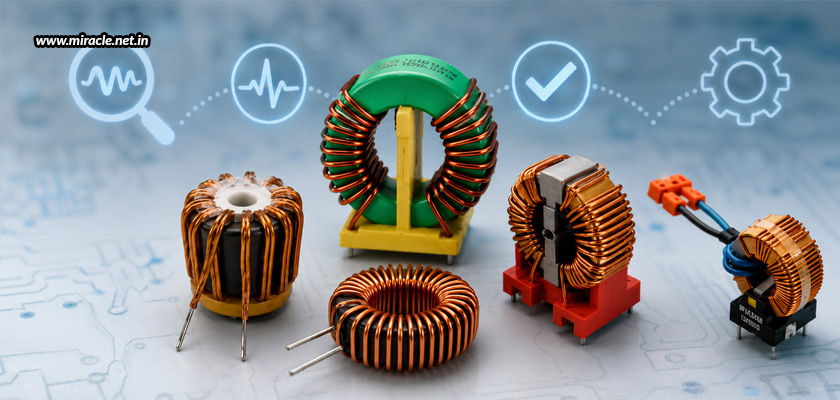

Ferrite inductors are vital magnetic components utilized in contemporary electronic circuits for energy storage, current flow regulation, and minimizing unwanted electrical noise. Choosing the correct ferrite inductor is essential, as an inappropriate component can negatively impact efficiency, stability, thermal performance, and the overall reliability of the system. Ferrite inductors are integral to a diverse array of applications, from power conversion systems and communication devices to sophisticated medical equipment and consumer electronics, including SMPS, automotive electronics, industrial automation, and telecom systems. Engineers must consider various factors before selecting an inductor, such as inductance value, current handling capacity, operating frequency, core material, size, temperature performance, and specific application requirements.
Understanding ferrite inductors
Ferrite inductors are electronic components that use ferrite-based magnetic cores to store energy in a magnetic field when electrical current flows through a coil. They function by opposing sudden changes in current, helping regulate power flow and filter unwanted signals in electronic circuits. Ferrite is widely used as a core material because of its high magnetic permeability, low electrical conductivity, and excellent high-frequency performance, making it suitable for switching power applications. Compared with air-core inductors, ferrite inductors provide higher inductance values in a more compact size due to the properties of the ferrite core. Compared with powdered iron inductors, they offer better high-frequency performance and lower core losses. They are commonly used in power supplies, DC-DC converters, noise filtering circuits, RF applications, and electronic systems requiring efficient energy management.
Why choosing the right ferrite inductor matters
Selecting the right ferrite inductor significantly impacts the performance and reliability of an electronic system. Inductors help maintain stable current and voltage levels by regulating energy flow and minimizing fluctuations within circuits. An unsuitable inductor can result in unstable operation, affecting the overall functionality of the device. A suitable ferrite inductor improves energy efficiency by reducing core and copper losses during operation, which is essential in power conversion systems. It also helps minimize electromagnetic interference (EMI) by suppressing unwanted electrical noise produced during switching activities. Properly selected inductors ensure effective filtering in power supply and signal processing applications. Using an inductor designed for specific electrical and environmental conditions can extend equipment lifespan by reducing stress on surrounding components. Lower electrical losses also reduce heat generation, improving thermal performance and preventing premature component failure.
Key factors to consider when selecting a ferrite inductor
Selecting the right ferrite inductor requires evaluating electrical, mechanical, and environmental factors. Application needs, operating conditions, performance expectations, and reliability requirements determine the most suitable inductor for a specific electronic system.
- Application specifications
Different applications require ferrite inductors with specific characteristics. SMPS, DC-DC converters, automotive electronics, RF systems, industrial automation, and medical devices demand inductors designed for their unique performance, frequency, and reliability requirements.
- Inductance value
The correct inductance value ensures effective energy storage and current regulation. Excessive inductance can reduce response speed, while insufficient inductance increases ripple current and affects filtering efficiency and circuit stability.
- Current rating
Current rating determines an inductor’s ability to handle operating currents safely. Considering rated current, saturation current, and RMS current prevents overheating, efficiency losses, and potential failures caused by insufficient current capacity.
- Operating frequency
Ferrite inductors perform efficiently at higher frequencies due to their low core losses. Matching the inductor’s frequency characteristics with the circuit requirements improves efficiency, reduces heating, and ensures reliable performance.
- Core material
Core material affects frequency response, losses, and power handling capability. MnZn ferrite suits lower-frequency applications, while NiZn ferrite performs better at higher frequencies due to reduced losses and improved efficiency.
- DC resistance
Low DC resistance helps minimize copper losses, reduce heat generation, and improve efficiency. This is especially important in battery-powered electronics where energy conservation and extended operating performance are critical considerations.
- Inductance tolerance
Inductance tolerance indicates variation between specified and actual values. Tight tolerance is essential for precision circuits requiring consistent performance, while wider tolerance may be acceptable in less sensitive applications.
- Size and package type
Size and package selection depend on PCB limitations and design requirements. Surface-mount inductors support compact assemblies, while through-hole inductors provide stronger mechanical stability in demanding applications.
- Temperature performance
Temperature performance ensures reliable operation across varying environmental conditions. Selecting inductors with suitable thermal stability helps maintain consistent inductance, prevent degradation, and improve reliability in industrial and automotive applications.
- EMI performance
Ferrite inductors help control electromagnetic interference in electronic systems. Shielded versions reduce magnetic interference in noise-sensitive applications, while non-shielded inductors may suit less-sensitive circuits requiring basic filtering.
- Reliability and compliance
Reliable ferrite inductors require quality materials, consistent manufacturing, and rigorous testing. Compliance with industry standards, electrical validation, and quality assurance processes ensures dependable performance throughout the component’s operational lifespan.
Common mistakes when choosing ferrite inductors
Choosing a ferrite inductor requires more than just picking a component with the desired inductance value. Focusing solely on one specification can lead to subpar performance, increased losses, and diminished system reliability.
- Focusing solely on inductance
Selecting an inductor based only on inductance value can overlook current rating, frequency, and thermal requirements, leading to poor performance under actual operating conditions.
- Disregarding saturation current
Exceeding saturation current reduces energy storage capability, increases ripple current, causes overheating, and lowers efficiency. Maintaining sufficient current margin ensures reliable inductor performance.
- Neglecting thermal conditions
Ignoring temperature effects can cause excessive heat buildup, material degradation, and reduced lifespan. Evaluating operating conditions helps maintain long-term ferrite inductor reliability.
- Opting for the cheapest component
Choosing only by initial cost may increase expenses due to failures and replacements. Considering lifecycle cost ensures better reliability, efficiency, and value.
- Overlooking mechanical constraints
Ignoring PCB layout, available space, mounting methods, and placement requirements can create design challenges, assembly issues, and limitations during product development.
Choosing a reliable ferrite inductor manufacturer
Selecting a dependable ferrite inductor manufacturer is essential for achieving consistent quality, durability, and long-term performance. Manufacturers with advanced production capabilities ensure precise specifications, reliable magnetic materials, and controlled manufacturing processes. Comprehensive testing procedures, certifications, and quality assurance systems help verify that inductors meet industry requirements. Customization support is also valuable for applications with unique electrical and mechanical needs. A trusted manufacturer should provide technical assistance, maintain production consistency, and ensure reliable supply throughout product development. For businesses seeking ferrite inductor exporters India to USA, Miracle Electronics delivers dependable magnetic solutions through precision manufacturing, rigorous quality control, and extensive industry expertise, supporting diverse electronic applications with high-performance ferrite inductors.
There is no universal ferrite inductor that fits every application. Choosing the appropriate component necessitates careful evaluation of electrical, thermal, mechanical, and environmental factors. Considering more than just the inductance value can enhance efficiency, reliability, EMI performance, and the overall lifespan of the equipment. Factors like current rating, operating frequency, core material, DC resistance, temperature performance, and manufacturing quality all play a role in the performance of inductors. Opting for high-quality ferrite inductors from seasoned manufacturers guarantees consistent operation and reliable performance across a broad spectrum of electronic applications. A well-chosen ferrite inductor not only enhances circuit functionality but also bolsters the long-term reliability of the entire system.