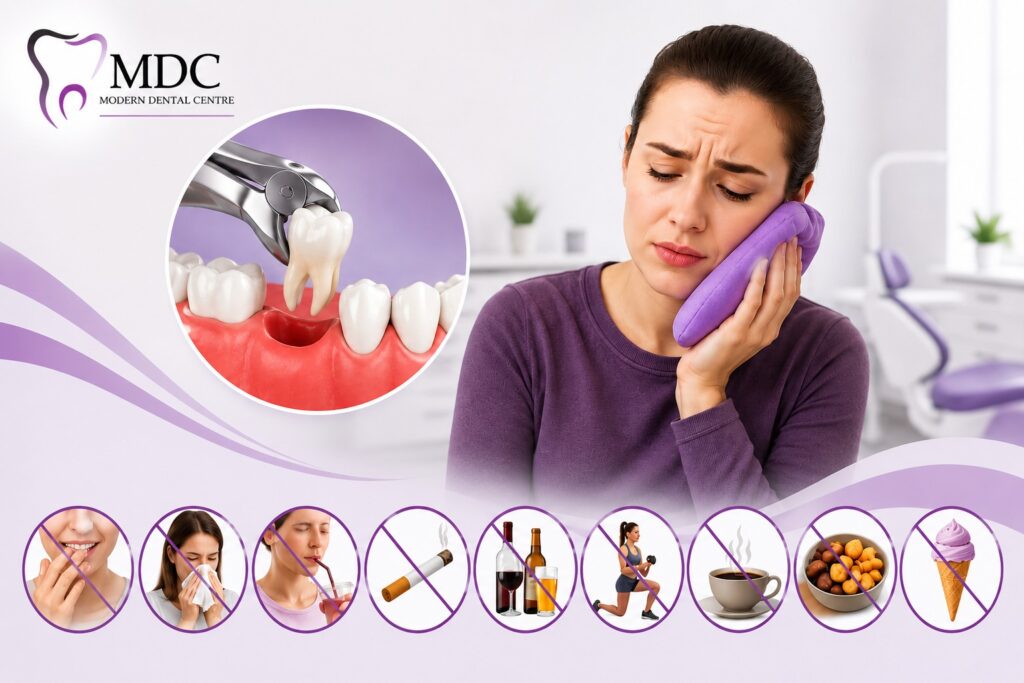

Dental extraction treatment is more common than people think and often far less intimidating than expected. Whether it’s due to severe decay, infection, or wisdom tooth complications, removing a tooth is sometimes the best step toward protecting your overall oral health.
But here’s what many patients underestimate: what you do after the extraction matters just as much as the procedure itself.
Think of it like planting a seed. The dentist has done the careful work of preparing the ground but if you don’t water it properly or protect it, things can go wrong quickly.
At clinics like Modern Dental Centre, patient recovery is taken just as seriously as the procedure itself because proper aftercare is what ensures long-term success.
In my experience working with dental patients and reviewing recovery cases, most complications don’t come from the extraction itself they come from small, avoidable mistakes during recovery.
This guide breaks down the 9 most common mistakes after dental extraction treatment and how to avoid them, so your healing is smooth, fast, and complication-free.
Why Post-Extraction Care Is Critical
After a tooth is removed, your body forms a blood clot at the extraction site. This clot is not just part of healing it’s essential. It protects the bone, nerves, and underlying tissue.
If that clot is disturbed or dislodged, it can lead to a painful condition called dry socket, which delays healing and may require additional treatment.
So, the goal is simple:
- Protect the clot
- Keep the area clean
- Avoid unnecessary stress on the site
1. Ignoring Your Dentist’s Instructions
It sounds obvious, but this is the most common mistake.
After dental extraction treatment, your dentist gives you specific instructions tailored to your case things like when to rinse, what to eat, and which medications to take.
What goes wrong:
- Patients rely on generic advice from the internet
- Skip medications early
- Change instructions based on “what feels okay”
Better approach:
Follow your dentist’s instructions exactly, even if your symptoms seem mild. Healing isn’t always visible from the outside.
Read Also : Benefits of Early Tooth Filling Treatment for Long-Term Oral Health
2. Rinsing or Spitting Too Soon
Many people feel the urge to clean their mouth immediately but doing it too early can dislodge the clot.
Why it’s risky:
Forceful rinsing or spitting creates pressure inside your mouth, which can pull out the clot.
What to do instead:
- Avoid rinsing for the first 24 hours
- After that, use gentle saltwater rinses
- Let liquid fall out of your mouth instead of spitting forcefully
3. Using Straws After Tooth Extraction
This one surprises a lot of patients.
The issue:
Suction from using a straw can pull out the blood clot similar to aggressive rinsing.
Real-life example:
Patients who switch to smoothies after extraction often think they’re making a safe choice but using a straw can undo healing progress.
Better option:
Drink directly from a glass for at least 5–7 days.
4. Smoking or Using Tobacco
If there’s one habit that dramatically increases complications, it’s this.
Why it’s harmful:
- Reduces blood flow (slower healing)
- Introduces bacteria
- Suction motion increases dry socket risk
Clinical insight:
Patients who smoke after dental extraction treatment are significantly more likely to experience delayed healing and infection.
Recommendation:
Avoid smoking for at least 72 hours (minimum) ideally longer.
5. Eating Hard, Crunchy, or Spicy Foods
Your mouth is in a delicate state after extraction.
Common mistake:
Jumping back into normal eating too quickly.
What can happen:
- Food particles get stuck in the socket
- Sharp foods irritate the wound
- Spicy foods cause discomfort and inflammation
What to eat instead:
- Soft foods like yogurt, mashed potatoes, soups, smoothies (no straw)
- Lukewarm not hot meals
Think of it as giving your mouth a “recovery diet” for a few days.
6. Touching the Extraction Site
Curiosity is natural but your fingers and tongue can cause more harm than you think.
What patients often do:
- Check the area repeatedly with their tongue
- Touch it with fingers to “see how it’s healing”
Why it’s risky:
- Introduces bacteria
- Disrupts the clot
- Delays healing
Better habit:
Leave it alone. Healing happens best when undisturbed.
7. Skipping Medications or Stopping Early
Painkillers and antibiotics are prescribed for a reason.
Mistake:
Stopping medication once pain reduces.
Why this matters:
- Incomplete antibiotic courses can lead to infection
- Pain can return unexpectedly
- Inflammation may worsen
Best practice:
Complete the full course exactly as prescribed even if you feel better.
8. Avoiding Rest and Physical Activity Restrictions
Many people underestimate how much rest matters.
Typical mistake:
Returning to workouts, heavy lifting, or busy routines too soon.
What happens:
- Increased blood pressure can disturb the clot
- Bleeding may restart
- Healing slows down
Guideline:
Take it easy for at least 24–48 hours. Light activity is fine, but avoid anything strenuous.
9. Not Watching for Warning Signs
Some discomfort is normal but certain symptoms shouldn’t be ignored.
Red flags to watch for:
- Severe pain after 2–3 days
- Bad taste or smell in the mouth
- Swelling that worsens instead of improving
- Fever
What this could mean:
- Dry socket
- Infection
Action:
Contact your dentist immediately. Early treatment prevents bigger problems.
Simple Recovery Checklist
To make things easier, here’s a quick summary you can follow:
- Keep the extraction site undisturbed
- Eat soft, gentle foods
- Stay hydrated (no straws)
- Take medications as prescribed
- Rest and avoid heavy activity
- Don’t smoke or use tobacco
- Don’t rinse aggressively
- Don’t touch the area
A Practical Analogy: Think “Wound Care, Not Just Dental Care”
If you had a visible wound on your skin, you wouldn’t:
- Keep poking it
- Expose it to dirt
- Ignore care instructions
Your extraction site deserves the same level of care—it’s just hidden inside your mouth.
Final Thoughts: Healing Is a Partnership
Dental extraction treatment doesn’t end when you leave the clinic. Healing is a shared responsibility between you and your dentist.
The good news?
Most complications are preventable with simple, mindful habits.
If you avoid these 9 mistakes, you’re giving your body the best chance to heal quickly and comfortably without unnecessary pain or setbacks.
What to Do Next
If you’ve recently had a tooth extraction:
- Review your dentist’s aftercare instructions again
- Follow the checklist above
- Reach out to your clinic if anything feels unusual
And if you’re planning a dental extraction treatment soon, now you know exactly how to prepare for a smooth recovery.