
Introduction
Yoga is an ancient discipline that goes beyond physical exercise and flexibility. It is a path toward self-awareness, inner peace, and spiritual growth. Among the many traditional forms of yoga, Ashtanga Yoga is known for its dynamic sequences, disciplined structure, and deep connection to yogic philosophy. One of the most important traditions in this practice is the chanting of the ashtanga opening mantra before beginning the physical postures.
The ashtanga opening mantra is a sacred prayer recited at the start of every traditional Ashtanga Yoga session. It is more than a ritual; it is an expression of gratitude, respect, and devotion toward the teachers who have preserved and transmitted the teachings of yoga through generations. Chanting this mantra helps practitioners prepare mentally, emotionally, and spiritually for their practice while creating a sense of focus and mindfulness.
Understanding the meaning and significance of the ashtanga opening mantra can deepen your appreciation of Ashtanga Yoga and enrich your overall experience on and off the mat.
What Is the Ashtanga Opening Mantra?
The ashtanga opening mantra is a traditional Sanskrit prayer recited before beginning an Ashtanga Yoga practice. It is often referred to as the Guru Prayer because it honors the lineage of yoga teachers and expresses gratitude for the wisdom they have shared.
This mantra has been an essential part of Ashtanga Yoga for decades and is commonly chanted in yoga shalas around the world. It serves as a reminder that yoga is not just a physical practice but also a spiritual journey guided by ancient teachings.
The prayer is dedicated to the gurus and to Sage Patanjali, the revered author of the Yoga Sutras, who is considered one of the most influential figures in the history of yoga.
Traditional Sanskrit Text of the Ashtanga Opening Mantra
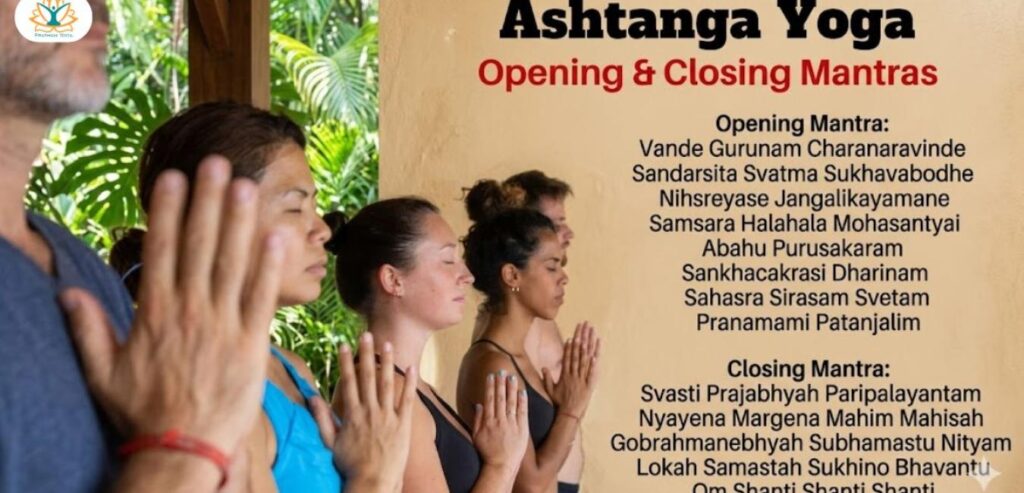
The ashtanga opening mantra is traditionally chanted as follows:
Om
Vande Gurunam Charanaravinde
Sandarsita Svatma Sukhava Bodhe
Nihsreyase Jangalikayamane
Samsara Halahala Mohasantyai
Abahu Purushakaram
Shankhachakrasi Dharinam
Sahasra Sirasam Svetam
Pranamami Patanjalim
Om
These sacred Sanskrit verses have been preserved through generations and continue to be recited by practitioners worldwide.
Meaning of the Ashtanga Opening Mantra
Understanding the translation of the ashtanga opening mantra helps practitioners connect more deeply with its message.
The first section is dedicated to honoring the gurus:
“I bow to the lotus feet of the gurus who reveal the understanding of the happiness of pure being. They act as healers, removing the poison of ignorance and the suffering caused by worldly existence.”
The second section pays tribute to Sage Patanjali:
“I salute Patanjali, who has a human form to the shoulders and whose upper body is represented by a thousand-headed serpent. He holds a conch, a discus, and a sword.”
The mantra expresses gratitude for the teachings that guide practitioners toward wisdom, self-awareness, and liberation.
Why Is the Ashtanga Opening Mantra Chanted?
Many students wonder why the ashtanga opening mantra is recited before every practice. The answer lies in its ability to create the right mindset for yoga.
Establishes Focus
Modern life is filled with distractions. Chanting the mantra helps practitioners shift their attention away from daily concerns and bring awareness to the present moment.
Honors the Yoga Tradition
The mantra acknowledges the lineage of teachers who have preserved and passed down the teachings of yoga. This tradition keeps the spirit of yoga alive across generations.
Creates a Sacred Atmosphere
Reciting the mantra transforms the practice space into a place of mindfulness and reverence. It encourages practitioners to approach yoga with respect and sincerity.
Encourages Gratitude
The ashtanga opening mantra reminds students to appreciate the wisdom, guidance, and opportunities available through yoga practice.
Supports Spiritual Growth
The prayer inspires self-reflection and encourages practitioners to look beyond physical achievements toward deeper spiritual understanding.
The Significance of Guru Parampara
One of the central themes of the ashtanga opening mantra is Guru Parampara, the lineage of teachers and students through which yoga knowledge is transmitted.
In traditional yoga, learning is not limited to books or theory. Wisdom is passed directly from teacher to student through experience, observation, and practice. The mantra honors this sacred relationship and acknowledges the role of teachers in guiding students along their journey.
By chanting the mantra, practitioners recognize that they are part of a long and respected tradition that extends back thousands of years.
Who Was Sage Patanjali?
The ashtanga opening mantra includes a tribute to Sage Patanjali, one of the most influential figures in yoga philosophy.
Patanjali is best known for compiling the Yoga Sutras, a collection of teachings that form the foundation of classical yoga. His work outlines the principles and practices that lead to mental clarity, self-discipline, meditation, and spiritual liberation.
The image of Patanjali holding symbolic objects represents wisdom, knowledge, and the ability to remove obstacles on the spiritual path.
Honoring Patanjali through the ashtanga opening mantra serves as a reminder of the philosophical roots of yoga and the importance of inner transformation.
Benefits of Chanting the Ashtanga Opening Mantra
Regular chanting of the ashtanga opening mantra can offer numerous benefits.
Mental Benefits
- Improves concentration
- Reduces mental distractions
- Promotes mindfulness
- Encourages emotional balance
- Enhances self-awareness
Physical Benefits
- Supports controlled breathing
- Relaxes the nervous system
- Improves vocal resonance
- Creates a sense of calm before movement
- Helps regulate stress responses
Emotional Benefits
- Develops gratitude
- Encourages humility
- Fosters a positive mindset
- Strengthens emotional resilience
- Promotes inner peace
Spiritual Benefits
- Deepens connection to yoga philosophy
- Enhances meditation practice
- Supports self-reflection
- Cultivates devotion and respect
- Encourages personal growth
These benefits make the ashtanga opening mantra an integral part of a well-rounded yoga practice.
How to Chant the Ashtanga Opening Mantra
If you are new to chanting, the process is simple and accessible.
Find a Comfortable Position
Sit comfortably with your spine upright. You may sit cross-legged on the floor or on a chair.
Relax and Breathe
Take several slow breaths to calm the mind and body before chanting.
Listen Carefully
Learning proper pronunciation takes time. Listening to experienced teachers can help you become familiar with the sounds and rhythm.
Chant with Intention
Focus on the meaning of the words rather than striving for perfection. Sincerity is more important than flawless pronunciation.
Maintain Awareness
Allow the vibration of the mantra to settle the mind and prepare you for practice.
Transition into Yoga
After chanting, begin your Ashtanga Yoga sequence with a sense of mindfulness and gratitude.
Common Questions About the Ashtanga Opening Mantra
Is the Mantra Religious?
The ashtanga opening mantra is not tied to any specific religion. It is a spiritual practice that expresses gratitude and respect for yoga teachings and teachers.
Do Beginners Need to Chant?
Beginners are encouraged to participate, but chanting is a personal choice. Many students gradually become comfortable with the practice over time.
Must the Sanskrit Be Perfect?
No. While learning proper pronunciation is beneficial, sincerity and understanding are far more important.
Can the Mantra Be Chanted Outside of Yoga Practice?
Yes. Many practitioners recite the mantra during meditation, personal reflection, or moments of stress to cultivate calmness and focus.
Integrating the Ashtanga Opening Mantra into Daily Life
The wisdom of the ashtanga opening mantra can extend beyond the yoga mat.
You can begin your morning with the mantra to set a positive tone for the day. It can also be used before meditation, important tasks, or moments when you need greater clarity and focus.
The principles embedded in the mantra—gratitude, humility, and respect for learning—can guide daily interactions and personal development.
By incorporating these values into everyday life, practitioners often find that yoga becomes more than a physical exercise and evolves into a meaningful way of living.
Conclusion
The ashtanga opening mantra is a treasured component of traditional Ashtanga Yoga practice. It serves as a prayer of gratitude, a tribute to the lineage of teachers, and a reminder of the deeper purpose of yoga. Through its sacred words, practitioners are encouraged to cultivate humility, mindfulness, and respect for the wisdom that has been passed down through generations.
Whether you are a beginner exploring yoga for the first time or an experienced practitioner seeking deeper meaning, the ashtanga opening mantra offers a powerful way to connect with the spiritual essence of yoga. By chanting it regularly and reflecting on its message, you can enhance your practice, strengthen your focus, and experience a deeper sense of inner peace and personal transformation.