
A sudden loud crack echoes through your yard during a midnight storm. That terrifying sound usually means a heavy branch just crushed your roof or car. You can stop this nightmare by recognizing the warning signs early. Trees need cutting down immediately if they show deep trunk cracks, rotting bases, sudden severe leans, or hollow trunks. Large dead branches overhead also mean you must act fast. Spotting these issues saves your home from catastrophic damage with timely hazardous tree removal services.
Learning what to look for keeps your landscape beautiful and safe. You will discover exactly how to evaluate your trees like a seasoned professional. Let us look at the clearest danger signs together.
Sudden Severe Leaning Signals Weak Roots
Healthy trees usually grow straight up toward the sunlight over many decades. A tree that tips over suddenly after a storm presents an extreme danger. This sudden movement means the underground root system is snapping under the pressure. The soil around the base might lift up or crack open. You might see exposed, torn roots sticking out of the grass.
Strong winds can pull shallow roots right out of the wet earth. Consequently, the entire structure loses its anchor to the ground. Gravity will eventually pull the heavy trunk down onto whatever sits nearby. Houses, power lines, and driveways face immediate destruction from these tipping giants.
You must check the ground carefully after every heavy rainstorm. Look for shifting soil or shifting bark near the bottom. Call an expert immediately if you notice a fresh, dramatic angle. Waiting even a few days can result in a total structural collapse.
Deep Trunk Cracks Indicate Structural Collapse
Trunk cracks show that the main support structure is failing from within. Superficial bark shedding occurs naturally on many healthy species. Deep, splitting gashes that penetrate the inner wood mean something far worse. These cracks signify that the tree is actively splitting into separate pieces.
Internal pressure from heavy canopies forces these cracks to open wider over time. Two large trunks joining in a tight “V” shape often split down the middle. Strong gusts of wind pull the two halves in opposite directions. Eventually, the trunk shears completely in half during a bad storm.
You can inspect these seams with a simple flashlight. Look inside the crack for signs of moisture or active insects. Internal decay weakens the wood fiber and reduces its overall strength. Any tree with a splitting trunk requires swift professional intervention.
Fungi Growth at the Base Shows Root Rot
Mushroom clusters growing on the bark indicate serious subterranean decay. These fungal growths act like small warning flags for your landscape. They feed on dying wood tissue inside the root system. Consequently, the underground anchor is rotting away out of sight.
You might notice these mushrooms popping up around the root flare. The wood beneath the bark feels soft, spongy, or damp. Healthy roots resist these organisms, but weakened roots succumb quickly. Dead roots can no longer hold thousands of pounds of wood upright.
Furthermore, diseased roots cannot absorb water or vital soil nutrients. The canopy will start thinning out at the very top. The tree slowly starves while losing its grip on the earth. This hidden rot makes hazardous tree removal on Martha’s Vineyard a common necessity.
Dead Branches in the Canopy Create Falling Dangers
Dead wood lacks the flexibility to bend during windy summer afternoons. These brittle limbs can snap and fall without any advanced warning. Arborists call these dangerous hanging branches “widowmakers” for a good reason. They present an immediate threat to anyone walking underneath the canopy.
You can identify dead branches by looking at their leaves. Dead sections remain bare while the rest of the tree turns green. The bark on these limbs often peels away in large flakes. Wood-boring beetles quickly attack these dead zones and accelerate the rot.
Storms send these heavy pieces crashing down onto cars and decks. A single large branch can punch a hole through your roof. Removing these limbs protects your family from sudden overhead impacts. Regular pruning keeps the canopy light, balanced, and perfectly safe.
Missing Bark and Cankers Prove Disease
Large patches of smooth, wood-exposed trunk signal an unhealthy specimen. Bark protects the tree from infections and harsh winter weather. Missing bark often indicates that the underlying tissue is completely dead. This damage stops the flow of nutrients from roots to leaves.
Cankers look like sunken, open sores on the main trunk. Fungal or bacterial infections cause these ugly wounds to develop over time. The wood inside and around a canker grows weak and brittle. Trunks often snap directly at the site of a large canker.
Look for bleeding sap or dark discoloration around these sores. The tree cannot heal itself once the infection spreads too far. Nearby healthy vegetation can catch these destructive diseases quite easily. Removing the infected specimen stops the sickness from ruining your entire yard.
Dead Wood Checklist
You can use this simple checklist to scan your property today. Look for these specific features on every large plant. Act quickly if you check more than two boxes.
- Bare Branches: No leaves grow on large upper sections.
- Peeling Bark: Large chunks drop off the main trunk.
- Root Mushrooms: Fungi grow directly out of the soil floor.
- Sawdust Piles: Fine powder accumulates near the bottom cracks.
- Leaning Trunk: The angle changed after recent heavy rains.
Professional Solutions Prevent Costly Property Damage
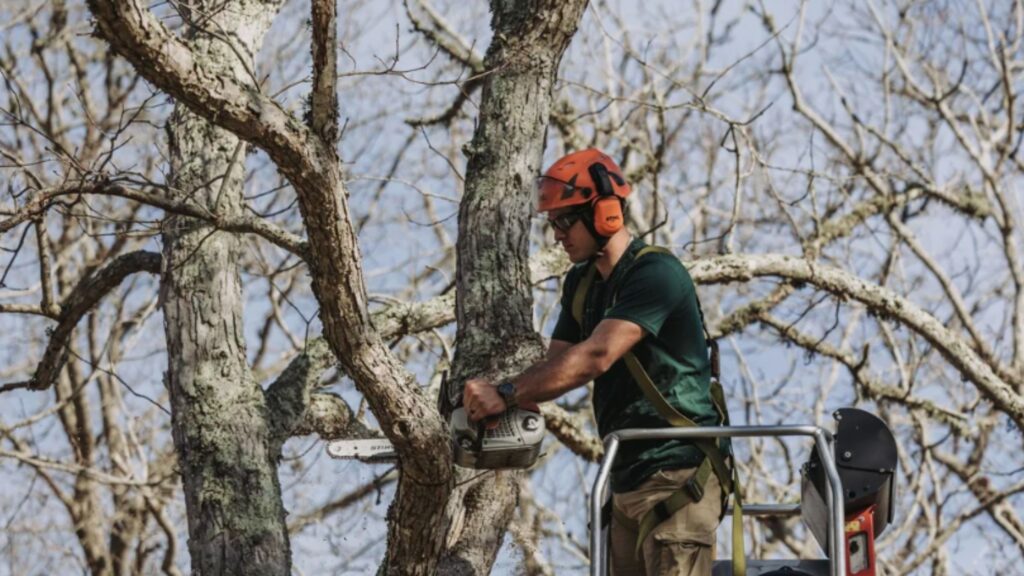
Managing large, dying trees requires specialized equipment and advanced safety training. Homeowners often injure themselves trying to cut massive limbs with basic tools. Falling wood behaves unpredictably when it hits the ground. Expert arborists utilize heavy ropes and cranes to lower sections safely.
Bilzerian Tree and Land Services handles these dangerous situations with precision and care. This expert company offers comprehensive tree removal services to protect your home. Their experienced crews evaluate structural integrity before making a single cut. They possess the proper machinery to dismantle massive trunks in tight residential spaces.
Landowners gain immediate peace of mind by hiring qualified professionals for difficult tasks. The company safely eliminates overhead threats without harming your beautiful lawns. They clear away all debris so your yard looks neat and tidy. Seeking expert help ensures your property remains safe during the storm season. You can easily find hazardous tree removal near me in Martha’s Vineyard to secure your home today.