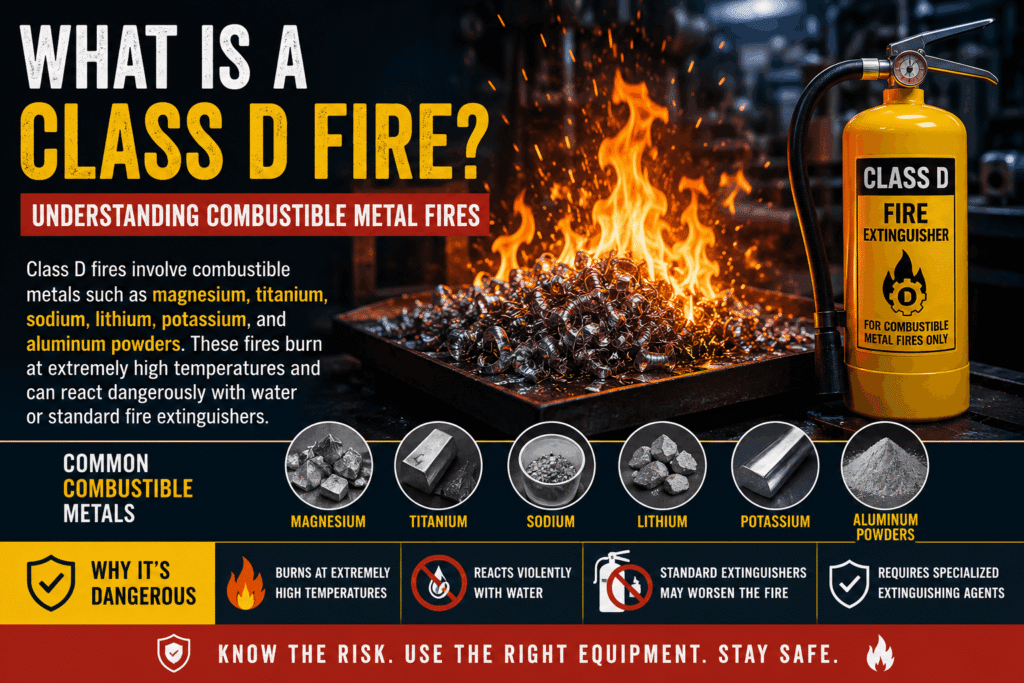

Fire safety is an essential requirement for every workplace, industrial facility, manufacturing plant, and commercial establishment. While many people are familiar with fires involving paper, wood, flammable liquids, and electrical equipment, fewer understand the dangers posed by combustible metal fires. These specialized fires are classified as Class D fires and require unique firefighting techniques and equipment.
A Class D fire involves combustible metals that can ignite under specific conditions and burn at extremely high temperatures. Because these metals react differently from ordinary combustible materials, traditional firefighting methods may not be effective and can sometimes make the situation worse. Understanding Class D fires is important for organizations that handle reactive metals and wish to maintain a safe working environment.
What Is a Class D Fire?
A Class D fire is a fire involving combustible metals such as magnesium, lithium, sodium, potassium, titanium, zirconium, and aluminum powder. These metals are commonly used in industries including aerospace, automotive manufacturing, electronics, chemical processing, defense, and metal fabrication.
Unlike ordinary fires, combustible metal fires can reach very high temperatures and may react violently when exposed to water or certain extinguishing agents. This makes Class D fires particularly dangerous and difficult to control without specialized fire protection equipment.
Why Are Class D Fires Dangerous?
Class D fires present several unique hazards that distinguish them from other fire classifications. One of the primary concerns is the intense heat generated during combustion. These fires can rapidly damage equipment, structures, and surrounding materials.
Another major risk is the chemical reaction that can occur when burning metals come into contact with water. Certain metals release flammable hydrogen gas when exposed to water, increasing the intensity of the fire and potentially causing explosions.
Additional hazards include:
- Rapid fire spread
- Extremely high burning temperatures
- Toxic fumes and smoke
- Damage to expensive machinery
- Increased risk to workers and emergency responders
- Potential production downtime and financial losses
For these reasons, businesses handling combustible metals must implement proper fire safety procedures and maintain specialized extinguishing systems.
Common Causes of Class D Fires
Several workplace activities can contribute to combustible metal fires. Understanding these causes is an important step in prevention.
Common causes include:
- Grinding and machining operations
- Welding near combustible metals
- Sparks from industrial equipment
- Improper storage of reactive metals
- Chemical reactions involving metal powders
- Accumulation of combustible metal dust
- Equipment overheating and electrical faults
Proper housekeeping and routine inspections can help reduce many of these risks.
How Are Class D Fires Extinguished?
Class D fires require specialized extinguishing agents specifically designed for combustible metals. Standard water, foam, or carbon dioxide extinguishers are generally not suitable and may increase the danger.
Specialized Class D fire extinguishers use dry powder agents that help isolate the metal from oxygen and absorb heat from the fire. The exact extinguishing method depends on the type of metal involved.
Proper employee training is equally important, ensuring personnel understand how to respond safely during a metal fire emergency.
Industries That Need Class D Fire Protection
Many industries work with combustible metals and therefore require appropriate fire protection measures.
Industries commonly at risk include:
- Aerospace manufacturing
- Automotive production
- Metal fabrication facilities
- Battery manufacturing plants
- Chemical processing industries
- Research laboratories
- Electronics manufacturing units
These organizations should conduct regular fire risk assessments and maintain suitable fire safety equipment.
The Importance of Fire Prevention
While specialized extinguishers are essential, prevention remains the most effective approach to fire safety. Businesses should focus on safe handling procedures, employee awareness programs, proper storage methods, and regular equipment maintenance.
Preventive measures help reduce workplace accidents, protect employees, preserve valuable assets, and minimize operational disruptions.
Conclusion
Class D fires involve combustible metals that require specialized fire protection solutions and trained emergency response procedures. Because these fires burn at extremely high temperatures and can react dangerously with conventional firefighting methods, understanding their risks is critical for industrial safety.
Organizations that handle combustible metals should invest in proper fire prevention strategies, employee training, and specialized fire extinguishing equipment. By taking proactive steps, businesses can significantly reduce fire hazards and create a safer working environment for everyone. Proper Class D fire protection not only safeguards people and property but also helps maintain business continuity and operational efficiency.