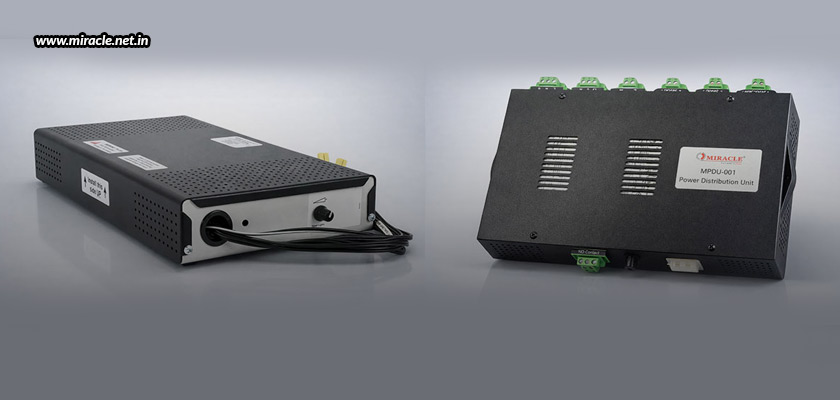

Electronic products today are more complex than ever, combining PCBs, wiring harnesses, enclosures, connectors, displays, power supplies, and mechanical components into a single system. As complexity increases, manufacturers must manage tighter quality requirements, supply chains, production schedules, and integration challenges. Traditionally, different stages of production were handled by separate vendors, requiring extensive coordination and increasing the risk of delays, miscommunication, and quality issues. Box build assembly streamlines this process by bringing together component integration, mechanical assembly, wiring, testing, and final product assembly under a unified workflow. This approach improves efficiency, consistency, quality control, and overall manufacturing performance.
Understanding box build assemblies
Box build assemblies are assembled and integrated electronic and mechanical components, combined into a complete, single, functional product. They incorporate PCBs with additional elements required to transform electronic circuits into a finished device. A typical box build assembly may include:
- PCB installation
- Cable and wire harness assembly
- Connector integration
- Enclosure assembly
- Display and control panel installation
- Power supply integration
- Mechanical fastening and mounting
- Functional testing and inspection
- Product labelling and packaging
The result is a complete assembled product ready for deployment, installation, or shipment to the end user.
The challenges of traditional manufacturing approaches
Traditional manufacturing approaches involve multiple vendors, each handling different stages of manufacturing. When multiple vendors work together, and when multiple collaborations are involved, companies often encounter several operational challenges.
- Complex vendor management
Managing multiple vendors necessitates extensive coordination between conveying specifications, monitoring production progress, upholding quality standards, and addressing issues across various organizations.
- Longer production cycles
Components and subassemblies often need to transit between different facilities before the final product is achieved. Factors such as transportation, scheduling conflicts, and coordination delays can significantly prolong production timelines.
- Increased risk of errors
When various organizations manage different phases of production, integration problems tend to arise more frequently. Misaligned specifications, incompatible components, incorrect wiring configurations, or assembly inconsistencies can result in expensive rework.
- Quality control challenges
Ensuring consistent quality across multiple vendors can prove challenging. Differences in manufacturing standards, inspection methods, and testing protocols may impact the overall reliability of the product.
The key benefits of box build assemblies in modern manufacturing
By consolidating multiple production stages into a single workflow, box build assemblies reduce manufacturing complexity. They improve coordination, streamline processes, enhance quality control, and help manufacturers deliver finished products more efficiently.
- Centralized production management
One of the most significant advantages of box build assemblies is the consolidation of manufacturing activities under one single production framework. Instead of coordinating with several suppliers, manufacturers can work with one integrated assembly partner responsible for managing the complete build process. This simplifies project management, production scheduling, communication, quality checks, and delivery. With fewer communication channels involved, projects move more efficiently from design to production.
- Improved supply chain coordination
Box build assemblies simplify procurement and inventory management by consolidating component sourcing and assembly operations. Rather than tracking multiple suppliers, manufacturers benefit from a more coordinated material management process. This brings better inventory control, improved supplier coordination, streamlined logistics, and enhanced production planning. all of this results in efficiency in the supply chain with minimized disruptions and production schedules on track.
- Faster time-to-market
Box build assemblies accelerate production by integrating multiple manufacturing stages into a unified workflow. Instead of waiting for completed subassemblies to move between facilities, assembly activities can be planned and executed in a coordinated sequence. This shortens lead times and enables faster product launches by reducing production bottlenecks. This means improved responsiveness to customer demands, bringing products to the market more quickly, impacting revenue growth and market competitiveness positively.
- Enhanced product quality
Box build assemblies support higher quality standards through integrated manufacturing processes. When assembly operations are performed within a unified production environment, standardized procedures can be implemented throughout the manufacturing process. This helps ensure uniform assembly practices, accurate component placement, and proper cable routing, which guarantees reduced variations in assembling and long-term reliability of the end product.
- Better engineering collaboration
Electronic products often involve interactions between electrical, mechanical, and software systems. Box build assemblies promotes closer collaboration between engineering and manufacturing teams, making it easier to identify and resolve integration challenges early in the production cycle. Such improved collaboration leads to reduced design conflicts, improved manufacturability, and enhanced product performance, along with enabling faster problem resolutions in case they arise.
- Reduced manufacturing costs
Box build assemblies reduce overall production expenses. This becomes possible because managing fewer suppliers reduces procurement, communication, documentation, and project management expenses. Such administrative efficiencies can generate substantial savings, particularly for complex projects involving numerous components and assemblies. Moreover, integrated manufacturing processes improve visibility and quality control throughout production, helping to identify issues earlier, and avoid wiring errors, component incompatibilities, assembly errors, and product returns. Hence, both direct manufacturing costs and indirect operational expenses are reduced.
Why box build assemblies are a smarter manufacturing solution
Box build assemblies simplify electronic product manufacturing by integrating component sourcing, PCB assembly, wiring, mechanical integration, testing, and final assembly into a coordinated workflow. This reduces the need for multiple vendors and handoffs, improving visibility, communication, and control over quality and timelines while minimizing errors and ensuring more efficient, predictable production outcomes. For companies seeking to simplify manufacturing, while maintaining high standards of quality and reliability, partnering with an experienced electronics manufacturing provider is essential. Miracle Electronics offers comprehensive electronic box assemblies in India, designed to support the efficient integration of electronic and mechanical systems. By offering end-to-end box build and system-level integration services, Miracle Electronics helps manufacturers convert complex designs into fully assembled, market-ready products with improved efficiency and consistency.
Today’s products require the seamless integration of electronic, mechanical, and electrical systems while maintaining strict quality, reliability, and performance standards. Box build assemblies simplify this process by consolidating multiple manufacturing stages into a coordinated production workflow. From supply chain management and component integration to system-level testing and final assembly, this approach reduces complexity, improves communication, enhances quality control, and accelerates time-to-market. As product designs become increasingly complex and customer expectations continue to rise, box build assemblies have become essential for organizations seeking greater efficiency, scalability, and long-term product success. By streamlining production and improving overall operational effectiveness, box build assemblies help manufacturers transform complex designs into reliable, market-ready electronic products.