
The US lawn mowers industry is evolving as homeowners, landscaping professionals, and commercial property managers increasingly seek efficient and technologically advanced equipment. Lawn maintenance remains an essential aspect of residential and commercial property upkeep, creating consistent demand for solutions that improve productivity while reducing operating costs and environmental impact.
Technological innovation is reshaping the industry landscape. From battery-powered equipment to autonomous robotic systems, manufacturers are introducing products that address changing consumer preferences for convenience, sustainability, and reduced maintenance requirements. These developments are helping redefine how lawn care is performed across the United States.
Growing Demand for Advanced Lawn Mowers
According to a US lawn mowers industry analysis, the sector is valued at around USD 6.2 billion in 2025 and is projected to reach USD 8.98 billion by 2032, expanding at a CAGR of approximately 5.43% during 2026–2032. The study highlights growing consumer interest in robotic and battery-powered equipment as a major factor influencing industry growth.
The shift toward modern mowing solutions reflects broader consumer expectations. Users increasingly prioritize equipment that offers ease of use, quieter operation, and reduced emissions. As a result, manufacturers are investing heavily in advanced features that enhance performance while simplifying lawn maintenance activities.
Electrification Is Reshaping Equipment Preferences
One of the most significant developments in the industry is the transition from traditional petrol-powered equipment to electric alternatives. Battery-powered lawn mowers offer several advantages, including lower maintenance requirements, reduced noise levels, and the elimination of direct fuel emissions.
Government initiatives promoting cleaner outdoor power equipment are also supporting this transition. Various states and municipalities are encouraging the adoption of zero-emission landscaping equipment, creating favourable conditions for electric mower manufacturers. These regulatory developments are influencing purchasing decisions among both residential users and professional landscaping companies.
The broader lawn care equipment sector is witnessing increasing demand for environmentally friendly solutions as consumers become more conscious of sustainability goals and emission reduction efforts.
Robotic Lawn Mowers Gain Traction
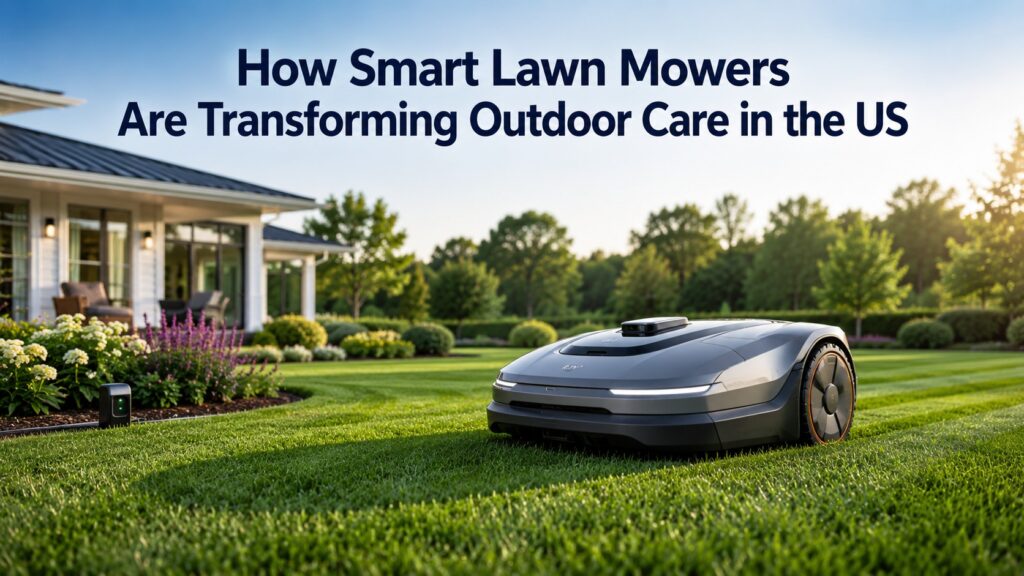
Automation is becoming a defining trend within the US lawn mowers industry. Robotic lawn mowers are attracting attention from homeowners seeking convenient solutions that minimize manual labor. These systems can operate autonomously, maintain consistent grass height, and navigate designated lawn areas with minimal human intervention.
Modern robotic models increasingly incorporate artificial intelligence, GPS navigation, obstacle detection, and smartphone connectivity. These capabilities allow users to monitor and control mowing activities remotely while optimizing coverage patterns and operational efficiency.
The integration of intelligent technologies is transforming lawn maintenance from a labor-intensive activity into a highly automated process. As technology costs become more accessible, adoption rates are expected to increase across residential and commercial applications.
Residential Landscaping Continues to Drive Demand
The residential segment remains a major contributor to industry growth. Continued investment in outdoor living spaces, home improvement projects, and landscape aesthetics has encouraged homeowners to prioritize lawn care equipment upgrades.
Single-family housing developments and increasing property improvement activities have created sustained demand for efficient mowing solutions. Homeowners are increasingly viewing lawn maintenance equipment as part of a broader investment in property value and outdoor appearance.
Additionally, the availability of cordless equipment with longer battery life and enhanced cutting performance has made advanced lawn mowers more attractive to residential consumers who previously relied on conventional products.
Commercial Users Seek Productivity and Efficiency
Professional landscaping companies, municipalities, educational institutions, and recreational facilities represent another important customer base. These organizations require durable equipment capable of maintaining large areas while minimizing downtime and operational costs.
Commercial operators are increasingly adopting smart equipment because advanced technologies can improve scheduling, route planning, maintenance tracking, and overall fleet management. Features such as connected devices and real-time diagnostics help reduce equipment downtime and improve resource utilization.
The growing landscaping services sector across the United States continues to create opportunities for manufacturers that can deliver reliable, efficient, and technologically advanced mowing solutions tailored to professional users.
Innovation and Sustainability Will Shape the Future
Innovation remains a central theme across the US lawn mowers industry. Manufacturers are investing in battery advancements, IoT connectivity, artificial intelligence, and autonomous operation to differentiate their products and address evolving customer expectations.
Shared battery platforms, enhanced energy efficiency, and smart ecosystem integration are creating additional value for users. These developments allow consumers and commercial operators to use multiple outdoor tools within a single battery ecosystem, improving convenience and reducing ownership costs.
As sustainability objectives continue influencing purchasing behavior, demand for electric and intelligent lawn care equipment is expected to strengthen. The combination of automation, connectivity, and environmental considerations is positioning the industry for continued technological transformation in the years ahead.