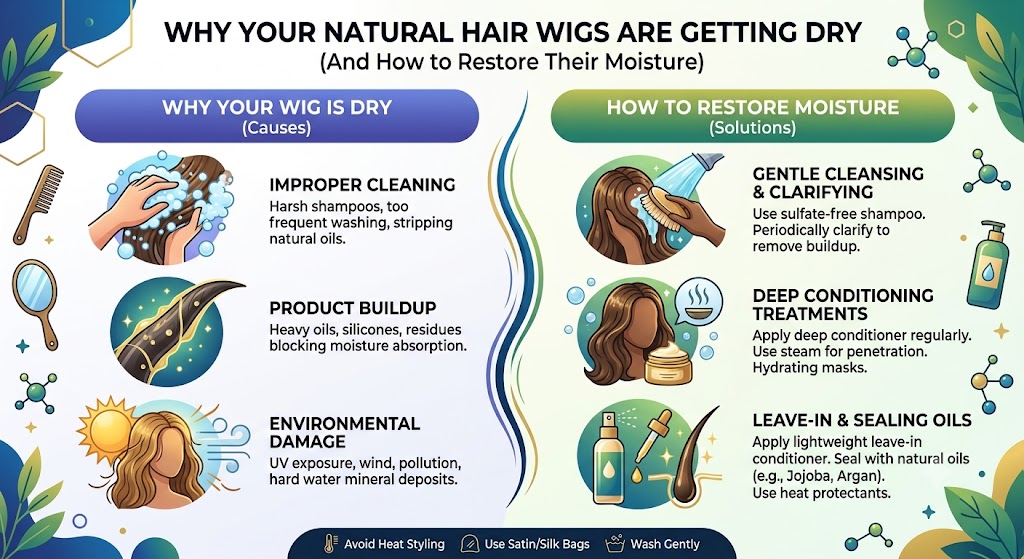

There is nothing comparable to the satisfaction of unsealing a new natural hair wig. The hair is smooth, shiny, and beautifully flowing. However, after a few weeks or months, you might notice an unfortunate change. Your premium natural wigs will feel stiff, dull, and knotted at the base of your neck.
If your straight lace front wigs are starting to feel more like straw than silk, you are not alone. Dryness is the single most common issue that alternative hair wearers face.
The good news? It is entirely preventable and reversible. In this blog, we will dive into the science of why real human hair wigs lose their moisture, the daily habits that are secretly draining their hydration, and a step-by-step restoration routine to bring your favorite units back to life.
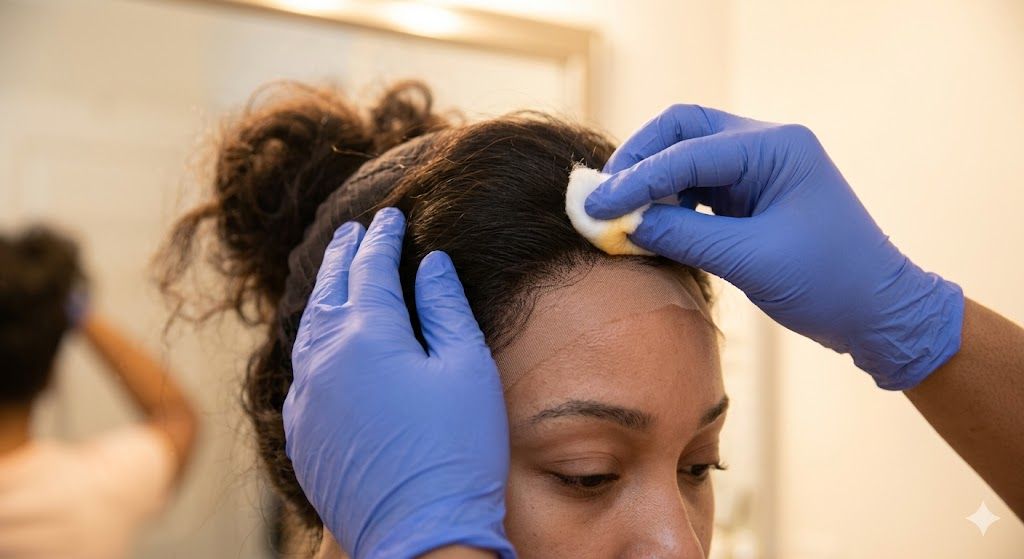
Why Do Real Human Hair Wigs Get So Dry?
To fix the problem, we first need to understand the structural difference between the hair growing from your scalp and the hair on your wig.
When you wear your natural hair, your scalp constantly produces a light, natural oil called sebum. Sebum is nature’s ultimate moisturizer; it travels down the hair shaft, sealing the cuticle layer and locking in hydration.
Because real hair wigs are detached from a living scalp, they have zero access to this continuous source of natural oils. Once the manufacturing oils and initial conditioning treatments wear off, the hair relies 100% on external maintenance to stay hydrated. Without a deliberate moisturizing routine, the porous hair strands inevitably dry out, leading to friction, frizz, and eventual breakage.
The Hidden Culprits Behind Wig Dryness
While a lack of natural sebum is the primary structural reason for dry hair, several daily styling choices and environmental factors accelerate the process.
Excessive Heat Styling
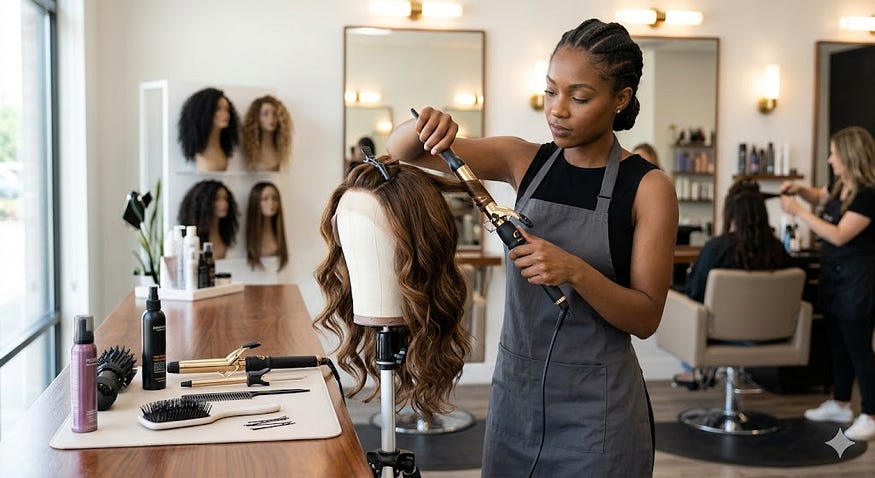
We all love the sleek, glass-like finish of high-quality straight wigs. However, frequently using flat irons, curling wands, and high-heat blow dryers strips away the internal moisture bound within the hair cortex. Because the hair cannot regenerate itself, repetitive heat damage creates microscopic cracks in the cuticle, making it impossible for the strands to retain future hydration.
Product Overload and Hard Water
Using heavy styling creams, silicones, and hairsprays creates a stubborn layer of buildup over time. This coating prevents water and deep conditioners from actually penetrating the hair shaft. Furthermore, washing your unit in hard water—which is loaded with minerals like calcium and magnesium—leaves behind a brittle residue that makes the hair feel rough and unmanageable.
Environmental Exposure
Just like your own growing hair, natural hair wigs are highly sensitive to the elements. UV rays from the sun degrade the protein structure of the hair, while dry winter air and indoor heating systems actively pull moisture out of the strands.

The Ultimate Moisture Restoration Routine
If your straight lace front wigs have already lost their luster, do not panic. You do not need to throw them away. Instead, dedicate an evening to this intensive hydration rescue routine to revive the hair.
Step 1: The Detangling Session
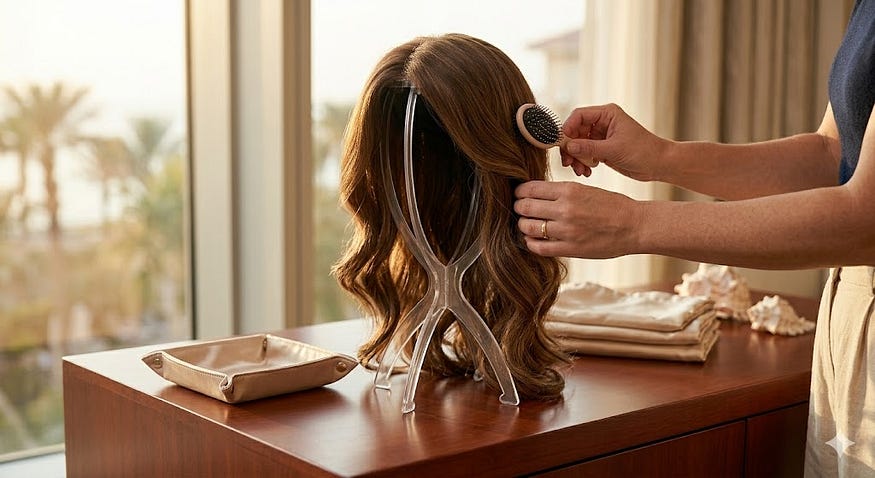
Never wash a tangled wig, as water will only tighten the knots and cause shedding. Before getting the hair wet, place the unit on a canvas block head or hold it securely. Using a wide size tooth comb or a specialized loop brush, gently work your way from the ends of the hair up to the roots. Take your time, especially around the nape area where friction causes the most tangling.
Step 2: The Clarifying and Hydrating Wash
To remove old product buildup, wash the unit with a sulfate-free, hydrating shampoo. Sulfates are harsh detergents that strip away essential moisture, which is the last thing a dry wig needs.
- Use a basin filled with lukewarm water, avoiding hot water to help protect the hair.
- Dissolve a quarter-sized amount of shampoo into the water.
- Submerge the wig and gently squeeze the soapy water through the strands. Avoid rubbing or twisting the hair.
- Rinse thoroughly in clean, cool water.
Step 3: Deep Conditioning and the “Zip-Lock” Method
This is where the magic happens. Apply a generous amount of a high-quality, moisture-rich deep conditioning mask from the mid-lengths to the ends, keeping it away from the lace grid or hand-tied knots to avoid loosening them.
For a deeply intensive treatment, place the conditioned wig inside a clean plastic zip-lock bag. Submerge the sealed bag into a bowl of warm water for 15 to 20 minutes. The gentle, indirect heat opens up the hair cuticles, allowing the moisturizing agents to penetrate deep into the core of each strand.
Step 4: Sealing in the Moisture
After rinsing the conditioner out with cool water (which helps snap the cuticles shut), gently press the hair with the help of soft microfiber towel to remove excess water. While the hair is still damp, apply a lightweight, alcohol-free leave-in conditioner followed by a few drops of a pure oil, such as argan or jojoba oil. This process mimics the scalp’s natural sebum, locking the water molecules inside the hair shaft as it air-dries.
Pros, Cons, and Frequently Asked Questions
Caring for real human hair wigs requires a balanced approach. To help you manage your maintenance routine effectively, let’s look at the balance of owning these premium units along with answers to the most common hydration questions.
The Trade-Offs of Real Hair Wigs
- Pros: They offer unparalleled realism, can be heat-styled just like your own hair, blend seamlessly with your natural hairline, and last for a year or more when properly hydrated.
- Cons: They demand a high level of maintenance, require regular deep-conditioning treatments, carry a higher initial investment, and react to weather and humidity just like natural hair.
How often should I wash my natural hair wigs to prevent dryness?
As a general rule, aim to wash your unit every 10 to 15 wears, or every two to three weeks. Washing too frequently strips away the topical oils you apply, while waiting too long allows product buildup to block out moisture. Find a sweet spot based on how often you wear the unit and how many styling products you use.
Can I use regular drugstore hair products on my real hair wigs?
You can, but you must be incredibly selective. Many standard high-street shampoos contain harsh sulfates and isopropyl alcohols that dry out alternative hair rapidly. Look for products specifically labeled as sulfate-free, color-safe, or explicitly formulated for alternative hair and extensions.
Why does the back of my straight lace front wigs always feel dry and matted?
The hair at the nape of the neck experiences constant friction against your clothing, coat collars, and skin throughout the day. This friction roughs up the cuticle layer, causing moisture to evaporate quickly and leading to tangles. Apply a drop of lightweight hair oil to the nape area before putting your wig on each morning to minimize this friction.
Conclusion: Consistency Equals Longevity
At the end of the day, keeping your natural hair wigs soft and beautiful comes down to a consistent care routine. Because these units cannot repair themselves or rely on natural scalp oils, they reflect exactly how much hydration you put back into them. By minimizing high heat, using sulfate-free products, and performing regular deep conditioning treatments, you can protect your investment and ensure your straight wigs look flawless, healthy, and beautifully fluid for a long time to come.