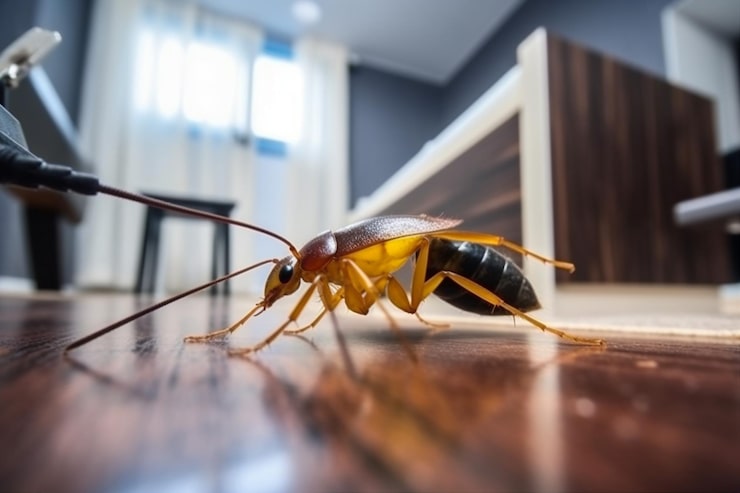

You treated the problem, the pests disappeared, and then a few months later, they were back. Sound familiar? This happens to more homeowners than you’d think, and the frustrating part is that it often has nothing to do with the quality of the treatment.
Some pest problems are built to return, and until you understand why, you’ll keep fighting the same battle every single year. Homeowners who work with the best pest control companies in San Diego still deal with recurring infestations when the root conditions in and around the home never actually change.
Treatment Handles the Pest, Not the Problem
This is the part most people don’t fully get. A pest treatment eliminates the current population. It doesn’t fix whatever attracted them in the first place. If ants found a food source, a moisture pocket, or a crack in your foundation last spring, those things are still there after the treatment ends.
The next wave simply follows the same path the previous one used. Treating without addressing the source is like mopping a floor while the tap is still running.
Pest Pressure From Outside Your Property
Your home doesn’t exist in isolation. Neighboring yards, empty lots, overgrown landscaping, and even the trees lining your street all create pest pressure that pushes insects and rodents toward homes. A treatment on your property does nothing about what’s breeding two houses over.
Every season, that external population rebuilds and starts moving again. This is especially common in older, established neighborhoods where green cover is dense, and pest populations are well established across multiple properties.
The Role Seasons Actually Play
Pests don’t operate on a random schedule. They respond to temperature, humidity, and food availability, all of which change predictably every year. Certain ant species swarm in spring. Rodents push indoors when temperatures drop in fall. Cockroaches multiply faster in summer heat. These patterns repeat because the environmental triggers repeat.
A single treatment applied once a year doesn’t account for the fact that different pests become active at different points in the season. Homeowners dealing with recurring issues through pest control in Laguna Niguel often find that timing treatments to match pest cycles makes a significant difference in how long results actually hold.
Entry Points That Never Get Sealed
Treatments kill what’s inside. They rarely stop what’s trying to get in. Gaps around pipes, cracks along the foundation, worn weatherstripping on doors, and small openings near utility lines are all entry points that pests use repeatedly. These spots don’t seal themselves, and most pest control visits don’t include physical exclusion work unless it’s specifically part of the service. Every new season brings a new wave of pests looking for the same openings that worked before.
Here are the most commonly missed entry points that keep infestations cycling back:
- Gaps where pipes enter through walls or flooring
- Cracks along the base of the foundation, especially near soil contact
- Weatherstripping on garage doors that has worn thin or pulled away
- Vents without intact screens, particularly in crawl spaces and attics
- Spaces around window frames that have shifted over time
Moisture Problems Invite the Same Guests Back Every Time
Moisture is one of the biggest recurring attractants that rarely gets addressed during a standard pest treatment. Leaky pipes under sinks, poor drainage in the yard, condensation in crawl spaces, and damp mulch pressed against the foundation all create conditions that certain pests depend on.
Cockroaches, termites, silverfish, and several ant species gravitate toward moisture consistently. Removing standing water, improving airflow in enclosed spaces, and fixing slow leaks removes one of the primary reasons pests keep returning to the same spots year after year.
When the Treatment Itself Isn’t the Right Fit
Not every pest responds to the same treatment, and not every infestation is the same size or stage. A surface spray might handle what’s visible but miss a colony that’s established deeper in a wall or under flooring. Baiting systems work differently from liquid treatments, and some species respond to one method far better than the other.
Using the wrong approach for the specific pest and infestation level produces short-term results at best. This is why recurring problems are sometimes a sign that the treatment strategy needs to change, not just repeat.
Why One Annual Visit Isn’t Enough for Active Properties
One treatment per year works fine for homes with minimal pest pressure and no structural vulnerabilities. For most homes, it isn’t enough. Pests rebuild populations quickly. A colony that gets reduced in spring can recover fully by summer if nothing else changes. Consistent monitoring and adjusted treatments across the season keep populations from rebounding the way they do after a single annual visit.
Look Beyond the Visible Pest Problem
Recurring pest problems are almost always a sign that something in or around the home keeps welcoming them back. The pest is the symptom. The entry points, moisture, food sources, and external pressure are the actual problem. Homeowners who address both sides of the equation, treating existing pests while eliminating what draws them in, are the ones who stop seeing the same infestations return every year.
Pest control professionals in Irvine, CA, believe that treating the same issue repeatedly without changing the outcome isn’t a solution; it’s just a cycle. They break the cycle by looking at the full picture, not just what’s visible on the surface.