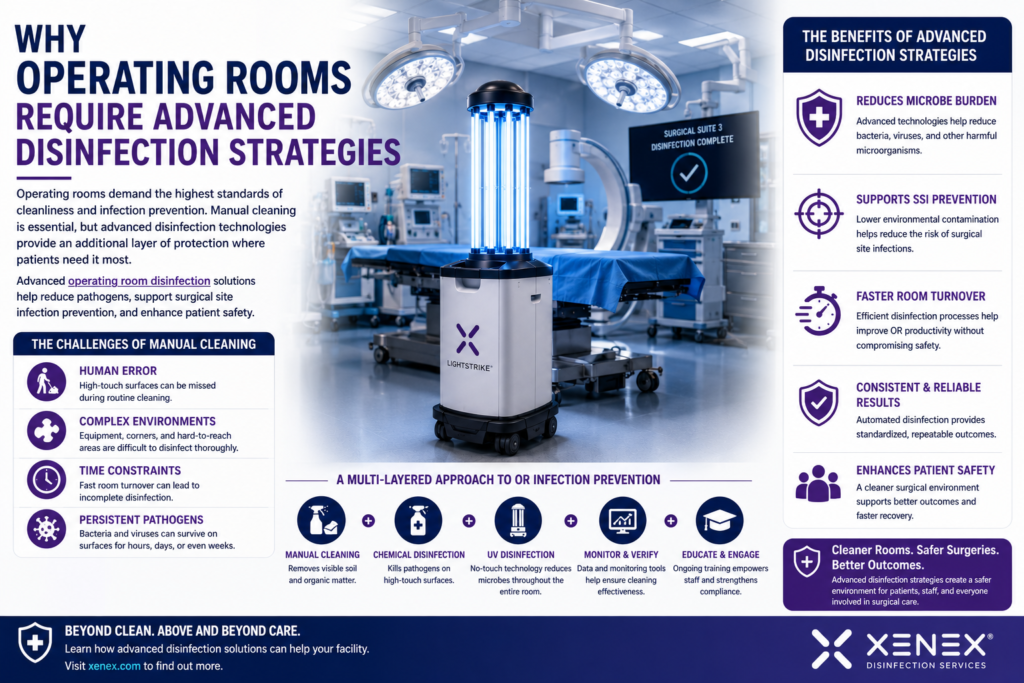

Operating rooms are among the most critical environments within any healthcare facility. Every surgical procedure requires a sterile setting to minimize the risk of infection and protect patient health. While healthcare organizations follow strict cleaning and sterilization protocols, modern infection prevention demands more than traditional cleaning methods alone. Hospitals are increasingly implementing advanced solutions from UV disinfection technology providers to strengthen environmental hygiene, reduce microbial contamination, and support safer surgical environments.
As healthcare-associated infections (HAIs) and surgical site infections (SSIs) continue to challenge healthcare systems worldwide, operating rooms require comprehensive disinfection strategies that go beyond routine cleaning procedures.
The High Stakes of Operating Room Cleanliness
Unlike standard patient rooms, operating rooms are environments where invasive procedures are performed. During surgery, patients are particularly vulnerable because surgical incisions create direct pathways for microorganisms to enter the body.
Even small amounts of microbial contamination can contribute to complications such as:
- Surgical site infections (SSIs)
- Extended hospital stays
- Additional medical treatments
- Increased healthcare costs
- Delayed patient recovery
- Higher readmission rates
Because of these risks, maintaining an exceptionally clean surgical environment is essential for patient safety and positive surgical outcomes.
Understanding Surgical Site Infections
Surgical site infections remain one of the most common healthcare-associated infections. They can occur when bacteria or other pathogens enter the surgical wound before, during, or after a procedure.
Common pathogens associated with surgical site infections include:
- Methicillin-resistant Staphylococcus aureus (MRSA)
- Staphylococcus aureus
- Clostridioides difficile (C. diff)
- Vancomycin-resistant Enterococci (VRE)
- Gram-negative bacteria
- Multidrug-resistant organisms (MDROs)
Preventing these infections requires a multi-layered approach that addresses every potential source of contamination within the operating room.
Why Manual Cleaning Alone Is Not Enough
Manual cleaning remains a foundational component of infection prevention programs. Environmental Services (EVS) teams thoroughly disinfect operating rooms between procedures and at the end of each day.
However, even the most diligent cleaning programs face limitations.
Human Error Can Occur
Healthcare staff work in fast-paced environments where operating room turnover times are often critical. Under time constraints, some surfaces may be unintentionally overlooked.
Complex Room Designs Create Challenges
Operating rooms contain numerous pieces of equipment, including:
- Surgical tables
- Anesthesia machines
- Medical monitors
- Lighting systems
- Instrument carts
- Imaging equipment
The complexity of these environments can make it difficult to ensure every exposed surface receives thorough disinfection.
Microorganisms Can Persist on Surfaces
Research shows that harmful pathogens can survive on environmental surfaces for hours, days, or even weeks under certain conditions. High-touch areas may remain contaminated despite routine cleaning efforts.
These challenges demonstrate why healthcare facilities increasingly rely on additional layers of protection.
The Importance of Environmental Hygiene in Operating Rooms
Environmental hygiene is a critical component of infection prevention. Every surface within an operating room has the potential to contribute to pathogen transmission if not properly disinfected.
Frequently touched surfaces include:
- Door handles
- Control panels
- Surgical equipment
- Workstations
- Storage cabinets
- Operating room tables
When pathogens remain on these surfaces, they may transfer to healthcare workers, medical devices, or patients. Reducing environmental contamination helps break the chain of infection and supports safer surgical care.
How Advanced Disinfection Technologies Improve Outcomes
Healthcare facilities are increasingly adopting advanced disinfection technologies to complement manual cleaning protocols.
One of the most effective innovations is no-touch UV disinfection technology. These systems use powerful ultraviolet light to reduce microorganisms on exposed surfaces throughout the operating room.
Unlike traditional cleaning methods, UV disinfection can provide consistent microbial reduction across a wide area without relying solely on manual application techniques.
By integrating advanced disinfection technologies into existing workflows, hospitals can strengthen infection prevention efforts and create cleaner surgical environments.
Whole Room Disinfection Supports Comprehensive Protection
Traditional cleaning often focuses on individual surfaces. Whole room disinfection expands the scope by targeting the entire operating room environment.
This approach offers several advantages:
Reduced Microbial Burden
Whole room disinfection technologies help lower the overall number of bacteria, viruses, and other microorganisms present within the surgical environment.
Consistent Disinfection Results
Automated systems provide standardized processes that reduce variability between cleaning cycles.
Enhanced Patient Safety
Lower environmental contamination can contribute to stronger infection prevention efforts and safer patient care.
Additional Layer of Protection
Whole room disinfection serves as a valuable complement to manual cleaning rather than a replacement.
Healthcare facilities increasingly recognize that combining multiple disinfection methods creates a more effective strategy for infection control.
Faster Turnover Without Compromising Safety
Operating room efficiency is essential for healthcare organizations. Delays between procedures can impact scheduling, patient flow, and overall productivity.
Advanced disinfection technologies help healthcare facilities balance efficiency with safety by supporting faster room turnover while maintaining high standards of cleanliness.
By reducing downtime and enhancing environmental hygiene, hospitals can improve operational performance without compromising infection prevention goals.
Preparing for Emerging Healthcare Challenges
Healthcare facilities continue to face evolving infection prevention challenges, including:
- Antimicrobial-resistant organisms
- Emerging infectious diseases
- Increased surgical volumes
- Greater patient expectations
- Regulatory compliance requirements
Advanced disinfection strategies help organizations remain prepared for these challenges while maintaining a proactive approach to patient safety.
Healthcare leaders increasingly view environmental hygiene investments as a critical part of long-term healthcare quality improvement initiatives.
Building a Multi-Layered Infection Prevention Strategy
The most successful operating room infection prevention programs rely on multiple layers of protection.
Key components include:
- Routine manual cleaning
- Surface disinfection protocols
- Sterilization procedures
- Hand hygiene compliance
- Environmental monitoring
- Staff education and training
- Advanced UV disinfection technology
- Whole room microbial reduction
Together, these measures create a comprehensive framework that supports safer surgical environments and improved patient outcomes.
Conclusion
Operating rooms require advanced disinfection strategies because the risks associated with microbial contamination are simply too significant to rely on manual cleaning alone. While traditional cleaning remains essential, modern healthcare facilities must adopt comprehensive approaches that address environmental contamination throughout the entire surgical environment.
Advanced disinfection technologies, whole room microbial reduction, and evidence-based infection prevention practices provide additional layers of protection that help reduce pathogen transmission and support surgical safety. As healthcare continues to evolve, operating rooms that embrace innovative disinfection solutions will be better positioned to protect patients, improve outcomes, and maintain the highest standards of care.