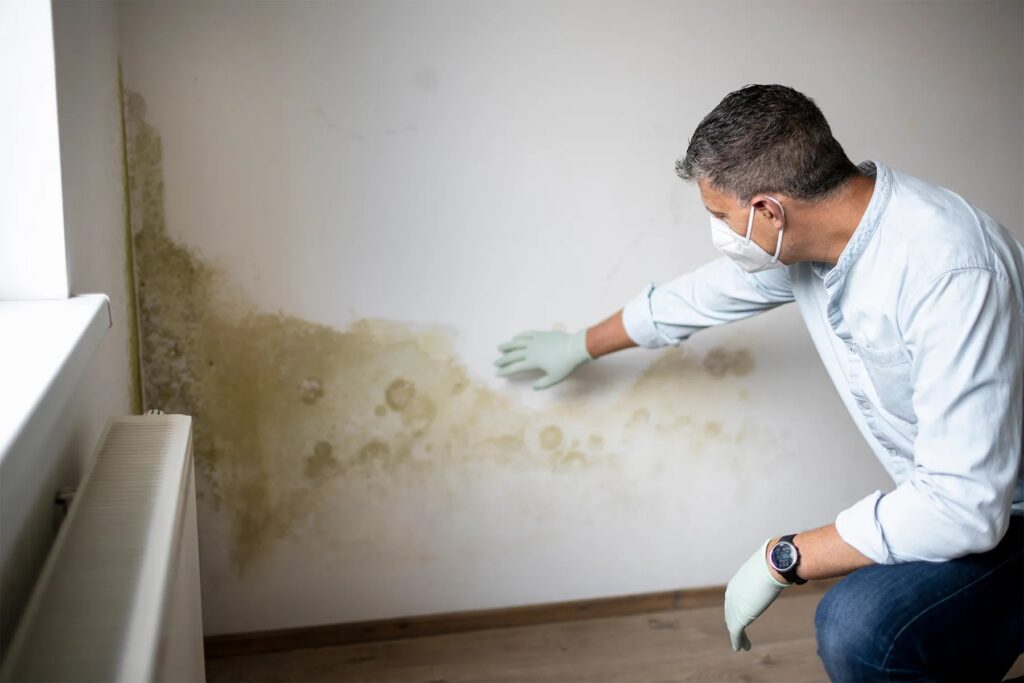

For many Simpsonville homeowners, discovering mold is not a one-time event. They treat it, repaint, and within weeks or months, the growth is back, often covering a larger area than before. This cycle is not random, and it is not bad luck. Recurring mold almost always traces back to one or more specific failures in how the original problem was addressed. Understanding those failures is what allows mold removal Simpsonville to become a permanent resolution rather than a repeated temporary fix.
Reason 1 — The Moisture Source Was Never Identified
Mold requires moisture to grow. It does not appear spontaneously. Every mold problem has a source, whether that is a slow plumbing leak behind a wall, condensation from an HVAC issue, a failed window seal, or water intrusion through a foundation or roof. When mold treatment addresses the visible growth without identifying and resolving the moisture source, the conditions that produced the mold are still present. The surface may look clean, but the mold returns as soon as the material re-accumulates enough moisture to support growth again. Identifying the source is not optional. It is the first step in the process of mold remediation Simpsonville to produce a durable result.
Reason 2 — Surface Cleaning Was Used Instead Of Remediation
Bleach and commercial mold sprays eliminate the appearance of mold on non-porous surfaces. On porous materials like drywall, wood framing, and grout, they eliminate the visible surface growth while leaving the root structure, known as hyphae, intact inside the material. The mold is not gone. It is temporarily invisible. Surface cleaning is not remediation. Remediation involves physical removal of contaminated materials that cannot be cleaned, treatment of the underlying structure, and verification that growth has been fully addressed. A surface clean is a cosmetic intervention that delays the visible recurrence rather than resolving the underlying problem.
Reason 3 — Contaminated Materials Were Left In Place
Drywall, insulation, and subflooring that have absorbed mold growth cannot be cleaned to a safe condition by surface treatment alone. These materials have to come out. When a previous treatment left contaminated materials in place because the scope was limited to surface cleaning or because the full extent of growth was not assessed, the mold that remained in those materials continued to grow and eventually re-emerged. This is one of the most common causes of recurring mold in Simpsonville homes. A visible patch of mold on a wall surface is treated while the insulation and framing behind it, which have been colonized to a far greater depth, remain in place and continue to sustain growth.
Reason 4 — Drying Was Insufficient Before Walls Were Closed
Following a water event that triggered mold growth, the affected area must be fully dried, and moisture readings must return to acceptable levels before any reconstruction begins. When walls are closed up over materials that are still above the moisture threshold for mold growth, the conditions for recurrence are sealed inside the structure. The mold may not become visible again for weeks or months, but it is growing continuously in the enclosed space and will eventually become visible again, often across a larger area than before.
Reason 5 — Post-Remediation Testing Was Skipped
Post-remediation testing is the verification step that confirms mold spore levels in the treated area have returned to acceptable limits before the space is reoccupied or closed up. Without it, there is no documented confirmation that the remediation was complete. A job that skips this step may look finished, but leaves no basis for confidence that the growth was fully resolved. Air quality testing after remediation is particularly important in Simpsonville homes, where the warm climate creates conditions for rapid re-establishment of mold if any contaminated material was missed.
How Proper Mold Remediation In Simpsonville Breaks The Cycle
Proper mold remediation in Simpsonville follows a defined sequence that leaves no step out. The moisture source is identified and resolved first. Containment barriers prevent spores from spreading to unaffected areas during removal. Contaminated materials are physically removed and disposed of properly. The underlying structure is treated with antimicrobial agents. Moisture readings are verified to confirm the structure is fully dry before reconstruction begins. Post-remediation testing confirms clearance before reoccupancy. Every step in this sequence exists because skipping it leaves the cycle in place.
Willard’s Restoration is the trusted, IICRC-certified choice for mold removal in Simpsonville and mold remediation in Simpsonville, with a process that addresses every phase from source identification through post-remediation clearance. For Simpsonville homeowners tired of mold coming back, Willard’s Restoration provides a complete and lasting resolution. Contact Willard’s Restoration any time at willardrestoration.com.