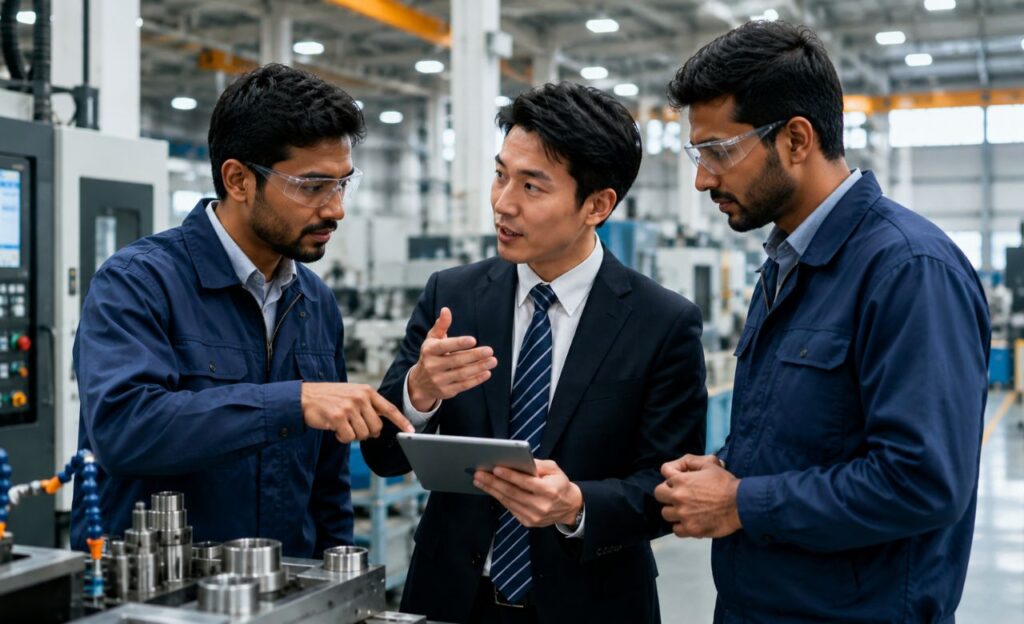

If your company is importing machinery or equipment from China, there’s a step in the process that often gets underestimated until it’s too late: communication during installation. Technical manuals can be translated in advance, but the actual installation, commissioning, and technician training happen in real time, on the factory floor, with engineers who may not speak English and plant staff who don’t speak Mandarin. This is exactly where an on-site interpreter — not just a translated document — becomes essential.
Here’s why this matters more than most companies expect, and what to look for when arranging interpreter support for a machinery installation project.
Why a Translated Manual Isn’t Enough
Most companies importing Chinese equipment already budget for document translation — user manuals, technical specifications, safety instructions. This is necessary, but it only solves part of the problem. Installation and commissioning involve constant back-and-forth: a technician needs to explain a wiring sequence, a plant engineer needs to ask a clarifying question about a calibration step, a supervisor needs to flag a safety concern immediately, not after the fact.
None of this works through a static document. It requires real-time, accurate interpretation between Mandarin and English (or the local language), delivered by someone who understands both the language and the technical context well enough to translate precisely — not just literally.
Where Miscommunication Actually Causes Problems
The risk of skipping proper interpretation isn’t hypothetical. Common failure points during Chinese machinery installations without a qualified interpreter include:
- Incorrect wiring or calibration due to a misunderstood instruction, leading to equipment damage or delayed startup
- Safety incidents when a warning or precaution isn’t communicated clearly in the moment
- Extended installation timelines because questions get answered slowly or ambiguously through translated emails instead of live conversation
- Warranty and support disputes later on, when it’s unclear whether an issue arose from equipment fault or a misunderstood setup instruction
For companies working with high-value machinery — steel processing lines, cable manufacturing equipment, industrial glass or chemical processing systems — even a single miscommunicated step can be costly, both in repair time and in production downtime.
What an On-Site Interpreter Actually Does During Installation
A technical interpreter’s role during a machinery installation goes well beyond general language conversion. It typically includes:
Real-time technical translation between the Chinese technician team and your plant staff throughout the installation and commissioning process — not just at the start, but continuously as questions and issues come up.
Terminology accuracy — industrial machinery involves specific technical vocabulary (torque specifications, calibration thresholds, electrical ratings) that a general interpreter without technical familiarity can easily get wrong. A good technical interpreter either has relevant industry background or is briefed thoroughly before arriving on-site.
Safety communication — ensuring warnings, precautions, and emergency procedures are communicated immediately and clearly, not translated after the fact.
Training session support — when Chinese technicians train your operators on running the new equipment, the interpreter ensures nothing is lost in that handover, which directly affects how confidently your team can operate the machinery once the technicians leave.
How to Prepare for an Interpreter-Assisted Installation
If you’re planning a Chinese machinery installation, a few steps make the process smoother:
- Share technical documentation in advance. Give the interpreter access to manuals, specifications, and any technical drawings before the installation date, so they can familiarize themselves with the terminology beforehand rather than learning it in real time.
- Confirm the interpreter’s technical background. Ask specifically whether they’ve worked on similar machinery or industrial installations before — general Mandarin fluency alone isn’t sufficient for high-stakes technical communication.
- Plan for the full installation timeline, not just a single day. Commissioning and training often take longer than expected, and having the same interpreter present throughout — rather than switching midway — avoids continuity issues.
- Clarify confidentiality expectations upfront. If your equipment or process involves proprietary specifications, confirm the interpreter or agency operates under a signed NDA before sharing sensitive technical details.
Where to Find This Kind of Support
If you’re arranging this for a facility in the Delhi NCR industrial belt — which includes manufacturing hubs like Gurgaon, Noida, Manesar, Bhiwadi, and Neemrana — sourcing an interpreter with local availability and technical familiarity makes logistics considerably easier than bringing someone in from further away. Our Chinese Translation in Delhi service is built around exactly this kind of local, on-demand support for companies in the region.
More broadly, if your project involves both technical interpretation and supporting document translation — user manuals, safety documentation, compliance paperwork — our Chinese Translation Services page covers the full range of support available, from certified document translation to on-site interpretation for exactly these kinds of industrial projects.
Don’t Overlook the Training Recordings
One detail companies often miss: recording technician training sessions during installation, then having that audio translated afterward into a written reference document for your operations team. This gives your staff something to refer back to weeks or months later, rather than relying purely on memory or notes taken in the moment — especially useful for more complex machinery where operators may need a refresher after the installation team has left.
Our Audio Translation Services page covers exactly this — converting recorded technician briefings, safety walkthroughs, or training sessions into accurate, usable written translations your team can keep on file.
A Few Questions Worth Asking Before You Book
Does the interpreter have experience with industrial or technical projects specifically? General business interpretation and technical machinery interpretation require different skill sets. Confirm relevant experience, not just language fluency.
Will the same interpreter be available for the full installation period? Continuity matters for complex, multi-day installations. Switching interpreters mid-project risks losing context on issues already discussed.
Is confidentiality formally covered under an NDA? This should be standard practice for any agency working with proprietary industrial equipment, not something you have to request as a special exception.
Can they support both the live interpretation and any follow-up document or audio translation needs? Handling both under one provider avoids the friction of coordinating multiple vendors for what’s really one continuous communication need — from installation day through to the reference materials your team keeps afterward.
Final Thoughts
Machinery installation is one of the highest-stakes moments in bringing new Chinese equipment into your facility — it’s where technical understanding, safety, and timeline all intersect in real time. A translated manual gets you partway there, but it can’t replace a qualified interpreter who can catch a misunderstanding the moment it happens, not after a costly mistake has already occurred.
If you have an installation coming up, it’s worth treating interpreter support as seriously as the equipment procurement itself — sourced early, briefed properly on the technical details, and backed by clear confidentiality agreements before day one on the factory floor.