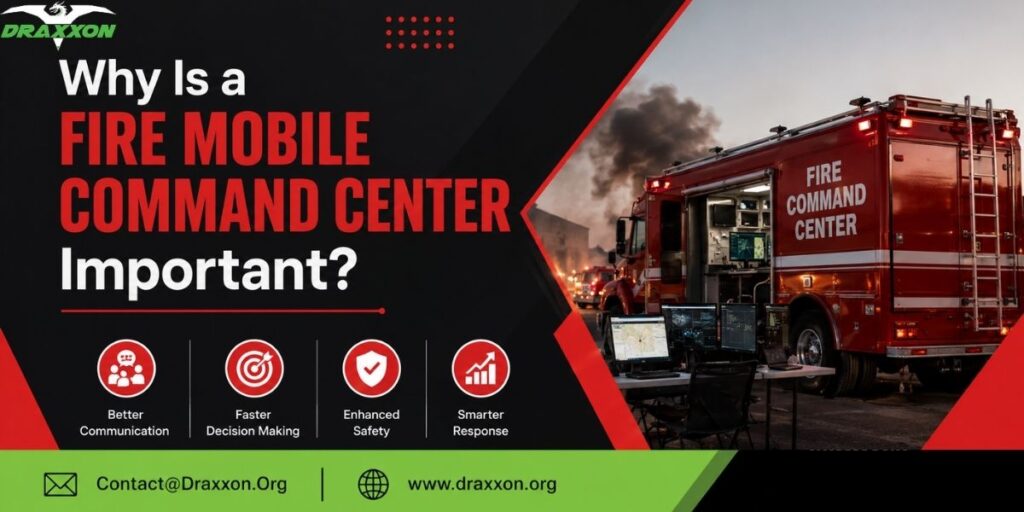

Emergency response operations rarely stay simple for long. A structure fire can spread unexpectedly. Weather conditions can shift within minutes. Communication between agencies becomes harder once multiple departments arrive on scene at the same time. That is usually where a fire mobile command center becomes critical. These mobile units serve as centralized coordination centers in times of emergency. Large incidents can become chaotic surprisingly quickly without organized communication and real time visibility. And honestly, that risk increases even more during multi-agency emergencies.
Centralized Communication Improves Emergency Response
Communication problems create delays that emergency teams cannot afford.
Coordinating Multiple Agencies
In large incidents, fire departments may work with police units, EMS teams, utility crews, and emergency management personnel. Without a centralised system information can very quickly become fragmented.
A public safety command center brings those moving parts together in one place, so teams can better coordinate decisions.
Reducing Confusion During Active Incidents
In a major emergency, radio traffic alone can get overwhelming. Mobile command teams help sift through incoming information, prioritizing updates and distributing clear instructions to responders on the ground.
That structure is important in fast-moving situations more than most people realize.
Maintaining Real Time Situational Awareness
Command personnel need constant updates about personnel locations, hazard zones, weather conditions, and operational changes.
A fire mobile command center allows teams to monitor those details continuously instead of relying only on scattered verbal communication.
Mobile Technology Supports Faster Decisions
Modern command centers operate far differently compared to older field coordination setups.
Real Time Monitoring Systems
Many mobile command trucks now include sophisticated monitoring systems. That can display live feeds from cameras, mapping software, drone footage and incident tracking tools.
Real time monitoring trailers are especially useful during wildfires, large public events and disaster response operations.
Access to Data in the Field
Pulling up building layouts, locations of fire hydrants, databases of hazardous materials and evacuation plans is possible for emergency coordinators in the command center.
Having this information in real-time can be of great help to respond at critical times.
Remote Connectivity Matters
Some command vehicles are also equipped with satellite communication and mobile internet systems. Which enables response teams to stay connected even in remote or damaged areas where traditional infrastructure may fail.
Fire Departments Need Flexible Response Capabilities
Not every emergency happens in controlled environments.
Large Incident Management
Large structure fires, industrial accidents, and wildfires often require operational coordination for many hours, or even days.
Mobile command trucks provide workspace, communications capability, and operational support immediately adjacent to the incident scene.
That helps departments avoid relying entirely on distant dispatch centers.
Rural and Remote Area Support
Some regions lack permanent emergency infrastructure nearby. Mobile command units help bridge those gaps by bringing operational capabilities directly into the field.
In rural emergencies, response flexibility can make a major difference.
Expanding During Public Events
Large festivals, sporting events, and public gatherings also create temporary emergency management demands.
A public safety command center can support crowd monitoring, emergency coordination, and rapid incident response without requiring permanent infrastructure installations.
Multi-Agency Coordination Becomes Easier
Large emergencies rarely involve only one department anymore.
Shared Operational Visibility
A military mobile command center often operates similarly by allowing multiple teams to access the same operational information simultaneously.
That shared visibility reduces delays caused by fragmented reporting systems.
Civilian emergency management increasingly uses similar coordination models.
Supporting Incident Command Systems
Mobile command centers are commonly designed around Incident Command System structures, helping agencies maintain organized operational hierarchies during high-pressure situations.
Without that structure, response efforts can become disorganized surprisingly quickly.
Advanced Equipment Improves Field Operations
Technology inside modern command centers has evolved considerably over the past decade.
Integrated Communication Systems
Many command units now combine:
- radio communications
- satellite systems
- video monitoring
- weather tracking
- GPS coordination
- drone integration
Bringing all those systems together improves operational efficiency during emergencies.
Climate-Controlled Workspaces
Field coordination can last for extended periods during large incidents. Mobile command vehicles provide protected work environments for operational teams handling communication, planning, and resource management.
That sounds simple, but fatigue management becomes important during long deployments.
Scalable Emergency Infrastructure
Some real time monitoring trailers and command systems can be expanded on a temporary basis for major incidents by adding portable workstations, communication tents or mobile surveillance equipment nearby.
Flexibility is important because no two emergencies happen in exactly the same way.
FAQs
What does a fire mobile command center do?
A fire mobile command center is the hub for coordinating activity during an emergency. It allows emergency personnel to communicate, monitor operations, coordinate resources, and maintain real time situational awareness in the field.
How are military mobile command center systems similar?
Military mobile command center systems and civilian emergency command units worry about operational coordination, managing communications and centralized decision-making in complex situations involving multiple teams.
Why are real time monitoring trailers important during emergencies?
Emergency teams can monitor live video feeds, weather conditions, mapping systems and operational updates from the incident scene on real time monitoring trailers, allowing for better response coordination and situational awareness.
Conclusion
Emergency response operations are much harder when there are communication failures or slow information sharing between teams. That is one reason mobile coordination systems are becoming increasingly important for fire departments, law enforcement agencies and disaster response organizations.
A fire mobile command center helps to bring structure to situations that can quickly become chaotic. Whether supporting wildfire operations, public event security or large-scale disaster response, these systems give emergency teams the ability to coordinate decisions more efficiently under pressure.
And if I’m honest, as emergencies continue to grow in complexity, the role of mobile command trucks, public safety command center systems and even military mobile command center technology will likely continue to grow with them.