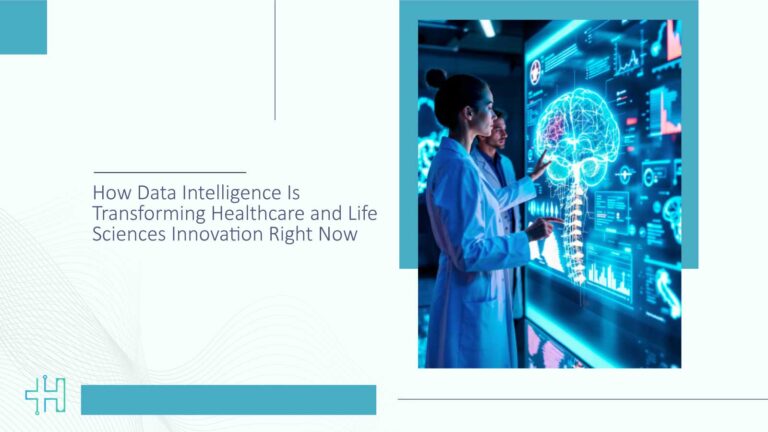

The healthcare and life sciences sectors are undergoing a profound transformation driven by the growing volume of digital data. From electronic health records and genomic sequences to clinical trial data and real-time patient monitoring, modern healthcare generates vast amounts of information. However, the real value lies not in collecting data but in converting it into actionable intelligence.
Data intelligence – the ability to collect, analyze, and operationalize large datasets using advanced analytics and AI – has emerged as a foundational capability for healthcare innovation. By transforming raw data into insights, healthcare organizations can improve patient outcomes, accelerate research, and optimize operational efficiency.
The Growing Importance of Data Intelligence in Healthcare
Healthcare organizations produce enormous volumes of data every day, including clinical records, imaging data, lab results, and operational metrics. Without intelligent analytics tools, this information remains fragmented and underutilized.
Data intelligence platforms integrate diverse datasets and apply advanced analytics, enabling healthcare leaders to generate insights that drive better decision-making. These insights help clinicians deliver more personalized care, improve operational efficiency, and support innovation in drug development and clinical research.
As healthcare becomes increasingly digital, data-driven decision-making is becoming essential to managing complex systems and improving patient outcomes.
Key Applications of Data Intelligence Across the Healthcare Ecosystem
1. Accelerating Drug Discovery and Research
Life sciences companies rely heavily on large datasets from genomics, clinical trials, and biomedical research. Data intelligence platforms allow researchers to identify patterns across complex biological data, accelerating drug discovery and reducing time to market for new therapies.
Advanced analytics can also help identify potential drug targets and predict treatment effectiveness, making the research process more efficient.
2. Improving Clinical Decision-Making
Healthcare providers can leverage predictive analytics to assist clinicians in diagnosing diseases earlier and recommending personalized treatment plans.
AI-powered analytics systems can analyze patient histories, medical imaging, and lab results to identify risk factors and predict disease progression. This enables healthcare professionals to make more informed decisions and deliver more effective care.
3. Optimizing Clinical Trials
Clinical trials are traditionally complex and expensive processes. Data intelligence improves trial design, patient recruitment, and monitoring by analyzing patient populations and identifying ideal candidates for studies.
Predictive models can also help anticipate trial outcomes, reduce trial failures, and accelerate regulatory approvals.
4. Enhancing Operational Efficiency
Healthcare systems must manage logistics, staffing, supply chains, and financial operations alongside patient care. Data intelligence tools provide real-time operational insights that allow organizations to streamline workflows and reduce costs.
For example, predictive analytics can forecast hospital admissions, optimize resource allocation, and prevent supply shortages.
5. Enabling Personalized Medicine
Personalized medicine relies on analyzing patient-specific data, including genetics, lifestyle factors, and medical history. Data intelligence platforms enable healthcare providers to develop customized treatment plans tailored to individual patient profiles.
This approach improves treatment effectiveness and reduces adverse reactions by ensuring therapies are matched to patient needs.
Strategic Value for Healthcare and Life Sciences Leaders
For healthcare CIOs, CTOs, and life sciences executives, data intelligence is no longer optional – it is a strategic necessity. Organizations that effectively harness their data assets can gain competitive advantages across several dimensions:
- Faster research and innovation cycles
- Improved clinical outcomes and patient safety
- More efficient operational management
- Stronger regulatory compliance and reporting
- Enhanced collaboration across healthcare ecosystems
Data intelligence also enables organizations to integrate artificial intelligence, machine learning, and predictive analytics into core workflows, further accelerating innovation across the healthcare landscape.
Implementation Challenges and Considerations
While the benefits are significant, implementing data intelligence strategies requires addressing several challenges:
- Data interoperability between healthcare systems
- Ensuring patient data privacy and regulatory compliance
- Integrating legacy IT infrastructure with modern analytics platforms
- Developing skilled data science teams within healthcare organizations
Successful implementation requires collaboration between clinicians, IT teams, data scientists, and regulatory experts.
Final Thoughts
Healthcare and life sciences innovation is increasingly powered by intelligent data ecosystems. As digital technologies expand, the ability to analyze and interpret complex datasets will determine how effectively organizations can deliver personalized care, accelerate research, and improve operational performance.
Data intelligence provides the foundation for these capabilities, transforming raw information into insights that drive innovation across the healthcare value chain.
Organizations that invest in data-driven strategies today will be better positioned to lead the next generation of healthcare transformation – where predictive analytics, AI, and intelligent decision-making become central to improving patient outcomes and advancing life sciences discovery.