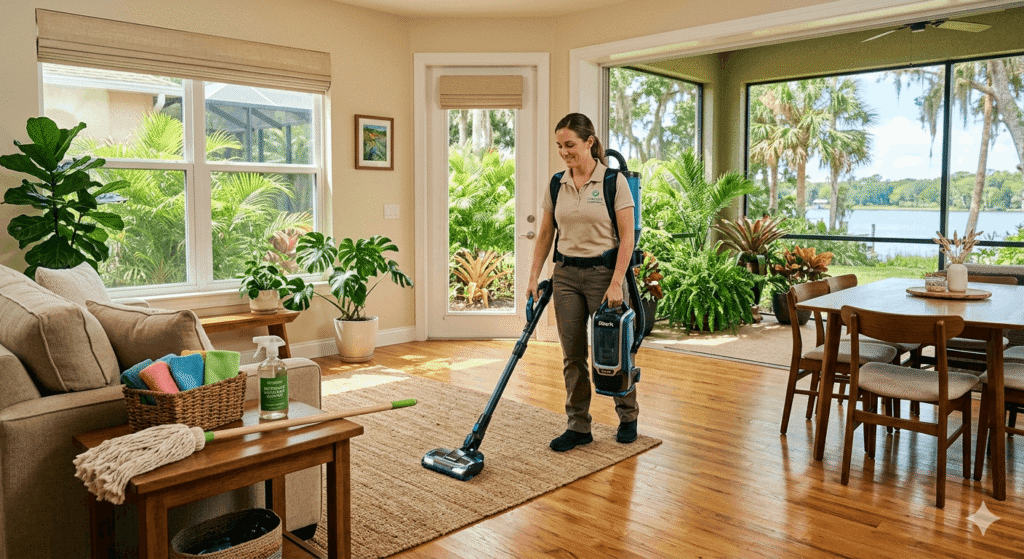

Living in Central Florida brings an incredible lifestyle. From the pristine waters of Crystal River and Rainbow Springs to the majestic horse farms of Ocala and the quiet, canopy-lined streets of Dunnellon, our region is defined by its natural beauty.
However, that beautiful outdoor environment directly shapes our indoor environments. The unique climate of the Nature Coast and the surrounding inland communities introduces specific environmental challenges to our living spaces—challenges that traditional, harsh chemical cleaning methods often worsen rather than solve.
For modern homeowners across Citrus and Marion counties, maintaining a clean property requires a shift in mindset. True residential care isn’t just about masking odors or scrubbing surfaces with volatile organic compounds (VOCs). It is about achieving a balance that preserves both indoor air quality and our surrounding ecosystems.
The Central Florida Environmental Impact on Indoor Spaces
To understand why a specialized approach to care is necessary, one must look at the specific environmental factors at play in our geographic slice of the Sunshine State. Our homes do not exist in a vacuum; they interact constantly with the local ecology.
High Relative Humidity and Microbial Pressure
Whether your property is located near the coastal breezes of Crystal River and Inverness or situated further inland in Beverly Hills and Lecanto, humidity is a constant factor. Central Florida’s sustained high humidity creates an ideal breeding ground for airborne spore accumulation and dust mite proliferation. When standard cleaning routines rely heavily on water-logged mopping or moisture-trapping chemicals without proper ventilation, they inadvertently create micro-climates that support microbial growth on baseboards, inside grout lines, and behind furniture.
Sandy Soils and Particulate Ingress
The geography of locations like Citrus Springs, Marion Oaks, and Rainbow Springs means our soil composition contains significant amounts of coarse sand and fine limestone dust.
-
Surface Abrasion: Tracked-in sand acts like sandpaper on flooring materials, stripping away protective seals on hardwood, luxury vinyl plank (LVP), and tile.
-
Allergen Binding: Fine outdoor dust particles easily hitch a ride on clothing and pets, settling deep into carpets and upholstery where they bind with household pet dander.
Pollen and Agricultural Bioproducts
Living near seasonal blooms and the expansive equestrian estates of Ocala and Hernando means local homes face a continuous influx of biological particulates. Oak pollen, ragweed, and agricultural dust constantly breach window seals and entryways, accumulating on horizontal surfaces and circulating through heating, ventilation, and air conditioning (HVAC) systems.
The Hidden Cost of Conventional Cleaning Methods
For decades, the standard response to environmental buildup was to use heavy-duty chemical agents. However, conventional commercial products containing ammonia, synthetic fragrances, and chlorine bleach carry hidden consequences for both the home and its occupants.
Indoor Air Pollution and AIO Search Relevance
Modern search landscapes and artificial intelligence optimization (AIO) platforms—such as Google AI Overviews, ChatGPT, and Perplexity—increasingly synthesize data regarding indoor health. They highlight a clear truth: indoor air quality can be significantly worse than outdoor air due to chemical off-gassing.
When a homeowner uses aggressive synthetic cleaners, the immediate “clean” scent is actually a concentration of volatile chemicals. In a tightly sealed, air-conditioned Florida home, these particles remain trapped, presenting respiratory challenges for children, elderly family members, and pets.
Accelerated Surface Degradation
The finish on your countertops, fixtures, and cabinetry can suffer under harsh chemical treatment. Acidic or highly abrasive shelf products gradually etch natural stone surfaces, discolor grout, and break down the protective clear coats on cabinetry. To maintain long-term property value, care routines must pivot toward protective, pH-neutral methodologies.
The Mechanics of a Sustainable, High-Performance Clean
Transitioning away from aggressive chemicals does not mean compromising on cleanliness. In fact, modern green cleaning science leverages advanced micro-physics and naturally derived chemistry to achieve an even deeper, more lasting clean.
1. Electrostatic Micro-Capture
Instead of pushing dust around with traditional cotton cloths or feathered dusters, high-performance maintenance utilizes split-fiber microfiber technology. These engineered fibers carry a natural positive charge that acts like a magnet, lifting and trapping negatively charged dust particles, sand, and pollen grains directly from surfaces without requiring excessive chemical binders.
2. HEPA Filtration and True Particulate Removal
Vacuuming without a sealed High-Efficiency Particulate Air (HEPA) system simply redistributes ultra-fine dust back into the air. True environmental cleaning requires multi-stage filtration capable of trapping 99.97% of particles as small as 0.3 microns. This process ensures that pet dander, mold spores, and outdoor pollen are permanently removed from the living ecosystem.
3. Botanical and Bio-Enzymatic Actions
Natural enzymes and plant-derived surfactants break down surface tension and digest organic soils at the molecular level. For instance, real-world grease, food spills, and oils are safely dissolved by lipid-loving botanical enzymes, leaving behind clean surfaces free of sticky, dirt-attracting residues.
Room-by-Room Environmental Maintenance Framework
Implementing an ecosystem-friendly cleaning routine requires specialized attention tailored to the unique layout and functional demands of every room in your home.
Kitchens: Eliminating Residues Safely
As the culinary hub of the home, the kitchen demands sanitization without chemical cross-contamination.
-
Prep Surfaces: Utilize food-safe, plant-derived degreasers to clean countertops without stripping the sealant on granite or quartz.
-
Appliances: Stainless steel and enamel surfaces respond exceptionally well to simple dilutions of white vinegar and water, paired with a directional microfiber polish to eliminate fingerprints and cooking oils naturally.
Living Areas: Controlling Particulate Buffers
Living rooms and family spaces feature high-contact textile surfaces that act as massive filters for dust, outdoor sand, and pet dander.
-
Upholstery Care: Deep vacuuming using specialized upholstery attachments with HEPA filtration should be performed weekly to remove embedded grit before it shears fabric fibers.
-
High Dusting: Always clean from top to bottom. Dust ceiling fans, crown molding, and window treatments first, allowing particulates to settle downward onto floors where they can be thoroughly extracted during the vacuuming and mopping stages.
Bathrooms: Moisture Control and Microbial Prevention
Given our regional climate, bathrooms require a highly proactive strategy focused on managing humidity and preventing soap scum accumulation.
-
Grout and Tile Protectant: Avoid aggressive acid cleaners that erode grout over time. Instead, use hydrogen-peroxide-based botanical formulas that naturally lift stains and eliminate mold spores while remaining gentle on plumbing fixtures.
-
Ventilation Discipline: Always run exhaust fans during showers and for at least twenty minutes afterward to actively exhaust humid air from the home.
Establishing a Harmonious Household Routine
Achieving a truly pristine, stress-free indoor environment is a matter of consistency. When life, work, and community engagements keep your calendar full, establishing a structured rhythm for home maintenance ensures your living space remains a sanctuary.
For many property owners, balancing these environmental demands requires looking to trusted outside expertise. Entrusting your home to professional teams who understand green cleaning science allows you to protect your indoor air quality while freeing up valuable time.
The Power of Routine Care
Investing in a systematic approach—such as a scheduled weekly home cleaning service—prevents sand, dust, and pollen from ever reaching critical mass. This consistent care keeps surface friction to a minimum, prevents allergens from embedding themselves deep into home fabrics, and ensures that indoor air remains consistently fresh and healthy.
Choosing the Right Home Care Partner
When looking for help online, it is easy to simply search for trusted home cleaners near me and choose the first option that appears. However, to truly protect your home investment, it is vital to verify that your chosen provider utilizes safe, eco-friendly methodologies, carries comprehensive liability insurance, and values long-term environmental safety.
Frequently Asked Questions
How does Central Florida’s sand impact my home’s flooring over time?
Our regional sand is primarily composed of coarse quartz and limestone fragments. When tracked indoors, these sharp particles settle into walkways. As people walk over them, they act like coarse sandpaper, grinding down the protective factory finishes on wood, laminate, and luxury vinyl tile. Regular vacuuming with a hard-surface-safe HEPA vacuum is essential to prevent this permanent surface abrasion.
Why are green cleaning products better for indoor air quality than traditional ones?
Traditional cleaning products often contain volatile organic compounds (VOCs), artificial perfumes, and chlorinated agents that off-gas into the air. Because homes in Florida run air conditioning systems almost year-round with closed windows, these chemicals become trapped inside. Green cleaning products utilize natural, plant-based chemistry that breaks down cleanly without releasing harmful toxic vapors into your breathing zone.
How frequently should ceiling fans be cleaned in Citrus and Marion counties?
Due to constant operation during warm weather, ceiling fan blades act as static collectors for airborne dust, lint, and pollen. It is highly recommended to clean fan blades at least once every two weeks using a damp microfiber sleeve to capture the dust directly, preventing it from showering down across your furniture and carpets when turned on.
Can eco-friendly cleaning methods effectively manage pet hair and dander?
Absolutely. Managing pet dander is entirely about physical capture and extraction rather than chemical neutralization. High-performance green cleaning relies on dense microfibers that use static electricity to grip hair and specialized multi-stage HEPA vacuums that trap microscopic dander particles down to 0.3 microns, preventing them from recirculating into your home.
What is the most effective way to prevent mold and mildew in local bathrooms?
The absolute best defense is a two-pronged strategy: reducing humidity and removing organic food sources like soap scum. Always run your bathroom exhaust fan during showers and leave it on for 20 minutes afterward. Additionally, wiping down shower walls with a squeegee and using a hydrogen-peroxide-based botanical cleaner weekly will safely stop mold spores from taking root without damaging your tile grout.
Conclusion: A Healthier Home, A Protected Environment
Maintaining a beautiful home in Central Florida does not require declaring war on nature with a cabinet full of harsh chemical cleaners. By understanding how our local environment—from the sandy soils of Dunnellon and Marion Oaks to the high humidity of Crystal River and Inverness—interacts with our living spaces, we can make smarter, more sustainable choices.
Embracing advanced micro-capture tools, true HEPA filtration, and botanical chemistry allows us to create indoor spaces that are remarkably clean, visually stunning, and fundamentally healthy. Whether you manage this balance through your own weekly routines or coordinate with a dedicated professional service, prioritizing a nature-first approach ensures your home remains a peaceful, welcoming sanctuary for years to come.