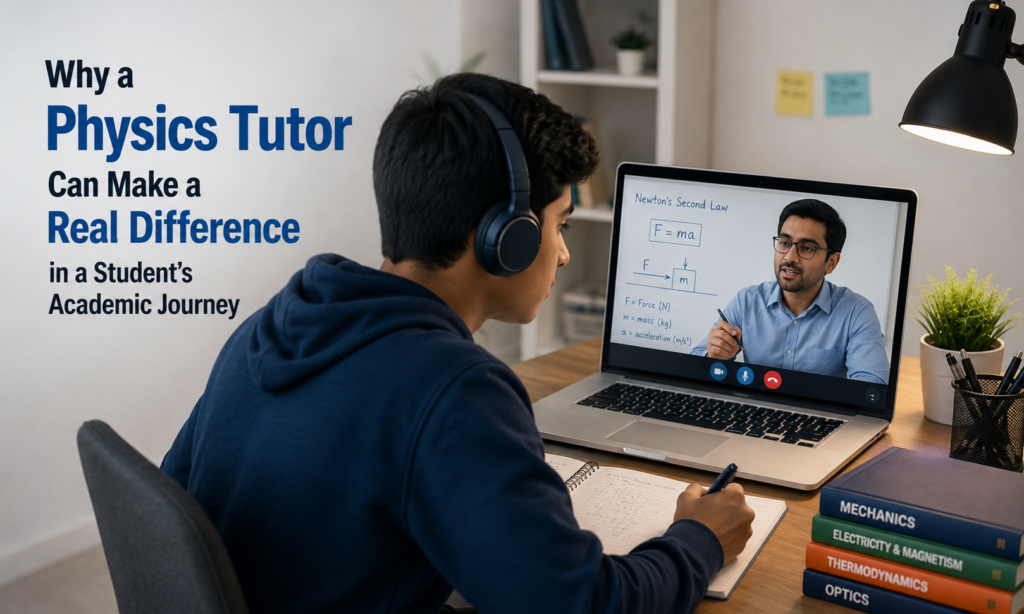

For many students, physics is the subject that turns confidence into confusion. A chapter may seem simple in class, but when it comes to solving numerical problems, applying formulas, or connecting concepts across topics, the subject suddenly feels much harder. This is especially true for students preparing for board exams, JEE, or NEET, where physics is not just another subject—it is often the deciding factor in overall performance.
A good physics tutor does more than explain chapters. The right guidance can change the way a student thinks, studies, and approaches exams. Instead of memorizing formulas without understanding them, students begin to see the logic behind every concept. That shift is what creates long-term improvement.
Why Physics Feels Difficult for Many Students
Physics is different from subjects that depend mainly on reading or memorization. It requires observation, reasoning, and the ability to apply concepts in new situations. A student may understand a definition in theory but still struggle when the same idea appears in a numerical problem or a tricky exam question.
Some of the most common challenges students face include:
- Weak understanding of basic concepts
- Difficulty connecting one chapter with another
- Fear of numerical and application-based questions
- Low confidence during tests and exams
- Poor time management while preparing for a large syllabus
- Limited personal attention in crowded classrooms
When these issues are not addressed early, students often begin to lose interest in the subject. That is why timely academic support matters.
How a Physics Tutor Helps Students Learn Better
1. Learning Becomes More Personal
Every student learns differently. Some need more time with concepts, while others need practice with problem-solving. A physics tutor can identify these differences and adjust the teaching style accordingly. This personalized approach helps students learn at a pace that suits them instead of forcing them to keep up with a fixed classroom rhythm.
2. Concepts Become Easier to Understand
A strong tutor does not rush through formulas. Instead, they explain why a formula works, where it comes from, and how it should be applied. This kind of teaching builds real understanding. Once the concept is clear, students find it much easier to solve both direct and tricky questions.
3. Doubts Are Cleared Without Hesitation
In a classroom full of students, many learners hesitate to ask questions. They may feel shy, confused, or worried about slowing down the class. A tutor creates a space where doubts can be discussed freely. This immediate clarification prevents small misunderstandings from turning into bigger learning gaps.
4. Exam Preparation Becomes More Structured
Physics preparation is not only about studying chapters. It also involves revision, practice, and strategy. A tutor helps students focus on important topics, solve previous year questions, and practice under exam-like conditions. This structured preparation improves both speed and accuracy.
5. Students Learn How to Manage Time Better
Many students know the syllabus but still struggle to complete it on time. A tutor helps break the subject into manageable parts and creates a realistic study plan. This is especially useful for JEE and NEET aspirants, where consistency matters as much as intelligence.
Why Personalized Coaching Works Well for Competitive Exams
Competitive exams like JEE and NEET test much more than memory. They test how well a student can think under pressure, analyze a problem, and choose the correct method quickly. That is why personalized coaching often works better than a one-size-fits-all approach.
Small-batch or one-to-one coaching gives students the advantage of focused attention. Teachers can track progress closely, identify weak areas early, and provide targeted practice. This kind of environment is especially helpful for students who need confidence, discipline, and regular feedback.
What to Look for in a Good Physics Tutor
Choosing the right tutor is an important decision. A good physics tutor should not only know the subject well but also know how to teach it in a way that students can understand and remember.
Before selecting a tutor, students and parents should consider:
- Teaching experience and subject knowledge
- Ability to explain concepts clearly
- Regular doubt-solving support
- Experience with board, JEE, or NEET preparation
- A student-friendly teaching style
- Focus on understanding rather than rote learning
- Consistent feedback and progress tracking
The best tutors are those who help students build confidence, not just complete the syllabus.
The Long-Term Value of Strong Physics Guidance
Good physics teaching does more than improve marks in one exam. It helps students develop logical thinking, problem-solving ability, and a more disciplined study habit. These skills are useful not only in school and competitive exams but also in higher studies and future careers.
When students understand physics properly, they stop fearing the subject. They begin to approach questions with curiosity instead of stress. That change in mindset often leads to better performance and greater academic confidence.
Conclusion
Physics can feel challenging, but it does not have to remain difficult. With the right tutor, students can move from confusion to clarity and from hesitation to confidence. Personalized guidance, concept-based teaching, and regular practice can make a major difference in how a student performs in board exams, JEE, or NEET.
For students who need focused support, structured learning, and a more personal approach to physics, coaching options such as those offered by Physics Point can provide the right foundation for stronger results and better understanding.