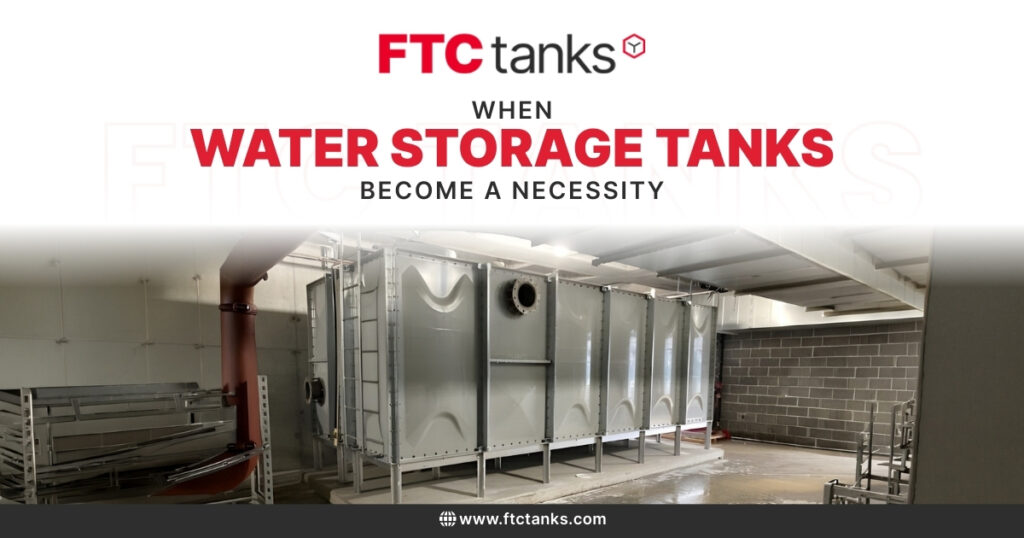

Access to clean and reliable water is no longer something individuals and businesses can take for granted. Population growth, climate variability, infrastructure challenges, and rising operational demands have made water management a strategic priority. In many regions, what was once considered optional has now become essential: water storage tanks.
Whether for residential, agricultural, commercial, or industrial use, water storage tanks provide stability, resilience, and operational continuity. They are not merely containers—they are critical infrastructure assets that protect health, productivity, and long-term sustainability.
This article explores the scenarios in which water storage tanks transition from convenience to necessity and why choosing a trusted provider like FTC Tanks ensures long-term value.
Unreliable Municipal Water Supply
In urban and semi-urban areas, municipal water systems can be inconsistent. Scheduled shutoffs, infrastructure maintenance, aging pipelines, and unexpected outages often interrupt supply.
When water flow becomes unpredictable, water storage tanks serve as a buffer system. By storing water during supply hours, households and businesses can maintain uninterrupted access during downtime. For residential properties, this means no disruption to daily routines. For commercial facilities, it prevents operational shutdowns that may result in financial losses.
For example, in rapidly growing cities like Karachi and Los Angeles, fluctuating demand has placed strain on infrastructure. In such environments, water storage tanks are no longer optional. they are a safeguard against uncertainty.
Drought and Climate Variability
Climate change has increased the frequency and intensity of drought conditions worldwide. Regions dependent on seasonal rainfall are especially vulnerable.
Water storage tanks play a vital role in water conservation strategies. By capturing rainwater during wet seasons, property owners can store reserves for dry periods. This approach reduces dependence on groundwater and municipal systems while promoting sustainable water management practices.
In drought-prone areas like California and Australia, water storage infrastructure has become a regulatory and environmental priority. Rainwater harvesting systems paired with high-quality water storage tanks significantly improve water resilience.
Agricultural Operations and Irrigation Needs
For farms and agricultural enterprises, water availability directly impacts productivity and profitability. Irrigation cycles require precise scheduling. Livestock operations depend on a consistent water supply for animal health.
Without water storage tanks, agricultural operations remain vulnerable to supply interruptions. Tanks enable farmers to:
- Store bulk water for irrigation
- Stabilize pressure for distribution systems
- Prepare for dry seasons
- Reduce reliance on external suppliers
In modern agriculture, water storage is considered operational infrastructure—just as important as machinery or seed quality.
Industrial and Commercial Continuity
Manufacturing plants, food processing facilities, hotels, hospitals, and office complexes depend on uninterrupted water flow. Water is often required for cooling systems, sanitation, production processes, and safety compliance.
Operational downtime due to water shortage can lead to:
- Production delays
- Equipment damage
- Health code violations
- Financial penalties
Water storage tanks mitigate these risks by maintaining an emergency reserve. In regulated industries, they also support compliance with fire safety and hygiene standards.
For commercial projects, working with a specialized provider like FTC Tanks ensures tanks are engineered to meet capacity, durability, and safety requirements specific to industrial applications.
Emergency Preparedness and Disaster Resilience
Natural disasters such as earthquakes, floods, hurricanes, and infrastructure failures can disrupt water systems without warning.
Emergency preparedness plans increasingly include water storage tanks as a core component. Hospitals, schools, and residential communities rely on stored water for drinking, sanitation, and medical operations during crises.
For businesses, having reserve capacity can mean the difference between temporary inconvenience and catastrophic shutdown.
Preparedness is no longer reactive—it is proactive risk management.
Remote and Off-Grid Living
Rural properties, construction sites, and off-grid developments often lack direct access to municipal water infrastructure. In these environments, water storage tanks are foundational infrastructure.
They support:
- Borehole and well systems
- Rainwater harvesting
- Transported water storage
- Solar-powered pumping systems
In remote projects, proper tank selection—capacity, material, and structural design—directly impacts operational sustainability.
Fire Protection Requirements
Fire safety codes frequently require on-site water reserves for sprinkler systems and emergency response. Commercial and industrial facilities must maintain designated volumes of stored water to comply with regulations.
Water storage tanks dedicated to fire protection ensure:
- Immediate access during emergencies
- Compliance with building codes
- Reduced liability exposure
In this context, tanks are not a luxury, they are a legal and safety necessity.
Rising Water Costs and Efficiency Planning
Water pricing continues to increase globally due to treatment costs, infrastructure investment, and scarcity management.
Storing water during lower tariff periods or harvesting rainwater reduces long-term operational expenses. Businesses conducting cost optimization analyses often find that water storage tanks provide measurable ROI within a few years.
Efficient water storage also supports sustainability goals and ESG (Environmental, Social, and Governance) reporting requirements.
Why Quality Matters in Water Storage Tanks
Not all water storage tanks deliver equal performance. Factors such as material composition, structural integrity, UV resistance, and corrosion protection determine long-term durability.
Poor-quality tanks can result in:
- Leakage
- Contamination
- Structural failure
- Increased maintenance costs
FTC Tanks specializes in engineered storage solutions designed for longevity and reliability. Whether for residential, agricultural, or industrial applications, selecting the right capacity and material ensures optimal performance.
When water storage tanks become essential infrastructure, quality is non-negotiable.
Choosing the Right Water Storage Tanks
When evaluating storage solutions, consider the following criteria:
- Capacity Requirements: Daily usage, emergency reserves, and future growth projections.
- Material Type: Steel, polyethylene, concrete, or fiberglass depending on application.
- Installation Location: Above-ground vs. underground placement.
- Regulatory Compliance: Health, safety, and fire standards.
- Maintenance Accessibility: Cleaning and inspection requirements.
Professional consultation ensures that the selected tank aligns with operational needs and regulatory frameworks.
Conclusion
Water security has transitioned from a background consideration to a central operational priority. Infrastructure strain, climate variability, emergency preparedness, agricultural demands, and industrial continuity have collectively elevated the importance of water storage tanks.
They are no longer auxiliary components; they are essential infrastructure assets that protect health, productivity, and long-term sustainability.
Whether safeguarding a home, stabilizing agricultural output, or ensuring uninterrupted industrial operations, water storage tanks provide resilience in an increasingly uncertain environment.
For dependable, high-performance solutions tailored to diverse applications, FTC Tanks delivers storage systems designed to meet today’s demands and tomorrow’s challenges.